Results by title
24 books match the query 'Decolonization in literature'
After Empire
Scott, Naipaul, RushdieMichael Gorra
University of Chicago Press, 1997
Arguing against a model of cultural identity based on race, Gorra begins with Scott's portrait, in The Raj Quartet, of the character Hari Kumar—a seeming oxymoron, an "English boy with a dark brown skin," whose very existence undercuts the belief in an absolute distinction between England and India. He then turns to the opposed figures of Naipaul and Rushdie, the two great novelists of the Indian diaspora. Whereas Naipaul's long and controversial career maps the "deep disorder" spread by both imperialism and its passing, Rushdie demonstrates that certain consequences of that disorder, such as migrancy and mimicry, have themselves become creative forces.
After Empire provides engaging and enlightening readings of postcolonial fiction, showing how imperialism helped shape British national identity—and how, after the end of empire, that identity must now be reconfigured.
Angry Planet
Decolonial Fiction and the American Third WorldAnne Stewart
University of Minnesota Press, 2022
Before the idea of the Anthropocene, there was the angry planet
How might we understand an earthquake as a complaint, or erosion as a form of protest—in short, the Earth as an angry planet? Many novels from the end of the millennium did just that, centering around an Earth that acts, moves, shapes human affairs, and creates dramatic, nonanthropogenic change.
In Angry Planet, Anne Stewart uses this literature to develop a theoretical framework for reading with and through planetary motion. Typified by authors like Colson Whitehead, Octavia Butler, and Leslie Marmon Silko, whose work anticipates contemporary critical concepts of entanglement, withdrawal, delinking, and resurgence, angry planet fiction coalesced in the 1990s and delineated the contours of a decolonial ontology. Stewart shows how this fiction brought Black and Indigenous thought into conversation, offering a fresh account of globalization in the 1990s from the perspective of the American Third World, construing it as the era that first made connections among environmental crises and antiracist and decolonial struggles.
By synthesizing these major intersections of thought production in the final decades of the twentieth century, Stewart offers a recent history of dissent to the young movements of the twenty-first century. As she reveals, this knowledge is crucial to incipient struggles of our contemporary era, as our political imaginaries grapple with the major challenges of white nationalism and climate change denial.
Anomalous States
Irish Writing and the Post-Colonial MomentDavid Lloyd
Duke University Press, 1993
Beginning with Heaney and Beckett, Lloyd shows how in these authors the question of identity connects with the dominance of conservative cultural nationalism and argues for the need to understand Irish culture in relation to the wider experience of colonized societies. A central essay reads Yeats's later works as a profound questioning of the founding of the state. Final essays examine the gradual formation of the state and nation as one element in a cultural process that involves conflict between popular cultural forms and emerging political economies of nationalism and the colonial state. Modern Ireland is thus seen as the product of a continuing process in which, Lloyd argues, the passage to national independence that defines Ireland's post-colonial status is no more than a moment in its continuing history.
Anomalous States makes an important contribution to the growing body of work that connects cultural theory with post-colonial historiography, literary analysis, and issues in contemporary politics. It will interest a wide readership in literary studies, cultural studies, anthropology, and history.
Autobiography and Decolonization
Modernity, Masculinity, and the Nation-StatePhilip Holden
University of Wisconsin Press, 2008
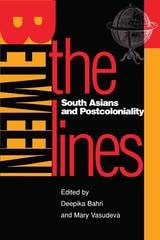
Between the Lines
South Asians and Postcolonialityedited by Deepika Bahri and Mary Vasudeva
Temple University Press, 1996
This ground-breaking collection of new interviews, critical essays, and commentary explores South Asian identity and culture. Sensitive to the false homogeneity implied by "South Asian," "diaspora," "postcolonial," and "Asian American," the contributors attempt to unpack these terms. By examining the social, economic, and historical particularities of people who live "between the lines"—on and between borders—they reinstate questions of power and privilege, agency and resistance. As South Asians living in the United States and Canada, each to some degree must reflect on the interaction of the personal "I," the collective "we," and the world beyond.
The South Asian scholars gathered together in this volume speak from a variety of theoretical perspectives; in the essays and interviews that cross the boundaries of conventional academic disciplines, they engage in intense, sometimes contentious, debate.
Contributors: Meena Alexander, Gauri Viswanathan, Gayatri Chakravorty Spivak, Amritjit Singh, M. G. Vassanji, Sohail Inayatullah, Ranita Chatterjee, Benita Mehta, Sanjoy Majumder, Mahasveta Barua, Sukeshi Kamra, Samir Dayal, Pushpa Naidu Parekh, Indrani Mitra, Huma Ibrahim, Amitava Kumar, Shantanu DuttaAhmed, Uma Parameswaran.
In the series Asian American History and Culture, edited by Sucheng Chan, David Palumbo-Liu, Michael Omi, K. Scott Wong, and Linda Trinh Võ.
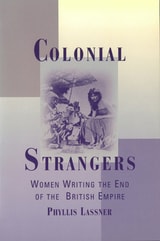
Colonial Strangers
Women Writing the End of the British EmpireLassner, Phyllis
Rutgers University Press, 2004
Drawing on memoirs, fiction, reportage, and film adaptations, Colonial Strangers explores the critical perspectives of writers who correct prevailing stereotypes of British women as agents of imperialism. They also question their own participation in British claims of moral righteousness and British politics of cultural exploitation. These authors take center stage in debates about connections between the racist ideologies of the Third Reich and the British Empire.
Colonial Strangers reveals how the literary responses of key artists represent not only compelling reading, but also a necessary intervention in colonial and postcolonial debates and the canons of modern British fiction.
Decolonial Witnessing
Cold War Afterlives in Latin American and Latinx TestimoniosGuadalupe Escobar
University of Texas Press, 2026
Examining the power of testimonios in illuminating political injustice in Latin America from the Cold War to the present.
During the Cold War, testimonio emerged as a powerful genre of political nonfiction in Latin America. Artists created first-person narratives of censorship and state violence, highlighting broader circumstances of oppression carried out by local right-wing oligarchies in collusion with the US empire. Decolonial Witnessing explores the continuing vitality of testimonio in the twenty-first century, as it has evolved into narratives contesting neoliberal dispossession and disposability.
Considering the cultural work of Ana Castillo, Regina José Galindo, Jayro Bustamante, Alberto Ledesma, Javier Zamora, Lila Downs, and others, Guadalupe Escobar shows how artists, authors, musicians, and filmmakers are using testimonial narratives to identify and resist the architecture of post–Cold War militarized democracy. Contemporary testimonios center migrant children, torture abolitionists, Indigenous land defenders—figures whose perspectives and, indeed, presence disrupt dominant paradigms of citizenship. Cast against the law, their stories—their memories—constitute a critical optic on the construction of belonging. In these acts of bearing witness, Escobar locates the possibility of a new, counterhegemonic political imagination.

Decolonisation and Criticism
The Construction of Irish LiteratureGerry Smyth
Pluto Press, 1998
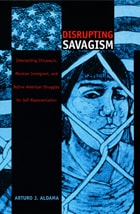
Disrupting Savagism
Intersecting Chicana/o, Mexican Immigrant, and Native American Struggles for Self-RepresentationArturo J. Aldama
Duke University Press, 2001
Arturo J. Aldama begins by presenting a genealogy of the term “savage,” looking in particular at the work of American ethnologist Lewis Henry Morgan and a sixteenth-century debate between Juan Ginés de Sepúlveda and Bartolomé de las Casas. Aldama then turns to more contemporary narratives, examining ethnography, fiction, autobiography, and film to illuminate the historical ideologies and ethnic perspectives that contributed to identity formation over the centuries. These works include anthropologist Manuel Gamio’s The Mexican Immigrant: His Life Story, Leslie Marmon Silko’s Ceremony, Gloria Anzaldúa’s Borderlands/La Frontera, and Miguel Arteta’s film Star Maps. By using these varied genres to investigate the complex politics of racialized, subaltern, feminist, and diasporic identities, Aldama reveals the unique epistemic logic of hybrid and mestiza/o cultural productions.
The transcultural perspective of Disrupting Savagism will interest scholars of feminist postcolonial processes in the United States, as well as students of Latin American, Native American, and literary studies.
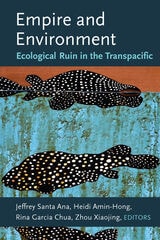
Empire and Environment
Ecological Ruin in the TranspacificJeffrey Santa Ana, Heidi Amin-Hong, Rina Garcia Chua, Zhou Xiaojing, Editors
University of Michigan Press, 2022
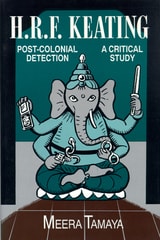
H.R.F. Keating
Post-Colonial Detection, A Critical StudyMeera Tamaya
University of Wisconsin Press, 1993
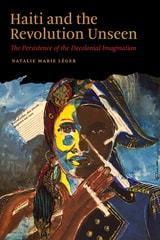
Haiti and the Revolution Unseen
The Persistence of the Decolonial ImaginationNatalie Marie Léger
Vanderbilt University Press, 2025
Léger writes against a Haiti- and Haitians-less idea of the Revolution. She asks scholars and artists of the Revolution to know Haitians as Ginens (African Haitians) and Haiti as Ayiti Ginen (Africa Haiti). This form of knowing demands a decolonial understanding of the Haitian Revolution and a reevaluation of its stories as told by influential twentieth-century Caribbean writers. The story she tells showcases the immense political impact of the African Haitian revolutionist’s philosophies of freedom in Saint Domingue and Haiti thereafter; and she argues that the absence of these philosophies in Caribbean classics of the Revolution demands consideration of why these classics continue to shape how the Revolution and Haiti are discussed in Caribbean Studies, Black Studies, Postcolonial Studies and Haitian Studies. More pressingly, Léger calls on artists and scholars of the Revolution to be mindful of how Haiti and Haitians are figured in narratives of the Revolution. The immense space Haiti holds in Caribbean imaginings of freedom and revolution makes mediating it, its Revolution, and peoples through a prejudiced gaze that serves the West hugely problematic, since a denigrated Haiti yields stunted visions of the Caribbean’s future. These conditions require attention to the pervasive presence of colonial paradigms for being in classic literatures of the Revolution and the way they undermine the generative manner Caribbean writers have used Haiti to think through their past, present, and future.
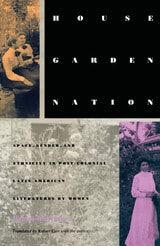
House/Garden/Nation
Space, Gender, and Ethnicity in Post-Colonial Latin American Literatures by WomenIleana Yamileth Rodriguez
Duke University Press, 1994
In House/Garden/Nation the narratives of five Centro-Caribbean writers illustrate these times of transition: Dulce María Loynáz, from colonial rule to independence in Cuba; Jean Rhys, from colony to commonwealth in Dominica; Simone Schwarz-Bart, from slave to free labor in Guadeloupe; Gioconda Belli, from oligarchic capitalism to social democratic socialism in Nicaragua; and Teresa de la Parra, from independence to modernity in Venezuela. Focusing on the nation as garden, hacienda, or plantation, Rodríguez shows us these writers debating the predicament of women under nation formation from within the confines of marriage and home.
In reading these post-colonial literatures by women facing the crisis of transition, this study highlights urgent questions of destitution, migration, exile, and inexperience, but also networks of value allotted to women: beauty, clothing, love. As a counterpoint on issues of legality, policy, and marriage, Rodriguez includes a chapter on male writers: José Eustacio Rivera, Omar Cabezas, and Romulo Gallegos. Her work presents a sobering picture of women at a crossroads, continually circumscribed by history and culture, writing their way.
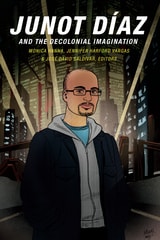
Junot Díaz and the Decolonial Imagination
Monica Hanna, Jennifer Harford Vargas, José David Saldívar, editors
Duke University Press, 2016

Junot Díaz
On the Half-Life of LoveJosé David Saldívar
Duke University Press, 2022

Le Maya Q’atzij / Our Maya Word
Emil’ Keme
University of Minnesota Press, 2021
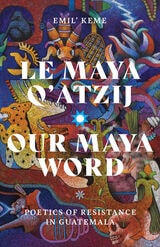
Le Maya Q’atzij/Our Maya Word
Poetics of Resistance in GuatemalaEmil’ Keme
University of Minnesota Press, 2021
Bringing to the fore the voices of Maya authors and what their poetry tells us about resistance, sovereignty, trauma, and regeneration
In 1954, Guatemala suffered a coup d’etat, resulting in a decades-long civil war. During this period, Indigenous Mayans were subject to displacement, disappearance, and extrajudicial killing. Within the context of the armed conflict and the postwar period in Guatemala, K’iche’ Maya scholar Emil’ Keme identifies three historical phases of Indigenous Maya literary insurgency in which Maya authors use poetry to dignify their distinct cultural, political, gender, sexual, and linguistic identities.
Le Maya Q’atzij / Our Maya Word employs Indigenous and decolonial theoretical frameworks to critically analyze poetic works written by ten contemporary Maya writers from five different Maya nations in Iximulew/Guatemala. Similar to other Maya authors throughout colonial history, these authors and their poetry criticize, in their own creative ways, the continuing colonial assaults to their existence by the nation-state. Throughout, Keme displays the decolonial potentialities and shortcomings proposed by each Maya writer, establishing a new and productive way of understanding Maya living realities and their emancipatory challenges in Iximulew/Guatemala.
This innovative work shows how Indigenous Maya poetics carries out various processes of decolonization and, especially, how Maya literature offers diverse and heterogeneous perspectives about what it means to be Maya in the contemporary world.
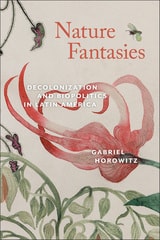
Nature Fantasies
Decolonization and Biopolitics in Latin AmericaGabriel Horowitz
Bucknell University Press, 2024
In this original study, Gabriel Horowitz examines the work of select nineteenth- and twentieth-century Latin American writers through the lens of contemporary theoretical debates about nature, postcoloniality, and national identity. In the work of José Martí, Gertrudis Gómez de Avellaneda, Jorge Luis Borges, Augusto Roa Bastos, Cesar Aira, and others, he traces historical constructions of nature in regional intellectual traditions and texts as they inform political culture on the broader global stage. By investigating national literary discourses from Cuba, Argentina, and Paraguay, he identifies a common narrative thread that imagines the utopian wilderness of the New World as a symbolic site of independence from Spain. In these texts, Horowitz argues, an expressed desire to return to the nation’s foundational nature contributed to a movement away from political and social engagement and toward a “biopolitical state,” in which nature, traditionally seen as pre-political, conversely becomes its center.
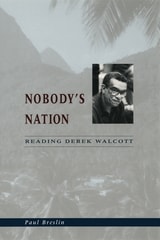
Nobody's Nation
Reading Derek WalcottPaul Breslin
University of Chicago Press, 2001
According to Breslin, Walcott's work is centrally concerned with the West Indies' imputed absence from history and lack of cohesive national identity or cultural tradition. Walcott sees this lack not as impoverishment but as an open space for creation. In his poems and plays, West Indian history becomes a realm of necessity, something to be confronted, contested, and remade through literature. What is most vexed and inspired in Walcott's work can be traced to this quixotic struggle.
Linking extensive archival research and new interviews with Walcott himself to detailed critical readings of major works, Nobody's Nation will take its place as the definitive study of the poet.
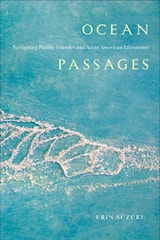
Ocean Passages
Navigating Pacific Islander and Asian American LiteraturesErin Suzuki
Temple University Press, 2021
In her pathbreaking book, Ocean Passages, Erin Suzuki explores how movement through—and travel across—the ocean mediates the construction of Asian American and Indigenous Pacific subjectivities in the wake of the colonial conflicts that shaped the modern transpacific. Ocean Passages considers how Indigenous Pacific scholars have emphasized the importance of the ocean to Indigenous activism, art, and theories of globalization and how Asian American studies might engage in a deconstructive interrogation of race in conversation with this Indigenous-centered transnationalism.
The ocean passages that Suzuki addresses include the U.S. occupation and militarization of ocean space; refugee passage and the history and experiences of peoples displaced from the Pacific Islands; migratory circuits and the labors required to cross the sea; and the different ways that oceans inform postcolonial and settler colonial nationalisms. She juxtaposes work by Indigenous Pacific and Asian American artists and authors including James George, Maxine Hong Kingston, Kathy Jetñil-Kijiner, lê thi diếm thúy, Ruth Ozeki, and Craig Santos Perez. In Ocean Passages, Suzuki explores what new ideas, alliances, and flashpoints might arise when comparing and contrasting Asian and Pacific Islander passages across a shared sea.
Quiet Methodologies
Humility in the HumanitiesSuzanne Bost
University of Minnesota Press, 2025
Reimagining humanities scholarship with humility and inclusive attention
How might foregrounding the writings of colonized peoples transform the ways we work in the humanities? In an era dominated by loud political rhetoric, Suzanne Bost advocates for quieter modes of scholarship: intellectual humility rather than ego, collaboration and conversation rather than singular argumentation, continual reflection and revision rather than defensiveness, and a willingness to believe in different ways of being and knowing rather than adhering to academic norms. With Quiet Methodologies, she demonstrates practical decolonial scholarship and proposes alternative approaches for fostering meaningful engagement.
Turning to feminist, queer, and decolonial writings from Gloria Anzaldúa, Alexis Pauline Gumbs, Audre Lorde, and many others, Bost reflects on what we do when we work with literature, culture, and ideas. She weaves together multiple voices, methods of writing, and culturally diverse epistemologies and uses creative devices such as collage, her own original poetry, revision, lists, images, and conversation to disengage academic thought and writing from colonial theories and archives that have passed as neutral. Eschewing conventional monograph formats, her work embraces a reciprocal and heterogeneous learning process with profound ethical implications.
Part of a movement of reimagining research and education through care, Quiet Methodologies is a powerful exploration of the possibilities of criticism during crises. It encourages readers to be visionary and pragmatic, challenging current conditions and offering alternative ideas for the future of the humanities.
Retail e-book files for this title are screen-reader friendly with images accompanied by short alt text and/or extended descriptions.
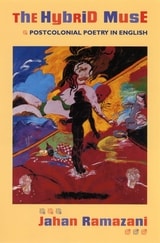
The Hybrid Muse
Postcolonial Poetry in EnglishJahan Ramazani
University of Chicago Press, 2001
In The Hybrid Muse, Jahan Ramazani argues that postcolonial poets have also dramatically expanded the atlas of literature in English, infusing modern and contemporary poetry with indigenous metaphors and creoles. A rich and vibrant poetry, he contends, has issued from the hybridization of the English muse with the long resident muses of Africa, India, and the Caribbean. Starting with the complex case of Ireland, Ramazani closely analyzes the work of leading postcolonial poets and explores key questions about the relationship between poetry and postcolonialism. As inheritors of both imperial and native cultures, poets such as W. B. Yeats, Derek Walcott, Louise Bennett, A. K. Ramanujan, and Okot p'Bitek invent compelling new forms to articulate the tensions and ambiguities of their cultural in-betweeness. They forge hybrid figures, vocabularies, and genres that embody the postcolonial condition.
Engaging an array of critical topics, from the aesthetics of irony and metaphor to the politics of nationalism and anthropology, Ramazani reconceptualizes issues central to our understanding of both postcolonial literatures and twentieth-century poetry. The first book of its kind, The Hybrid Muse will help internationalize the study of poetry, and in turn, strengthen the place of poetry in postcolonial studies.
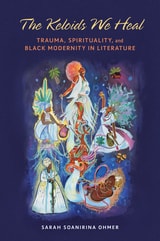
The Keloids We Heal
Trauma, Spirituality, and Black Modernity in LiteratureSarah Soanirina Ohmer
University of Illinois Press, 2025
Women of colors and a literature written in corporeal and spiritual scars
The corporeal and spiritual healing in literature by women of colors can be seen to redefine modern thought and printed text. Sarah Soanirina Ohmer traces the impact of colonization and enslavement on Black women and Black women’s contributions to colonial, nineteenth, and twentieth century literature in the US, Brazil, and the Caribbean.
Drawing on intersectional analysis, Ohmer focuses on portrayals of trauma and spirituality in works by Toni Morrison, Conceição Evaristo, Maryse Condé, Gloria Anzaldúa, the Quilombhoje poets, and María de los Reyes Castillo. Ohmer compares literature from different countries along four thematic pathways: ghosts, mirrors, naming, and motherhood. Her analysis unlocks the literature’s power to heal through gut-wrenching descriptions of wounds and thrilling passages of hope and liberation. Throughout, Ohmer weaves in her life story as a Black woman as she reflects on how colonialism, racism, sexism, and capitalism have impacted her work, traumas, and faith journey.
Transfigurations Of The Maghreb
Feminism, Decolonization, and LiteraturesWinfred Woodhull
University of Minnesota Press, 1993
Through readings of some of the best-known texts in Algerian literature in French, Woodhull both challenges the separation between French and Francophone literatures and cultures in the academy and explores the ways in which "femininity" has been represented in the texts of North African and French writers since the mid-1950s.