Results by title
8 books match the query 'Deep South'
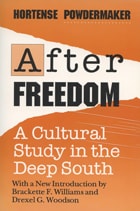
After Freedom
A Cultural Study In The Deep SouthHortense Powdermaker
University of Wisconsin Press, 1993
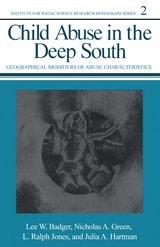
Child Abuse in the Deep South
Geographical Modifiers of Abuse CharacteristicsLee W. Badger
University of Alabama Press, 1988
A powerful, data-driven investigation into how race, geography, and community shape the reporting and response to child abuse in Alabama.
Child Abuse in the Deep South is a groundbreaking examination of how child maltreatment is reported, confirmed, and understood in Alabama—a state shaped by deep historical, racial, and geographic divides. Drawing on over 7,000 case reports, this study reveals how factors such as race, community size, and regional culture influence the identification and handling of abuse cases. With a focus on both rural and urban settings, the book uncovers patterns of systemic bias, underreporting, and institutional response that have long gone unaddressed.
Through rigorous data analysis and a compassionate lens, this work challenges assumptions about child welfare in the American South and offers critical insights for policymakers, social workers, legal professionals, and scholars. Child Abuse in the Deep South is both a call to action and a vital resource for understanding the intersection of social justice, public policy, and child protection in one of the nation’s most complex regions.
Child Abuse in the Deep South provides a quantitative benchmark that investigators and policy-makers will find invaluable on the path to defining at-risk populations, effective interventions, and treatments.
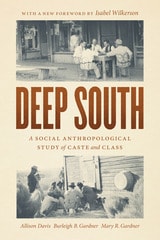
Deep South
A Social Anthropological Study of Caste and ClassAllison Davis, Burleigh B. Gardner, and Mary R. Gardner
University of Chicago Press, 2022
First published in 1941, Deep South is a landmark work of anthropology, documenting in startling and nuanced detail the everyday realities of American racism. Living undercover in Depression-era Mississippi—not revealing their scholarly project or even their association with one another—groundbreaking Black scholar Allison Davis and his White co-authors, Burleigh and Mary Gardner, delivered an unprecedented examination of how race shaped nearly every aspect of twentieth-century life in the United States. Their analysis notably revealed the importance of caste and class to Black and White worldviews, and they anatomized the many ways those views are constructed, solidified, and reinforced.
This reissue of the 1965 abridged edition, with a new foreword from Pulitzer Prize winner Isabel Wilkerson—who acknowledges the book’s profound importance to her own work—proves that Deep South remains as relevant as ever, a crucial work on the concept of caste and how it continues to inform the myriad varieties of American inequality.

Fascinating Foods from the Deep South
Favorite Recipes from the University Club of Tuscaloosa, AlabamaAlline P. Van Duzor
University of Alabama Press, 2010
250 Recipes from the University of Alabama’s famed University Club in Tuscaloosa
The historic mansion at the corner of University Boulevard and Queen City Avenue in Tuscaloosa, Alabama has been home to the University of Alabama University Club since 1944. In its early years, the Club took shape around the vision and culinary expertise of the formidable Atlantan Alline P. Van Duzor, still remembered in Tuscaloosa for her impeccable and exacting standards. This book reveals her most beloved recipes.
Commissioned in the early 1960s by a New York publisher, this collection of her gastronomic creations sold through more than eight printings, further spreading her reputation.
The more than 250 favorite Southern recipes in this now-classic cookbook are written in Van Duzor’s straight-forward style, using common fresh and store-bought ingredients. This new edition has been augmented by a guide to portions and food brand names, an index to the recipes, and an appendix of past presidents of the University Club Board.
Cookbook collectors, local history buffs, the university community, and happy cooks everywhere will welcome this reissue of a popular cookbook that has won decades of fans.
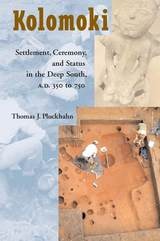
Kolomoki
Settlement, Ceremony, and Status in the Deep South, A.D. 350 to 750Thomas J. Pluckhahn
University of Alabama Press, 2003
A Dan Josselyn Memorial Publication
The first comprehensive and systematic investigation of a Woodland period ceremonial center.
Kolomoki, one of the most impressive archaeological sites in the southeastern United States, includes at least nine large earthen mounds in the lower Chattahoochee River valley of southwest Georgia. The largest, Mound A, rises approximately 20 meters above the terrace that borders it. From its flat-topped summit, a visitor can survey the string of smaller mounds that form an arc to the south and west.
Archaeological research had previously placed Kolomoki within the Mississippian period (ca. A.D. 1000-1500) primarily because of the size and form of the mounds. But this book presents data for the main period of occupation and mound construction that confirm an earlier date, in the Woodland period (ca. A.D. 350-750). Even though the long-standing confusion over Kolomoki’s dating has now been settled, questions remain regarding the lifeways of its inhabitants. Thomas Pluckhahn's research has recovered evidence concerning the level of site occupation and the house styles and daily lives of its dwellers. He presents here a new, revised history of Kolomoki from its founding to its eventual abandonment, with particular attention to the economy and ceremony at the settlement.
This study makes an important contribution to the understanding of middle range societies, particularly the manner in which ceremony could both level and accentuate status differentiation within them. It provides a readable overview of one of the most important but historically least understood prehistoric Native American sites in the United States.
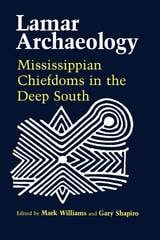
Lamar Archaeology
Mississippian Chiefdoms in the Deep SouthEdited by Mark Williams and Gary Shapiro
University of Alabama Press, 1990
A Dan Josselyn Memorial Publication
Lamar Archaeology provides a comprehensive and detailed review of our knowledge of the late prehistoric Indian societies in the Southern Appalachian area and its peripheries. These Lamar societies were chiefdom-level groups who built most of the mounds in this large region and were ancestors of later tribes, including the Creeks and Cherokees. This book begins with a history of the last 50 years of archaeological and historical research and brings together for the first time all the available data on this early culture. It also provides an invaluable model for books about Southeastern Indian societies by combining purely descriptive information with innovative analyses, advancing our knowledge of the past while remaining firmly grounded in the archaeological evidence as fact.
Contributors include:
Frankie Snow, Chad O. Braley, James B. Langford Jr., Marvin T. Smith, Daniel T. Elliott, Richard R. Polhemus, C. Roger Nance, Gary Shapiro, Mark Williams, John F. Scarry, David G. Anderson, andCharles M. Hudson
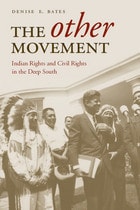
The Other Movement
Indian Rights and Civil Rights in the Deep SouthDenise E. Bates
University of Alabama Press, 2022
Examines the most visible outcome of the Southern Indian Rights Movement: state Indian affairs commissions
In recalling political activism in the post-World War II South, rarely does one consider the political activities of American Indians as they responded to desegregation, the passing of the Civil Rights Acts, and the restructuring of the American political party system. Native leaders and activists across the South created a social and political movement all their own, which drew public attention to the problems of discrimination, poverty, unemployment, low educational attainment, and poor living conditions in tribal communities.
While tribal-state relationships have historically been characterized as tense, most southern tribes—particularly non-federally recognized ones—found that Indian affairs commissions offered them a unique position in which to negotiate power. Although individual tribal leaders experienced isolated victories and generated some support through the 1950s and 1960s, the creation of the inter-tribal state commissions in the 1970s and 1980s elevated the movement to a more prominent political level. Through the formalization of tribal-state relationships, Indian communities forged strong networks with local, state, and national agencies while advocating for cultural preservation and revitalization, economic development, and the implementation of community services.
This book looks specifically at Alabama and Louisiana, places of intensive political activity during the civil rights era and increasing Indian visibility and tribal reorganization in the decades that followed. Between 1960 and 1990, U.S. census records show that Alabama’s Indian population swelled by a factor of twelve and Louisiana’s by a factor of five. Thus, in addition to serving as excellent examples of the national trend of a rising Indian population, the two states make interesting case studies because their Indian commissions brought formerly disconnected groups, each with different goals and needs, together for the first time, creating an assortment of alliances and divisions.

You're the First One I've Told
The Faces of HIV in the Deep SouthWhetten-Goldstein, Kathryn
Rutgers University Press, 2013
The Deep South has seen a 36 percent increase in AIDS cases while the rest of the nation has seen a 2 percent decline. Many of the underlying reasons for the disease’s continued spread in the region—ignorance about HIV, reluctance to get tested, non-adherence to treatment protocols, resistance to behavioral changes—remain unaddressed by policymakers.
In this extensively revised second edition, Kathryn Whetten and Brian Wells Pence present a rich discussion of twenty-five ethnographic life stories of people living with HIV in the South. Most importantly, they incorporate research from their recent quantitative study, “Coping with HIV/AIDS in the Southeast” (CHASE), which includes 611 HIV-positive patients from North Carolina, South Carolina, Georgia, Alabama, and Louisiana. This new edition continues to bring the participants’ voices to life while highlighting how the CHASE study confirmed many of the themes that originally emerged from the life histories. This is the first cohesive compilation of up-to-date evidence on the unique and difficult aspects of living with HIV in the Deep South.