Results by title
2 books match the query 'Delbo, Charlotte'
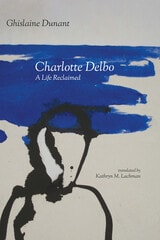
Charlotte Delbo
A Life ReclaimedGhislaine Dunant, Translated by Kathryn M. Lachman
University of Massachusetts Press, 2021
In 1943, Charlotte Delbo and 229 other women were deported to a station with no name, which they later learned was Auschwitz. Arrested for resisting the Nazi occupation of Paris, Delbo was sent to the camps, enduring both Auschwitz and Ravensbrück for twenty-seven months. There, she, her fellow deportees, and millions of others were subjected to slave labor and nearly succumbed to typhus, dysentery, and hunger. She sustained herself by reciting Molière and resolved to someday write a book about herself and her fellow deportees, a stunning work called None of Us Will Return. After the camps, Delbo devoted her life to the art of writing and the duty of witnessing, fiercely advocating for the power of the arts to testify against despotism and tyranny.
Ghislaine Dunant's unforgettable biography of Delbo, La vie retrouvée (2016), captivated French readers and was awarded the Prix Femina. Now translated into English for the first time, Charlotte Delbo: A Life Reclaimed depicts Delbo's lifelong battles as a working-class woman, as a survivor, as a leftist who broke from the Communist Party, and most of all, as a writer whose words compelled others to see.
Ghislaine Dunant's unforgettable biography of Delbo, La vie retrouvée (2016), captivated French readers and was awarded the Prix Femina. Now translated into English for the first time, Charlotte Delbo: A Life Reclaimed depicts Delbo's lifelong battles as a working-class woman, as a survivor, as a leftist who broke from the Communist Party, and most of all, as a writer whose words compelled others to see.
[more]
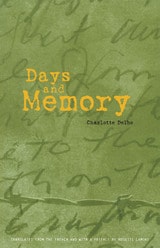
Days and Memory
Charlotte Delbo
Northwestern University Press, 2001
In Auschwitz, memory meant life: remembering the humanity extinguished by the death camps and hoping to survive to tell what had been endured. Charlotte Delbo, a non-Jew sent to Auschwitz for being a member of the French resistance movement, recalls the poems, vignettes, and meditations that fed her companions' spirits, interweaving her experiences with the sufferings of others and depicting dignity and decency in the face of inhumanity.
This definitive translation is by Delbo's close friend, the author and theater critic Rosette Lamont, an expert on the works of Ionesco and Beckett. Lamont wrote that Delbo was, like Beckett, "a minimalist of infinite pain, a voice of conscience."
This definitive translation is by Delbo's close friend, the author and theater critic Rosette Lamont, an expert on the works of Ionesco and Beckett. Lamont wrote that Delbo was, like Beckett, "a minimalist of infinite pain, a voice of conscience."
[more]