Results by title
3 books match the query 'Demoniac possession'

Believe Not Every Spirit
Possession, Mysticism, & Discernment in Early Modern CatholicismMoshe Sluhovsky
University of Chicago Press, 2007
From 1400 through 1700, the number of reports of demonic possessions among European women was extraordinarily high. During the same period, a new type of mysticism—popular with women—emerged that greatly affected the risk of possession and, as a result, the practice of exorcism. Many feared that in moments of rapture, women, who had surrendered their souls to divine love, were not experiencing the work of angels, but rather the ravages of demons in disguise. So how then, asks Moshe Sluhovsky, were practitioners of exorcism to distinguish demonic from divine possessions?
Drawing on unexplored accounts of mystical schools and spiritual techniques, testimonies of the possessed, and exorcism manuals, Believe Not Every Spirit examines how early modern Europeans dealt with this dilemma. The personal experiences of practitioners, Sluhovsky shows, trumped theological knowledge. Worried that this could lead to a rejection of Catholic rituals, the church reshaped the meaning and practices of exorcism, transforming this healing rite into a means of spiritual interrogation. In its efforts to distinguish between good and evil, the church developed important new explanatory frameworks for the relations between body and soul, interiority and exteriority, and the natural and supernatural.
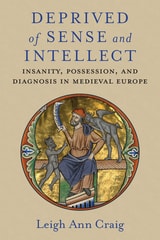
Deprived of Sense and Intellect
Insanity, Possession, and Diagnosis in Medieval EuropeLeigh Ann Craig
University of Michigan Press, 2026
While medieval communities assigned these tensions to a malfunction of consciousness in a single person, medieval miracle texts also reveal how the function and malfunction of consciousness was named and classified. In studying these texts, Leigh Ann Craig explores the terminology and rhetoric used to diagnose a loss of mind as either from natural causes or as an effect of demonic predation, tracing the use of Latin vocabulary in medical compendia, law, and theology. Deprived of Sense and Intellect finds that since diagnoses were difficult and frequently subject to doubt, they varied based on regional cultures of disability in northern and southern Europe, the influences on the development of community consensus in Latin Europe in the Middle Ages, and assumptions based on gender, material evidence, and self-diagnosis.
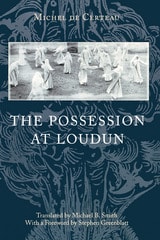
The Possession at Loudun
Michel de Certeau
University of Chicago Press, 2000
Interweaving substantial excerpts from primary historical documents with fascinating commentary, de Certeau shows how the plague of sorceries and possessions in France that climaxed in the events at Loudun both revealed the deepest fears of a society in traumatic flux and accelerated its transformation. In this tour de force of psychological history, de Certeau brings to vivid life a people torn between the decline of centralized religious authority and the rise of science and reason, wracked by violent anxiety over what or whom to believe.
At the time of his death in 1986, Michel de Certeau was a director of studies at the école des hautes études en sciences sociales, Paris. He was author of eighteen books in French, three of which have appeared in English translation as The Practice of Everyday Life,The Writing of History, and The Mystic Fable, Volume 1, the last of which is published by The University of Chicago Press.
"Brilliant and innovative. . . . The Possession at Loudun is [de Certeau's] most accessible book and one of his most wonderful."—Stephen Greenblatt (from the Foreword)