Results by title
4 books match the query 'Denver Museum of Nature and Science'
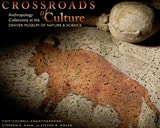
Crossroads of Culture
Anthropology Collections at the Denver Museum of Nature & ScienceChip Colwell
University Press of Colorado, 2010
The book presents 123 full-color images to highlight the museum's cultural treasures. Selected for their individual beauty, historic value, and cultural meaning, these objects connect different places, times, and people. From the mammoth hunters of the Plains to the first American pioneer settlers to the flourishing Hispanic and Asian diasporas in downtown Denver, the Rocky Mountain region has been home to a breathtaking array of cultures. Many objects tell this story of the Rocky Mountains' fascinating and complex past, whereas others serve to bring enigmatic corners of the globe to modern-day Denver.
Crossroads of Culture serves as a behind-the-scenes tour of the museum's anthropology collections. All the royalties from this publication will benefit the collections of the Denver Museum of Nature & Science's Department of Anthropology.
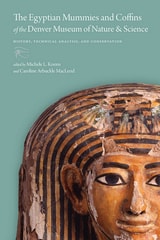
Egyptian Mummies and Coffins of the Denver Museum of Nature & Science
History, Technical Analysis, and ConservationMichele L. Koons
University Press of Colorado, 2020
This interdisciplinary volume provides a history of the mummies’ discovery and relocation to Colorado. It guides the reader through various analytical techniques, detailing past research and introducing new data and best practices for future conservation efforts. The new analysis includes more accurate radiocarbon dating, fully comprehensive data from updated CT scans, examples of Egyptian blue and yellow pigments on the coffins uncovered by non-invasive x-ray fluorescence, unprecedented analysis of the coffin wood, updated translations and stylistic analysis of the text and imagery on the coffins, gas chromatography of the paints and resins, linen analysis, and much more.
The Egyptian Mummies and Coffins of the Denver Museum of Nature & Science provides replicable findings and consistent terminology for institutions performing holistic studies on extant museum collections of a range of material types. It will add substantially to what we know about the effective conservation of Egyptian mummies and coffins.
Contributors: Christopher H. Baisan, Hans Barnard, Bonnie Clark, Pearce Paul Creasman, Farrah Cundiff, Jessica M. Fletcher, Kari L. Hayes, Kathryn Howley, Stephen Humphries, Keith Miller, Vanessa Muros, Robyn Price, David Rubinstein, Judith Southward, Jason Weinman
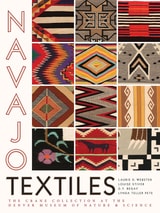
Navajo Textiles
The Crane Collection at the Denver Museum of Nature and ScienceLaurie D. Webster
University Press of Colorado, 2017
Navajo Textiles provides a nuanced account the Navajo weavings in the Crane Collection at the Denver Museum of Nature & Science—one of the largest collections of Navajo textiles in the world. Bringing together the work of anthropologists and indigenous artists, the book explores the Navajo rug trade in the mid-nineteenth century and changes in the Navajo textile market while highlighting the museum’s important, though still relatively unknown, collection of Navajo textiles.
In this unique collaboration among anthropologists, museums, and Navajo weavers, the authors provide a narrative of the acquisition of the Crane Collection and a history of Navajo weaving. Personal reflections and insights from foremost Navajo weavers D. Y. Begay and Lynda Teller Pete are also featured, and more than one hundred stunning full-color photographs of the textiles in the collection are accompanied by technical information about the materials and techniques used in their creation. An introduction by Ann Lane Hedlund documents the growing collaboration between Navajo weavers and museums in Navajo textile research.
The legacy of Navajo weaving is complex and intertwined with the history of the Diné themselves. Navajo Textiles makes the history and practice of Navajo weaving accessible to an audience of scholars and laypeople both within and outside the Diné community.
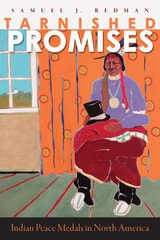
Tarnished Promises
Indian Peace Medals in North AmericaSamuel J. Redman
University Press of Colorado, 2026
Using a collection of medals held at the Denver Museum of Nature & Science, Tarnished Promises presents an updated overview of the history and story of peace medals through an examination of their legacy in the modern world. Accompanying the history and analysis are images of thirteen exemplar peace medals from the DMNS collections and their accompanying object biographies.
Peace medals paradoxically worked as tools of colonialism and also Native American agency, sovereignty, power, resistance, and change in response to growing challenges. Their widespread adoption by Native people in North America both prefigured and coincided with the many ways in which Native Americans and First Nations peoples worked to adapt to the unwelcome and undesirable changes wrought by expanding western colonialism. The unique individual histories behind the medals and the larger peace medal story suggest how material objects can hold several, sometimes contradictory, meanings and be influenced by varied strands of culture and historical memory. Tarnished Promises tells this complex story in two parts, with the first detailing the history of Indian peace medals from 1670 to the present day and the second part exploring their meaning at different points in time and to different peoples.
The first book-length treatment of peace medals using an anticolonialist perspective, Tarnished Promises is significant to scholars and the general public interested in numismatics, American history, Indigenous studies, and museum collections.