Results by title
16 books match the query 'Depression'

American Melancholy
Constructions of Depression in the Twentieth CenturyHirshbein, Laura D
Rutgers University Press, 2009
American Melancholy traces the growth of depression as an object of medical study and as a consumer commodity and illustrates how and why depression came to be such a huge medical, social, and cultural phenomenon. It is the first book to address gender issues in the construction of depression, explores key questions of how its diagnosis was developed, how it has been used, and how we should question its application in American society.
Biofeedback for the Brain
How Neurotherapy Effectively Treats Depression, ADHD, Autism, and MorePaul G. Swingle, PhD
Rutgers University Press, 2008
Neurofeedback is a cutting-edge, drug-free therapeutic technique used by over a thousand licensed therapists in North America to treat a range of conditions from attention deficit and hyperactivity disorders to epilepsy, stroke, anxiety, migraine, and depression. First popularized in the 1970s, this naturalistic method is based on the idea that we can control our brain activity and that, through training, the brain can learn to modify its own electrical patterns for more efficient processing or to overcome various states of dysfunction.
In Biofeedback for the Brain, Dr. Paul G. Swingle describes in clear and coherent language how these procedures work. With numerous actual case examples, readers follow the progress of clients from the initial “brain map” that shows the location and severity of the neurological abnormalities to the various stages of treatment. Conditions often considered untreatable by conventional health practitioners respond positively to neurotherapeutic treatment and Swingle describes many of these remarkable recoveries. Other chapters describe the use of neurotherapy for a variety of surprising purposes, including performance training for elite athletes, of which the most famous example is the Italian soccer team who considered the technique to be their “secret weapon” in attaining a World Cup victory.
Despite wide-ranging success stories and the endorsement of the American Psychological Association, many health care practitioners remain skeptical of neurofeedback and the procedures are still not well-known by the public or conventional health care providers. This book provides a thorough, definitive, and highly readable presentation of this remarkable health care alternative that offers millions of individuals a chance for healing.

Cognitive Behavioral Therapy for Christians with Depression
A Practical Tool-Based PrimerMichelle Pearce
Templeton Press, 2016
For anyone in the helping profession, whether as mental health professional or religious leader, this question is bound to arise. Many mental health professionals feel uncomfortable discussing religion. In contrast, many religious leaders feel uncomfortable referring their congregants to professionals who do not know their faith or intent to engage with it.
And yet Michelle Pearce, PhD, assistant professor and clinical psychologist at the Center for Integrative Medicine at the University of Maryland, argues that if religion is essential to a client, religion will be a part of psychotherapy, whether it is discussed or not. Clients cannot check their values at the door more than the professionals who treat them.
To Pearce, the question isn’t really, “does religion belong?” but rather, “how can mental health professionals help their religious clients engage with and use their faith as a healing resource in psychotherapy?”
Cognitive Behavioral Therapy for Christian Clientswith Depression is the answer to that question, as the book’s purpose is to educate mental health professionals and pastoral counselors about religion’s role in therapy, as well as equip them to discuss religious issues and use evidence-based, religiously-integrated tools with Christian clients experiencing depression.
In this book, readers will find the following resources in an easy-to-use format:
- An overview of the scientific benefits of integrating clients’ religious beliefs and practices in psychotherapy
- An organizing therapeutic approach for doing Christian CBT
- Seven tools specific to Christian CBT to treat depression
- Suggested dialogue for therapists to introduce concepts and tools
- Skill-building activity worksheets for clients
- Clinical examples of Christian CBT and the seven tools in action
Cognitive Behavioral Therapy for Christian Clients with Depression is a practical guide for mental health professionals and pastoral counselors who want to learn how to use Christian-specific CBT tools to treat depression in their Christian clients.

Communists in Harlem during the Depression
Mark Naison
University of Illinois Press, 2004
Winner of the Ralph Bunche Award, American Political Science Association
No socialist organization has ever had a more profound effect on black life than the Communist Party did in Harlem during the Depression. Mark Naison describes how the party won the early endorsement of such people as Adam Clayton Powell Jr. and how its support of racial equality and integration impressed black intellectuals, including Richard Wright, Langston Hughes, and Paul Robeson.
This meticulously researched work, largely based on primary materials and interviews with leading black Communists from the 1930s, is the first to fully explore this provocative encounter between whites and blacks. It provides a detailed look at an exciting period of reform, as well as an intimate portrait of Harlem in the 1920s and 30s, at the high point of its influence and pride.
Dash of Pepper!
The Depression, The Hobo, and the 1931 World SeriesJustin Wingerter
University of Missouri Press, 2027
Dash of Pepper!: The Depression, The Hobo, and the 1931 World Series is the first book about the 1931 World Series and its unlikely star, Johnnie Leonard Roosevelt “Pepper” Martin. Born in Oklahoma in 1904, Martin grew up in poverty, performing farm labor with his family and attending school only sporadically (he was eventually expelled for his lack of shoes). Local sandlots served as his introduction to baseball, bringing him into an unpretentious world of hand-me-down leather, battered balls bursting at the seams, and boyhood. He was immediately hooked.
Martin spent his adolescence working a variety of odd jobs and playing for even odder baseball teams before making a living as a player for the East Texas League beginning in 1925, the owner of which sold him to the St. Louis Cardinals later that year. Martin played for the Cardinals’ minor league affiliates for the next two years, all while continuing his boyhood habit of “hoboing” freight trains to travel to games. Promoted to the major leagues in 1927, Martin was sent back down to the minors two years later, making his return to the Big Leagues in 1931 and soon thereafter emerging as the star of that year’s World Series. Historians still credit Martin, with his .500 batting average, 4 doubles, 1 home run, and 5 RBIs, for the Cardinals’ taking the championship.
Author Justin Wingerter documents the words of reporters from every state who told of a Depression-weary nation enthralled by the self-described hobo with endless hustle — “Don’t say Pepper, say STAR,” wrote The St. Louis Star (a play on its motto, “Don’t say ‘paper,’ say STAR”) after the Cardinals’ Game Three win. As Wingerter argues, Martin became a symbol of the forgotten man at a time when his fellow Americans needed a hero. His performance in the 1931 Series was followed obsessively by farmers, businesspeople, industrial workers, and even inmates, all of whom found in Martin a source of solace in a time of widespread misery. As one sportswriter opined in Waterloo, Iowa, “The Pepper Martins have a way of making us forget it all.”
In Dash of Pepper!, Wingerter explores the 1931 World Series in the context of the era’s national mood, populating the book’s pages with a host of colorful characters reaching far beyond Martin: One-Eyed Connelly, the famed gatecrasher who eventually met his match; the masked assailants of the St. Louis Milk War, a violent labor action that shared the city’s frontpages with the Series; banking regulators rushing to save deposits at Philadelphia’s Franklin Trust, and more.
With Dash of Pepper!, Wingerter makes an original contribution to the field, its focus on American society making it particularly valuable to lovers of United States history in addition to baseball fans.

Depression and Play in Early Childhood
Annemieke Mol Lous
Amsterdam University Press, 2015

Depression
A Public FeelingAnn Cvetkovich
Duke University Press, 2012
Cvetkovich draws on an unusual archive, including accounts of early Christian acedia and spiritual despair, texts connecting the histories of slavery and colonialism with their violent present-day legacies, and utopian spaces created from lesbian feminist practices of crafting. She herself seeks to craft a queer cultural analysis that accounts for depression as a historical category, a felt experience, and a point of entry into discussions about theory, contemporary culture, and everyday life. Depression: A Public Feeling suggests that utopian visions can reside in daily habits and practices, such as writing and yoga, and it highlights the centrality of somatic and felt experience to political activism and social transformation.
God's Businessmen
Entrepreneurial Evangelicals in Depression and WarSarah Ruth Hammond
University of Chicago Press, 2017
The evangelical embrace of conservatism is a familiar feature of the contemporary political landscape. What’s less well-known, however, is that the connection predates the Reagan revolution, going all the way back to the Depression and World War II. Evangelical businessmen at the time were quite active in opposing the New Deal—on both theological and economic grounds—and in doing so claimed a place alongside other conservatives in the public sphere. Like previous generations of devout laymen, they self-consciously merged their religious and business lives, financing and organizing evangelical causes with the kind of visionary pragmatism that they practiced in the boardroom.
In God’s Businessmen, Sarah Ruth Hammond explores not only these men’s personal trajectories but also those of the service clubs and other institutions that, like them, believed that businessmen were God’s instrument for the Christianization of the world. Hammond presents a capacious portrait of the relationship between the evangelical business community and the New Deal—and in doing so makes important contributions to American religious history, business history, and the history of the American state.
It's Just the Normal Noises
Marcus, Guralnick, No Depression, and the Mystery of Americana MusicTimothy Gray
University of Iowa Press, 2017
In It’s Just the Normal Noises, Timothy Gray examines a wide array of writing about roots music from the 1960s to the 2000s. In addition to chapters on the genre-defining work of Guralnick and Marcus, he explores the influential writings of Grant Alden and Peter Blackstock, the editors of No Depression magazine, and the writers who contributed to its pages, Bill Friskicks-Warren, Ed Ward, David Cantwell, and Allison Stewart among them. A host of memoirists and novelists, from Patti Smith and Ann Powers to Eleanor Henderson and Dana Spiotta, shed light on the social effects and personal attachments of the music’s many manifestations, from punk to alt country to hardcore. The ambivalent attitudes of rock musicians toward success and failure, the meaning of soul, the formation of alternative communities through magazine readership, and the obsession of Generation X scenes with DIY production values wend through these works.
Taking a personal approach to the subject matter, Gray reads criticism and listens to music as though rock ‘n’ roll not only explains American culture, but also shores up his life. This book is for everyone who’s heard in roots rock the sound of an individual and a nation singing themselves into being.

My Remembers
A Black Sharecropper's Recollections of the DepressionEddie Stimpson Jr.
University of North Texas Press, 1996

The Aesthetics of Disengagement
Contemporary Art and DepressionChristine Ross
University of Minnesota Press, 2006
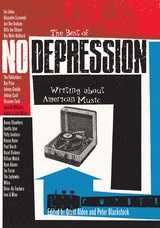
The Best of No Depression
Writing about American MusicEdited by Grant Alden and Peter Blackstock
University of Texas Press, 2005
Since the magazine's founding in 1995, No Depression has reported on and helped define the music that goes by names such as alt.country, Americana, and roots music. Though dismissed by the commercial country music establishment as "music that doesn't sell," alternative country has attracted thousands of listeners who long for the authenticity and rich complexity that come from its potent blend of country and rock 'n' roll and any number of related musical genres and subgenres.
To celebrate No Depression's tenth anniversary and spotlight some of the most important artists and trends in alt.country music, editors Grant Alden and Peter Blackstock have compiled this anthology of twenty-five of the magazine's best and most representative feature articles. Their subjects range from venerated country artists such as Johnny Cash and Ray Price to contemporary songwriters such as Lucinda Williams and Buddy and Julie Miller to the post-punk country-influenced bands Wilco and the Drive-By Truckers. All of the articles included here illustrate No Depression's commitment to music writing that puts the artist front-and-center and covers his or her career in sufficient depth to be definitive. Alden and Blackstock have also written a preface to this volume in which they discuss the alt.country phenomenon and the history and editorial philosophy that have made No Depression the bible for everyone seeking genuine American roots music.
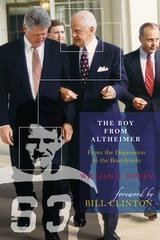
The Boy from Altheimer
From the Depression to the BoardroomWilliam H. Bowen
University of Arkansas Press, 2006

The Communist Party of the United States
From the Depression to World War IIOttanelli, Fraser
Rutgers University Press, 1991

The Family Meets the Depression
A Study of a Group of Highly Selected FamiliesWinona L. Morgan
University of Minnesota Press, 1939
The Family Meets the Depression was first published in 1939. Minnesota Archive Editions uses digital technology to make long-unavailable books once again accessible, and are published unaltered from the original University of Minnesota Press editions.
There have been very few studies of normal, happy family life. One such study, "The Family in the Present Social Order," by Ruth Lindquist, presented the circumstances of several hundred normal American families in 1927, one of the most prosperous years of our history.
The present investigation is a follow-up of Miss Lindquist's. Miss Morgan compares the circumstances of 331 of these families as they were in that year with those of the same families in 1933, which perhaps was the blackest year of the depression. The problems faced and the manner in which they were solved are carefully analyzed and presented in eminently readable form. Including as they do depleted incomes, lack of help in the household, dependent relatives, and health difficulties, these problems are in numerous ways typical of those faced by thousands of American families today.
The findings of this study should possess considerable significance not only for students of home economics but also for sociologists, parent educators, and psychologists concerned with problems of personal adjustment.

The Family Silver
A Memoir of Depression and InheritanceSharon O'Brien
University of Chicago Press, 2004
A compassionate and engaging writer, O'Brien uses the biographer's methods to understand her family history, weaving the scattered pieces of the past—her mother's memo books, her father's reading journal, family photographs, tombstones, dance cards, hospital records, the family silver—into a compelling narrative. In the lives of her Irish-American relatives she finds that the American values of upward mobility, progress, and the pressure to achieve sparked both desire and depression, following her family through generations, across the sea, from the Irish famine of the 1840s to Harvard Yard in the late 1960s.
"Many people who write stories of depression or other chronic illnesses tell tales of recovery in the upward-mobility sense, the 'once I was ill, but now I am well' formula that we may find appealing, but doesn't match the messiness of our lives," she writes. "Mine is not such a tale. But it is a recovery tale in another sense—a story of salvage, of rescuing stories from silence." Told with humor and honesty, O'Brien's story will captivate all readers who want to know how they, and their families, have been shaped by the past.