Results by title
12 books match the query 'Depression, Mental'

A Kinder, Gentler America
Melancholia and the Mythical 1950sMary Caputi
University of Minnesota Press, 2005
Analyzing these competing uses of the past, A Kinder, Gentler America reveals how longing for the era of “the greatest generation” actually exposes a disillusionment with the present. Caputi draws on the theoretical frameworks of Julia Kristeva and Walter Benjamin to look at how the decade has been portrayed in movies such as Pleasantville and Far from Heaven and delves further to investigate our disenchantment’s lost origins in early modernity through a reading of the poetry of Baudelaire. What emerges is a stark contrast between the depictions of a melancholic present and a cheerful, shiny past. In the right’s invocation of the mythical 1950s and the left’s criticism of the same, Caputi recognizes a common unfulfilled desire, and proposes that by understanding this loss both sides can begin to accept that American identity, despite chaos and confusion, lies in the here and now.
Mary Caputi is professor of political science at California State University, Long Beach, and is author of Voluptuous Yearnings: A Feminist Theory of the Obscene.

American Melancholy
Constructions of Depression in the Twentieth CenturyHirshbein, Laura D
Rutgers University Press, 2009
American Melancholy traces the growth of depression as an object of medical study and as a consumer commodity and illustrates how and why depression came to be such a huge medical, social, and cultural phenomenon. It is the first book to address gender issues in the construction of depression, explores key questions of how its diagnosis was developed, how it has been used, and how we should question its application in American society.

Cognitive Behavioral Therapy for Christians with Depression
A Practical Tool-Based PrimerMichelle Pearce
Templeton Press, 2016
For anyone in the helping profession, whether as mental health professional or religious leader, this question is bound to arise. Many mental health professionals feel uncomfortable discussing religion. In contrast, many religious leaders feel uncomfortable referring their congregants to professionals who do not know their faith or intent to engage with it.
And yet Michelle Pearce, PhD, assistant professor and clinical psychologist at the Center for Integrative Medicine at the University of Maryland, argues that if religion is essential to a client, religion will be a part of psychotherapy, whether it is discussed or not. Clients cannot check their values at the door more than the professionals who treat them.
To Pearce, the question isn’t really, “does religion belong?” but rather, “how can mental health professionals help their religious clients engage with and use their faith as a healing resource in psychotherapy?”
Cognitive Behavioral Therapy for Christian Clientswith Depression is the answer to that question, as the book’s purpose is to educate mental health professionals and pastoral counselors about religion’s role in therapy, as well as equip them to discuss religious issues and use evidence-based, religiously-integrated tools with Christian clients experiencing depression.
In this book, readers will find the following resources in an easy-to-use format:
- An overview of the scientific benefits of integrating clients’ religious beliefs and practices in psychotherapy
- An organizing therapeutic approach for doing Christian CBT
- Seven tools specific to Christian CBT to treat depression
- Suggested dialogue for therapists to introduce concepts and tools
- Skill-building activity worksheets for clients
- Clinical examples of Christian CBT and the seven tools in action
Cognitive Behavioral Therapy for Christian Clients with Depression is a practical guide for mental health professionals and pastoral counselors who want to learn how to use Christian-specific CBT tools to treat depression in their Christian clients.

Depression
A Public FeelingAnn Cvetkovich
Duke University Press, 2012
Cvetkovich draws on an unusual archive, including accounts of early Christian acedia and spiritual despair, texts connecting the histories of slavery and colonialism with their violent present-day legacies, and utopian spaces created from lesbian feminist practices of crafting. She herself seeks to craft a queer cultural analysis that accounts for depression as a historical category, a felt experience, and a point of entry into discussions about theory, contemporary culture, and everyday life. Depression: A Public Feeling suggests that utopian visions can reside in daily habits and practices, such as writing and yoga, and it highlights the centrality of somatic and felt experience to political activism and social transformation.
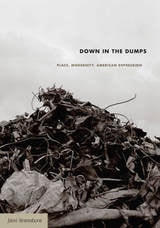
Down in the Dumps
Place, Modernity, American DepressionJani Scandura
Duke University Press, 2007
An interpretive bricolage that draws on an unlikely archive of 1930s detritus—office memos, scribbled manuscripts, scrapbooks, ruined photographs, newspaper clippings, glass eyes, incinerated stage sets, pulp novels, and junk washed ashore—Down in the Dumps escorts its readers through Reno’s divorce factory of the 1930s, where couples from across the United States came to quickly dissolve matrimonial bonds; Key West’s multilingual salvage economy and its status as the island that became the center of an ideological tug-of-war between the American New Deal government and a politically fraught Caribbean; post-Renaissance Harlem, in the process of memorializing, remembering, grieving, and rewriting a modernity that had already passed; and Studio-era Hollywood, Nathanael West’s “dump of dreams,” in which the introduction of sound in film and shifts in art direction began to transform how Americans understood place-making and even being itself. A coda on Alcatraz and the Pentagon brings the book into the present, exploring how American Depression comes to bear on post-9/11 America.

Gut Feminism
Elizabeth A. Wilson
Duke University Press, 2015

Living Worth
Value and Values in Global Pharmaceutical MarketsStefan Ecks
Duke University Press, 2022

Sage Dreams, Eagle Visions
Danielle M. Hornett
Michigan State University Press, 2004
Amanda Aaron, a woman of mixed Ojibwe and white heritage, spent twenty years living in Milwaukee, away from her home and family. After the deaths of her parents, a short-lived marriage to an abusive non-Indian, and finally a tragic accident in which her friends were killed, she is pushed into a state of depression. Acting on her doctor’s orders, she returns to her grandparents’ cabin on her home reservation in northern Wisconsin, seeking the solitude she needs to recover.
Migizi, the Eagle, the Grandfather’s messenger, gifts Amanda with a feather, then visits her one night in her bedroom. Wanting to believe it was a dream, but knowing it was not, Amanda seeks the advice and counsel of Elders on the reservation who, in turn, introduce Amanda to Noah, a spiritual man who can guide and advise her as her life becomes complicated with unwanted responsibilities. Eventually, Amanda is forced to admit that the void she has been experiencing can only be filled by a return to the reservation—a life that has always enriched her and provided her with the needed strength to achieve her goals.

The Drug, the Soul, and God
A Catholic Moral Perspective on AntidepressantsJohn-Mark Miravalle
University of Scranton Press, 2010
With The Drug, the Soul, and God, John-Mark Miravelle examines the stance of the Catholic Church regarding the prescription and consumption of antidepressants. After a careful investigation of Catholic moral theology and philosophy, Miravelle argues that treating depression with medication alone fails to address the underlying causes of the depression and does not facilitate the cognitive, interpersonal, and environmental changes necessary for a patient’s long-term health. In addition, he suggests that such medication may deprive sufferers of providential opportunities for personal and communal conversion and sanctification. This controversial volume will engage theologians and medical professionals alike.

The Family Silver
A Memoir of Depression and InheritanceSharon O'Brien
University of Chicago Press, 2004
A compassionate and engaging writer, O'Brien uses the biographer's methods to understand her family history, weaving the scattered pieces of the past—her mother's memo books, her father's reading journal, family photographs, tombstones, dance cards, hospital records, the family silver—into a compelling narrative. In the lives of her Irish-American relatives she finds that the American values of upward mobility, progress, and the pressure to achieve sparked both desire and depression, following her family through generations, across the sea, from the Irish famine of the 1840s to Harvard Yard in the late 1960s.
"Many people who write stories of depression or other chronic illnesses tell tales of recovery in the upward-mobility sense, the 'once I was ill, but now I am well' formula that we may find appealing, but doesn't match the messiness of our lives," she writes. "Mine is not such a tale. But it is a recovery tale in another sense—a story of salvage, of rescuing stories from silence." Told with humor and honesty, O'Brien's story will captivate all readers who want to know how they, and their families, have been shaped by the past.
The Mercy of Eternity
A Memoir of Depression and GraceEric G. Wilson
Northwestern University Press, 2010
As a bright student-athlete on his way to West Point, Eric Wilson seemed to be well on the way to a fulfilling life. Yet he was haunted by overwhelming feelings of his deep insignificance. As he grew older, the traditional means of fulfillment—marriage and professional success—did nothing to assuage the descents into darkness and destructive behavior. Therapy and medication have offered some relief, but the birth of his daughter ultimately forces his hand. In some ways, the answer has been in front of him the whole time, for English professor Wilson finds in the literature of Coleridge, Blake, and others the lessons that depression might teach. When he comes upon “negative theology”—the school of thought that finds God in the “dark night of the soul”—Wilson discovers the framework for a radical call to forgive depression.
Only by forgiving this capricious, impersonal force is Wilson able to find the grace to move beyond the cycles of destructive self-absorption.Wilson admits that he continues to struggle, but in facing his depression instead of trying to escape it, he finds wisdom and grace.
Beautifully and accessibly written, The Mercy of Eternity is a brief yet profound meditation on the largest question of life.

The Sad Citizen
How Politics Is Depressing and Why It MattersChristopher Ojeda
University of Chicago Press, 2025
For many citizens, politics is depressing. How has this come to be the norm? And, how is it influencing democracy?
From rising polarization to climate change, today’s politics are leaving many Western democracies in the throes of malaise. While anger, anxiety, and fear are loud emotions that powerfully activate voters, depression is quiet, demobilizing, and less visible as a result. Yet its pervasiveness is cause for concern: after all, democracy should empower citizens.
In The Sad Citizen, Christopher Ojeda draws on wide-ranging data from the United States and beyond to explain how politics is depressing, why this matters, and what we can do about it. Integrating insights from political science, sociology, psychology, and other fields, The Sad Citizen exposes the unhappy underbelly of contemporary politics and offers fresh ideas to strengthen democracy and help citizens cope with the stress of politics.