Results by title
4 books match the query 'Designs and plans'
Architecture for the Shroud
Relic and Ritual in TurinJohn Beldon Scott
University of Chicago Press, 2003
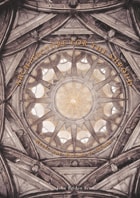
The famed linen cloth preserved in Turin Cathedral has provoked pious devotion, scientific scrutiny, and morbid curiosity. Imprinted with an image many faithful have traditionally believed to be that of the crucified Christ "painted in his own blood," the Shroud remains an object of intense debate and notoriety yet today.
In this amply illustrated volume, John Beldon Scott traces the history of the unique relic, focusing especially on the black-marble and gilt-bronze structure Guarino Guarini designed to house and exhibit it. A key Baroque monument, the chapel comprises many unusual architectural features, which Scott identifies and explains, particulary how the chapel's unprecedented geometry and bizarre imagery convey to the viewer the supernatural powers of the object enshrined there. Drawing on early plans and documents, he demonstrates how the architect's design mirrors the Shroud's strange history as well as political aspirations of its owners, the Dukes of Savoy. Exhibiting it ritually, the Savoy prized their relic with its godly vestige as a means to link their dynasty with divine purposes. Guarini, too, promoted this end by fashioning an illusionary world and sacred space that positioned the duke visually so that he appeared close to the Shroud during its ceremonial display. Finally, Scott describes how the additional need for an outdoor stage for the public showing of the relic to the thousands who came to Turin to see it also helped shape the urban plan of the city and its transformation into the Savoyard capital.
Exploring the mystique of this enigmatic relic and investigating its architectural and urban history for the first time, Architecture for the Shroud will appeal to anyone curious about the textile, its display, and the architectural settings designed to enhance its veneration and boost the political agenda of the ruling family.
[more]
Chicago Apartments
A Century and Beyond of Lakefront LuxuryNeil Harris and Teri J. Edelstein
University of Chicago Press, 2020
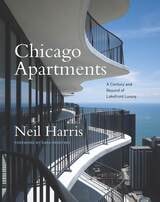
The Chicago lakefront is one of America’s urban wonders. The ribbon of high-rise luxury apartment buildings along the Lake Michigan shore has few, if any, rivals nationwide for sustained architectural significance. This historic confluence of site, money, style, and development lies at the heart of the updated edition of Neil Harris's Chicago Apartments: A Century and Beyond of Lakefront Luxury. The book features more than one hundred buildings, stretching from south to north and across more than a century, each with its own special combination of design choice, floor plans, and background story. Harris, with the assistance of Teri J. Edelstein, proves to be an affable and knowledgeable tour guide, guiding us through dozens of buildings, detailing a host of inimitable development histories, design choices, floor plans, and more along the way. Of particular note are recent structures on the Chicago River and south of the Loop that are proposing new definitions of comfort and extravagance. Featuring nearly 350 stunning images and a foreword by renowned Chicago author Sara Paretsky, this new edition of Chicago Apartments offers a wide-ranging look inside some of the Windy City’s most magnificent abodes.
[more]
In Julia's Kitchen
Practical and Convivial Kitchen Design Inspired by Julia ChildPamela Heyne and Jim Scherer
University Press of New England, 2016
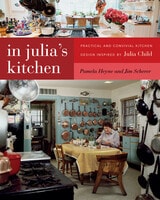
“Most architects I know don’t know anything about cooking, and their designs are not practical for cooks!” Julia Child wrote to architect Pamela Heyne. Indeed, our contemporary kitchens are showplaces with islands, hidden appliances, and cold stone surfaces. They resemble laboratories more than the heart of the home, and they are neither cook friendly nor family friendly. American culinary icon Julia Child embraced the significance of the family meal and was devoted to sharing delicious food with friends and family at the comfortable dining table in her kitchen, a place where conversation was as important as cuisine. Pamela Heyne and Julia’s long-time food photographer Jim Scherer collaborate to share Julia’s kitchen design and lifestyle concepts in this book, which examines the kitchens in her Cambridge, Massachusetts, home; at la Pitchoune, the Childs’ French vacation retreat; and in her television studio. The authors reveal which materials, layouts, and equipment Julia preferred and why, providing practical advice interspersed with Julia’s inimitable, wry humor. They bring Julia’s wisdom into the contemporary kitchen, exploring current trends, including modern green sensibilities, and varied styles of kitchens, featuring architectural designs by Heyne, Jacques Pepin’s kitchen, a renovation Julia Child consulted on for PBS’s This Old House, several celebrity home kitchens, and more.
[more]
The Chicago Tribune Tower Competition
Skyscraper Design and Cultural Change in the 1920sKatherine Solomonson
University of Chicago Press, 2003
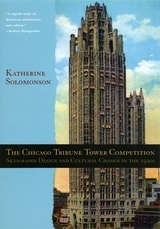
In 1922, the Chicago Tribune sponsored an international competition to design its new corporate headquarters. Both a serious design contest and a brilliant publicity stunt, the competition received worldwide attention for the hundreds of submissions—from the sublime to the ridiculous—it garnered.
In this lavishly illustrated book, Katherine Solomonson tells the fascinating story of the competition, the diverse architectural designs it attracted, and its lasting impact. She shows how the Tribune used the competition to position itself as a civic institution whose new headquarters would serve as a defining public monument for Chicago. For architects, planners, and others, the competition sparked influential debates over the design and social functions of skyscrapers. It also played a crucial role in the development of advertising, consumer culture, and a new national identity in the turbulent years after World War I.
In this lavishly illustrated book, Katherine Solomonson tells the fascinating story of the competition, the diverse architectural designs it attracted, and its lasting impact. She shows how the Tribune used the competition to position itself as a civic institution whose new headquarters would serve as a defining public monument for Chicago. For architects, planners, and others, the competition sparked influential debates over the design and social functions of skyscrapers. It also played a crucial role in the development of advertising, consumer culture, and a new national identity in the turbulent years after World War I.
[more]