Results by title

5 books match the query 'Developing World'
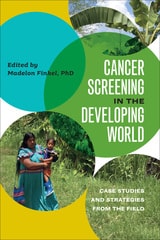
cover of Cancer Screening in the Developing World: Case Studies and Strategies from the Field

Cancer Screening in the Developing World

Case Studies and Strategies from the Field

Edited by Madelon L. Finkel

Dartmouth College Press, 2018

Worldwide, cancer is responsible for one in eight deaths—more than AIDS, tuberculosis, and malaria combined. This global burden starkly illustrates the inequality between the developed and the developing world. While the majority of people living in developed countries receive timely treatment, those living in developing countries are not as fortunate and their survival rates are much lower—not only due to delays in diagnosis, but also to a lack of personnel, a paucity of treatment facilities, and the unavailability of many medications. Routine screening—a mainstay in the developed world—could greatly increase the likelihood of identifying individuals with early stage cancers and thus reduce the number of people who present with advanced disease. This book represents a critical addition to the literature of global health studies. Focusing on cervical, breast, and oral cancers, these case studies highlight innovative strategies in cancer screening in a diverse array of developing countries. The authors discuss common issues and share how obstacles—medical, economic, legal, social, and psychological—were addressed or overcome in specific settings. Each chapter offers an empirical discussion of the nature and scope of a screening program, the methodology used, and its findings, along with a candid discussion of challenges and limitations and suggestions for future efforts.
[more]
cover of Strategies for Primary Health Care: Technologies Appropriate for the Control of Disease in the Developing World

Strategies for Primary Health Care

Technologies Appropriate for the Control of Disease in the Developing World

Edited by Julia A. Walsh and Kenneth S. Warren

University of Chicago Press, 1986

[more]
cover of Tears of the Crocodile: From Rio to Reality in the Developing World

Tears of the Crocodile

From Rio to Reality in the Developing World

Neil Middleton

Pluto Press, 1993

[more]
cover of The Economics of Killing: How the West Fuels War and Poverty in the Developing World

The Economics of Killing

How the West Fuels War and Poverty in the Developing World

Vijay Mehta

Pluto Press, 2012

Globalisation has created an interconnected world, but has not diminished violence, militarism and inequality. The Economics of Killing describes how the power of global elites, entrenched under globalisation, has created a deadly cycle of violence.

In this groundbreaking work, Vijay Mehta shows how attempts at peaceful national development are routinely blocked by Western powers. He locates the 2008 financial crisis in US attempts to block China's model of development. He shows how Europe and the US conspire with regional dictators to prevent countries from developing advanced industries, and how this system has fed terrorism.

Mehta argues that a different world is possible, based on policies of disarmament, demilitarisation and sustainable development. This original and thought-provoking book will be of great interest to anyone concerned about the consequences of endless war fuelled by the West.
[more]
cover of Transformative Political Leadership: Making a Difference in the Developing World

Transformative Political Leadership

Making a Difference in the Developing World

Robert I. Rotberg

University of Chicago Press, 2012

Accomplished political leaders have a clear strategy for turning political visions into reality. Through well-honed analytical, political, and emotional intelligence, leaders chart paths to promising futures that include economic growth, material prosperity, and human well-being. Alas, such leaders are rare in the developing world, where often institutions are weak and greed and corruption strong—and where responsible leadership therefore has the potential to effect the greatest change.
          
In Transformative Political Leadership, Robert I. Rotberg focuses on the role of leadership in politics and argues that accomplished leaders demonstrate a particular set of skills. Through illustrative case studies of leaders who have performed ably in the developing world—among them Nelson Mandela in South Africa, Seretse Khama in Botswana, Lee Kuan Yew in Singapore, and Kemal Ataturk in Turkey—Rotberg examines how these leaders transformed their respective countries. The importance of capable leadership is woefully understudied in political science, and this book will be an important tool in exploring how leaders lead and how nations and institutions are built.
[more]