Results by title
12 books match the query 'Diabetes'
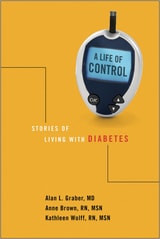
A Life of Control
Stories of Living with DiabetesAlan L. Graber
Vanderbilt University Press, 2010
The people who describe their experiences with diabetes range from teenagers to physicians, immigrants, athletes, pregnant women, accountants, a prisoner, and a dairy farmer. They speak of the variety of ways they handle monitoring, diet, insurance coverage, sports, and fashion. Some talk of how they manage to drive trucks for a living or, for recreation, fly airplanes or go spelunking. Many speak frankly of their anxieties and frustrations.
The authors acknowledge that both the patient and clinician have a story about their relationship, and describe the richness and tension in their interaction. Families, too, are sources of both support and conflict. These relationships are acknowledged in the organization of the book, which is divided into sections defined by the main elements of diabetes control: patient self-determination, the role of the family, the social situation, and the patient-clinician encounter.
The book provides a wealth of information about diabetes, including material on prevention, complications, and new technology, as well as a superb glossary, but it is not intended as a textbook on diabetes or as a self-care manual for patients. Rather the book provides a textured account of the health professional's view of diabetes control and the perspective of the patient whose life is complicated by diabetes.
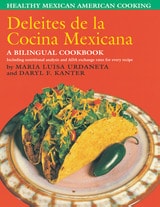
Deleites de la Cocina Mexicana
Healthy Mexican American CookingBy Maria Luisa Urdaneta and Daryl F. Kanter
University of Texas Press, 1996
Mexican food, Tex-Mex, Southwestern cuisine—call it what you will, the foods that originated in Mexico have become everyone's favorites. Yet as we dig into nachos and enchiladas, many people worry about the fats and calories that traditional Mexican food contains.
Deleites de la Cocina Mexicana proves that Mexican cooking can be both delicious and healthy. In this bilingual cookbook, Maria Luisa Urdaneta and Daryl F. Kanter provide over 200 recipes for some of the most popular Mexican dishes-guacamole, frijoles, Spanish rice, chiles rellenos, chile con carne, chalupas, tacos, enchiladas, fajitas, menudo, tamales, and flan-to name only a few. Without sacrificing a bit of flavor, the authors have modified the recipes to increase complex carbohydrates and total dietary fiber, while decreasing saturated and total fats. These modifications make the recipes suitable for people with diabetes-and all those who want to reduce the fats and calories in their diet. Each recipe also includes a nutritional analysis of calories, fats, sodium, etc., and American Diabetic Association exchange rates.
Because diabetes is a growing problem in the Mexican-American community, Deleites de la Cocina Mexicana is vital for all those who need to manage their diet without giving up the foods they love. Let it be your one-stop guide to cooking and eating guilt-free Mexican food.

Diabetes among the Pima
Stories of SurvivalCarolyn Smith-Morris
University of Arizona Press, 2006
Click here for a Facilitator’s Guide to Diabetes among the Pima
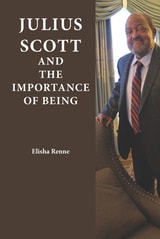
Julius Scott and the Importance of Being
Elisha P. Renne
Michigan Publishing Services, 2024
This biography of Julius Scott is based on primary and secondary sources and focuses on aspects of Julius’s life in order to underscore the personal connection between scholarly achievement, his experiences of living the United States as an African American, and the relentless consequences of having type 1 diabetes. The book, Julius Scott and the Importance of Being, also underscores the importance of documenting the continuing significance of race and religion in political life in the US and the Caribbean.
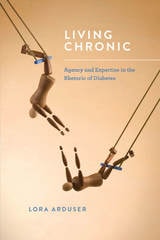
Living Chronic
Agency and Expertise in the Rhetoric of DiabetesLora Arduser
The Ohio State University Press, 2017
Diabetes, referred to as an epidemic for more than a decade, remains one of our most significant health issues in the twenty-first century. Because self-management is an important component of living with the disease, the biomedical concept of patient agency has long stressed notions of individual responsibility and autonomy. However, dramatic shifts in both health care and cultural practices call for a reassessment of traditional definitions of patient agency.
Lora Arduser’s Living Chronic: Agency and Expertise in the Rhetoric of Diabetes answers this call with a unique rhetorical examination of one of the most critical issues in contemporary health: how we live and work with being chronic. Through her perceptive analysis of the discourse of both people with diabetes and health care providers, Arduser presents a new model for patient agency—one that advocates for a relational, fluid concept of agency that blurs the boundaries between medical experts and patients. Her thought-provoking use of bodily and rhetorical plasticity crafts a multidimensional picture of patient agency that profoundly affects how rhetorical scholars, people living with chronic illness, and health care providers can forge patient-centered discourse and practices.
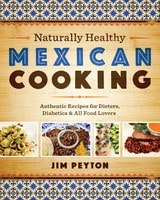
Naturally Healthy Mexican Cooking
Authentic Recipes for Dieters, Diabetics, and All Food LoversBy Jim Peyton
University of Texas Press, 2014
Just about everyone loves Mexican food, but should you eat it if you want to manage your weight or diabetes? Yes, absolutely! There are literally hundreds of authentic Mexican dishes that are naturally healthy—moderate in calories, fat, and sugar—and completely delectable. In Naturally Healthy Mexican Cooking, Jim Peyton presents some two hundred recipes that have exceptional nutrition profiles, are easy to prepare, and, most important of all, taste delicious.
Peyton starts from the premise that for any diet to work, you have to enjoy the food you’re eating. Substitutions that alter the taste and pleasure of food, such as nonfat yogurt for mayonnaise, have no place here. Instead, you’ll find tasty, highly nutritious, low-calorie dishes from the various schools of Mexican and Mexican American cooking in Texas, New Mexico, Arizona, and California. From traditional meat, seafood, and vegetarian entrees and antojitos mexicanos, including tacos, enchiladas, and tamales, to upscale alta cocina mexicana such as shrimp ceviche and mango salsa, these recipes are authentic, simple for home cooks to prepare with supermarket ingredients, flavorful, and fully satisfying in moderate portions. Every recipe includes nutritional analysis—calories, protein, carbs, fat, cholesterol, fiber, sugar, and sodium. In addition to the recipes, Peyton offers helpful information on diet and healthy eating, Mexican cooking and nutrition, ingredients, cooking techniques, and cooking equipment.
Try the recipes in Naturally Healthy Mexican Cooking, and you’ll discover that comfort food can be both delicious and good for you. ¡Buen provecho!
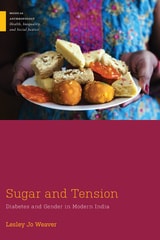
Sugar and Tension
Diabetes and Gender in Modern IndiaWeaver, Lesley Jo
Rutgers University Press, 2019

The Discovery of Insulin
Michael Bliss
University of Chicago Press, 1982
The Discovery of Insulin
Enlarged EditionMichael Bliss
University of Chicago Press, 2021
When insulin was discovered in the early 1920s, even jaded professionals marveled at how it brought starved, sometimes comatose patients with diabetes back to life. Defying the average timeline, the 1923 Nobel Prize in Physiology or Medicine was awarded for its discovery. To recount the fascinating story behind the discovery of insulin, in this classic work Michael Bliss draws on archival records and personal interviews with witnesses to the events. He unearths scientists’ memoirs and confidential appraisals of insulin by members of the Nobel Committee, bringing science to life and resolving a longstanding controversy about scientific collaboration at its most fractious and fascinating: who among the Canadian team of Frederick Banting, Charles Best, James Collip, and John Macleod ultimately deserves credit for the discovery of insulin? Or is credit due farther afield—to Georg Zuelzer in Berlin, E.L. Scott in Chicago, Israel Kleiner in New York, Nicolas Paulescu in Bucharest, John Murlin in Rochester?
Bliss’s life-and-death saga illuminates one of the most important breakthroughs in the history of medicine. With a new preface by the author and a foreword by historian Alison Li, this enlarged edition celebrates the lasting impact of insulin’s discovery and ongoing importance.
The Discovery of Insulin
Twenty-fifth Anniversary EditionMichael Bliss
University of Chicago Press, 2007

The Medical Library Association Guide to Finding Out about Diabetes
The Best Print and Electronic ResourcesDana L. Ladd
American Library Association, 2013