Results by title
23 books match the query 'Dialectic'
A Commentary on Jean-Paul Sartre's Critique of Dialectical Reason, Volume 1, Theory of Practical Ensembles
Joseph S. Catalano
University of Chicago Press, 1986
A Study of Dialectic in Plato's Parmenides
Eric Sanday
Northwestern University Press, 2014
Adventures of the Dialectic
Maurice Merleau-Ponty
Northwestern University Press, 1973

Brazil and the Dialectic of Colonization
Alfredo Bosi
University of Illinois Press, 2015
Portugal extracted wealth from its Brazilian colony. Slaves--first indigenous peoples, later Africans--mined its ore and cut its sugarcane. From the customs of the colonists and the aspirations of the enslaved rose Brazil. Bosi scrutinizes signal points in the creation of Brazilian culture--the plays and poetry, the sermons of missionaries and Jesuit priests, the Indian novels of José de Alencar and the Voices of Africa of poet Castro Alves. His portrait of the country's response to the pressures of colonial conformity offers a groundbreaking appraisal of Brazilian culture as it emerged from the tensions between imposed colonial control and the African and Amerindian cults--including the Catholic-influenced ones--that resisted it.

Capitalism and the Dialectic
The Uno-Sekine Approach to Marxian Political EconomyJohn R. Bell
Pluto Press, 2009
From the 1960s to the 1990s the ground-breaking Japanese economists Kozo Uno and Thomas Sekine developed a masterful reconfiguration of Marxist economics. The most well-known aspect of which is the levels of analysis approach to the study of capitalism.
Written in Japanese, the Uno-Sekine approach to Marx's work is little understood in West. John Bell seeks to correct this, explaining how problematic elements of Marxian Political Economy such as the law of value and the law of relative surplus population can be solved by using a more rigorous dialectical analysis.
Bell's clear and accessible synthesis provides economists with the tools to interrogate capitalism in a more powerful way than ever before.

Control and Crisis in Colonial Kenya
The Dialectic of DominationBruce Berman
Ohio University Press, 1990
This history of the political economy of Kenya is the first full length study of the development of the colonial state in Africa.
Professor Berman argues that the colonial state was shaped by the contradictions between maintaining effective political control with limited coercive force and ensuring the profitable articulation of metropolitan and settler capitalism with African societies.
This dialectic of domination resulted in both the uneven transformation of indigenous societies and in the reconstruction of administrative control in the inter-war period.
The study traces the evolution of the colonial state from its skeletal beginnings in the 1890s to the complex bureaucracy of the post-1945 era which managed the growing integration of the colony with international capital. These contradictions led to the political crisis of the Mau Mau emergency in 1952 and to the undermining of the colonial state.
The book is based on extensive primary sources including numerous interviews with Kenyan and British participants. The analysis moves from the micro-level of the relationship of the District Commissioners and the African population to the macro-level of the state and the political economy of colonialism.
Professor Berman uses the case of Kenya to make a sophisticated contribution to the theory of the state and to the understanding of the dynamics of the development of modern African political and economic institutions.
Dance of the Dialectic
STEPS IN MARX'S METHODBertell Ollman
University of Illinois Press, 2003
Marx made extremely creative use of dialectical method to analyze the origins, operation, and direction of capitalism. Unfortunately, his promised book on method was never written, so that readers wishing to understand and evaluate Marx's theories, or to revise or use them, have had to proceed without a clear grasp of the dialectic in which the theories are framed. The result has been more disagreement over "what Marx really meant" than over the writings of any other major thinker.
In putting Marx's philosophy of internal relations and his use of the process of abstraction--two little-studied aspects of dialectics--at the center of this account, Ollman provides a version of Marx's method that is at once systematic, scholarly, clear and eminently useful.
Ollman not only sheds important new light on what Marx really meant in his varied theoretical pronouncements, but in carefully laying out the steps in Marx's method makes it possible for a reader to put the dialectic to work in his or her own research. He also convincingly argues the case for why social scientists and humanists as well as philosophers should want to do so.
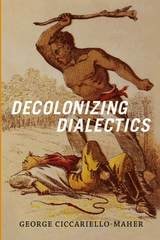
Decolonizing Dialectics
Geo Maher
Duke University Press, 2017
Dialectic and Dialogue
Plato's Practice of Philosophical InquiryFrancisco J. Gonzalez
Northwestern University Press, 1998
Dialectic
A Scholarly Journal of Thought Leadership, Education and Practice in the Discipline of Visual Communication Design - Volume II, Issue II - Summer 2019Michael R. Gibson
Michigan Publishing Services, 2019
Dialectic
A Scholarly Journal of Thought Leadership, Education and Practice in the Discipline of Visual Communication Design Volume I, Issue I - Winter 2016-17Keith M Owens and Michael Gibson
Michigan Publishing Services, 2017
examination of issues that affect design education, research,
and inquiry into their effects on the practice of design. Michigan
Publishing, the hub of scholarly publishing at the University of Michigan,
publishes Dialectic on behalf of the AIGA (American Institute of
Graphic Arts) Design Educators Community (DEC).
Dialectic
A Scholarly Journal of Thought Leadership, Education and Practice in the Discipline of Visual Communication Design Volume I, Issue II - Fall 2017Michael R. Gibson and Keith M. Owens (Editors)
Michigan Publishing Services, 2017
examination of issues that affect design education, research,
and inquiry into their effects on the practice of design. Michigan
Publishing, the hub of scholarly publishing at the University of Michigan,
publishes Dialectic on behalf of the AIGA (American Institute of
Graphic Arts) Design Educators Community (DEC).
Dialectic
A scholarly journal of thought leadership, education and practice in the discipline of visual communication design - Volume II, Issue I - Summer 2018Michael R. Gibson
Michigan Publishing Services, 2018
Dialectic seeks to publish scholarship, analytical study and criticism that will enlighten and inform a diverse audience of design educators engaged not only in classroom teaching experiences but also in differing forms of research and professional practice. The journal's advisory and editorial boards recognize that design education, along with design research and professional practice, exist in relationships that are now broadly informed by theoretical frameworks and applications of knowledge derived from the social and applied sciences, the humanities, and other professions such as business, education, information technology and media studies. The outcomes of these synergies often result in the invention, discovery, understanding, and dissemination of new knowledge, innovation, and best practices.
Dialogue, Dialectic and Conversation
A Social Perspective on the Function of WritingGregory Clark. Foreword by Robert J. Connors
Southern Illinois University Press, 1990
This book articulates an ethics for reading that places primary responsibility for the social influences of a text on the response of its readers.
We write and read as participants in a process through which we negotiate with others whom we must live or work with and with whom we share values, beliefs, and actions. Clark draws on current literary theory, rhetoric, philosophy, communication theory, and composition studies as he builds on this argument.
Because reading and writing are public actions that address and direct matters of shared belief, values, and action, reading and writing should be taught as public discourse. We should teach not writing or reading so much as the larger practice of public discourse—a discourse that sustains the many important communities of which students are and will be active members.

Gadamer’s Hermeneutics
Between Phenomenology and DialecticRobert J. Dostal
Northwestern University Press, 2022
The book situates Gadamer’s hermeneutics in three important ways: in relation to the contestability of the legacy of the Enlightenment project; in relation to the work of his mentor, Martin Heidegger; and in relation to Gadamer’s reading of Plato and Aristotle. Dostal explores both Gadamer’s claim on the Enlightenment and his ambivalence toward it. He considers Gadamer’s dependence on Heidegger’s accomplishment while pointing out the ways in which Gadamer charted his own course, rejecting his teacher’s reading of Plato and his antihumanism. Dostal points out notable differences in the philosophers’ politics as well. Finally, Dostal mediates between Gadamer’s hermeneutics and what might be called philological hermeneutics. His analysis defends the civic humanism that is the culmination of the philosopher’s hermeneutics, a humanism defined by moral education, common sense, judgment, and taste. Supporters and critics of Gadamer’s philosophy will learn much from this major achievement.

Inwardness and Existence
Subjectivity in/and Hegel, Heidegger, Marx, and FreudWalter A. Davis
University of Wisconsin Press, 1989
Mastery and Escape
T. S. Eliot and the Dialectic of ModernismJewel Spears Brooker
University of Massachusetts Press, 1994
This seminal scholarly work examines T. S. Eliot's literary development and philosophical outlook through the lens of modernist dialectics, exploring the tension between mastery and escape as central to understanding both his poetry and critical thought. Edited and written by acclaimed Eliot scholar Jewel Spears Brooker, this volume presents expert studies of key intellectual influences on Eliot's modernism—particularly Stéphane Mallarmé, Sir James George Frazer, F. H. Bradley, and T. E. Hulme—yielding fresh and original insights into how these thinkers shaped the poet's artistic vision.
Through careful textual analysis and intellectual history, Brooker investigates how Eliot grappled with fundamental modernist anxieties: the desire for artistic mastery and transcendence alongside the simultaneous impulse toward escape from the constraints of tradition, rationality, and conventional form. She demonstrates how Eliot's poetry and prose reflect a dialectical movement, a constant interplay between opposing forces, that defines both his modernist aesthetics and his philosophical positions.
An essential resource for scholars seeking comprehensive understanding of modernism's philosophical foundations and poetic achievements, Brooker is devoted to tracing both dialectical movements and biographical developments in Eliot's career.
Philosophy in Dialogue
Plato's Many DevicesGary Alan Scott
Northwestern University Press, 2007
The essays gathered here each examine vital aspects of Plato’s many methods, considering his dialogues in relation to Thucydides and Homer, narrative strategies and medical practice, images and metaphors. They offer surprising new research into such much-studied works as The Republic as well as revealing views of lesser-known dialogues like the Cratylus and Philebus. With reference to thinkers such as Heidegger, Gadamer, and Sartre, the authors place the Platonic dialogues in an illuminating historical context. Together, their essays should reinvigorate the scholarly examination of the way Plato’s dialogues “work”—and should prompt a reconsideration of how the form of Plato’s philosophical writing bears on the Platonic conception of philosophy.
Reading Cusanus
Metaphor and Dialectic in a Conjectural UniverseClyde Lee Miller
Catholic University of America Press, 2019
Spirit and System
Media, Intellectuals, and the Dialectic in Modern German CultureDominic Boyer
University of Chicago Press, 2005
Boyer analyzes the creation and mediation of the social knowledge of "German-ness" from nineteenth-century university culture and its philosophies of history, to the media systems and redemptive public cultures of the Third Reich and the German Democratic Republic, to the present-day experiences of former East German journalists seeking to explain life in post-unification Germany. Throughout this study, Boyer reveals how dialectical knowledge of "German-ness"—that is, knowledge that emphasizes a cultural tension between an inner "spirit" and an external "system" of social life —is modeled unconsciously upon intellectuals' self-knowledge as it tracks their fluctuation between alienation and utopianism in their interpretations of nation and modernity.
The Birth of Theory
Andrew Cole
University of Chicago Press, 2014
By uncovering these theoretical filiations across time, The Birth of Theory will not only change the way we read Hegel, but also the way we think about the histories of theory. With chapters that powerfully reanimate the overly familiar topics of ideology, commodity fetishism, and political economy, along with a groundbreaking reinterpretation of Hegel’s famous master/slave dialectic, The Birth of Theory places the disciplines of philosophy, literature, and history in conversation with one another in an unprecedented way. Daring to reconcile the sworn enemies of Hegelianism and Deleuzianism, this timely book will revitalize dialectics for the twenty-first century.
The Emergence of Dialectical Theory
Philosophy and Political InquiryScott Warren
University of Chicago Press, 1984
Scott Warren’s ambitious and enduring work sets out to resolve the ongoing identity crisis of contemporary political inquiry. In the Emergence of Dialectical Theory, Warren begins with a careful analysis of the philosophical foundations of dialectical theory in the thought of Kant, Hegel, and Marx. He then examines how the dialectic functions in the major twentieth-century philosophical movements of existentialism, phenomenology, neomarxism, and critical theory. Numerous major and minor philosophers are discussed, but the emphasis falls on two of the greatest dialectical thinkers of the previous century: Maurice Merleau-Ponty and Jürgen Habermas.
Warren’s shrewd critique is indispensable to those interested in the history of social and political thought and the philosophical foundations of political theory. His work offers an alternative for those who find postmodernism to be at a philosophical impasse.
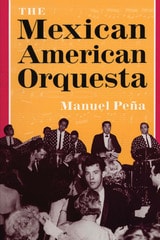
The Mexican American Orquesta
Music, Culture, and the Dialectic of ConflictBy Manuel Peña
University of Texas Press, 1999
The Mexican American orquesta is neither a Mexican nor an American music. Relying on both the Mexican orquesta and the American dance band for repertorial and stylistic cues, it forges a synthesis of the two. The ensemble emerges historically as a powerful artistic vehicle for the expression of what Manuel Peña calls the "dialectic of conflict." Grounded in ethnic and class conflict, this dialectic compels the orquesta and its upwardly mobile advocates to waver between acculturation and ethnic resistance. The musical result: a complex mesh of cultural elements—Mexican and American, working- and middle-class, traditional and contemporary.
In this book, Manuel Peña traces the evolution of the orquesta in the Southwest from its beginnings in the nineteenth century through its pinnacle in the 1970s and its decline since the 1980s. Drawing on fifteen years of field research, he embeds the development of the orquesta within a historical-materialist matrix to achieve the optimal balance between description and interpretation. Rich in ethnographic detail and boldly analytical, his book is the first in-depth study of this important but neglected field of artistic culture.