Results by title
11 books match the query 'Dialectics'
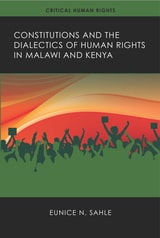
Constitutions and the Dialectics of Human Rights in Malawi and Kenya
Eunice N. Sahle
University of Wisconsin Press, 2026
As in many other countries, the protection of human rights and other practices of constitutionalism remains uneven in Malawi and Kenya. In this book, Eunice N. Sahle argues that the adoption in 1994 and 2010 in Malawi and Kenya, respectively, of new constitutional frameworks, which have the markings of “critical constitutional events,” provided significant openings for the promotion of human rights. Nonetheless, the emergence of such opportunities does not mean that the protection of human rights is automatic. Sahle zeroes in on the tension between the possibilities of human rights promotion on one hand, and the historical and contemporary factors influencing that process on the other. In that regard, her analysis shows the importance and limits of transformative constitutional frameworks as tools for social change. Further, by focusing on the promotion of human rights by a diverse range of social actors—individuals, civil society, organizations, and public institutions—she demonstrates the need to broaden who “counts” as an agent of human rights and to go beyond a strictly state-centric approach.

Man-Made Woman
The Dialectics of Cross-DressingCiara Colin Cremin
Pluto Press, 2017
Interweaving personal narrative with political discourse, Man-Made Woman is a vivid exploration of gender, identity, fetishism, aesthetics, and popular culture through the lenses of feminism, Marxism, and psychoanalytic theory. Cremin’s anti-moralistic approach dismantles the abjection associated with male-to-female cross dressing, examines the causes of repression, and considers what it means to publicly materialize desire on one’s body. Man-Made Woman is an experiment that ultimately draws both author and reader into a conflict with their material, ideological, and libidinal relationship to patriarchal-capitalism.
With an emancipatory and empowering voice, Cremin interrogates her, his, and our relationship to the gender binary. In light of recent debate surrounding transgender bathroom rights in the United States, Man-Made Woman is a deeply personal account that offers timely insight for anyone interested in contemporary trans politics and queer theory.
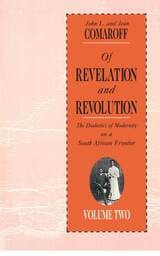
Of Revelation and Revolution, Volume 2
The Dialectics of Modernity on a South African FrontierJohn L. Comaroff and Jean Comaroff
University of Chicago Press, 1997
The Comaroffs trace many of the major themes of twentieth-century South African history back to these formative encounters. The relationship between the British evangelists and the Southern Tswana engendered complex exchanges of goods, signs, and cultural markers that shaped not only African existence but also bourgeois modernity "back home" in England. We see, in this volume, how the colonial attempt to "civilize" Africa set in motion a dialectical process that refashioned the everyday lives of all those drawn into its purview, creating hybrid cultural forms and potent global forces which persist in the postcolonial age.
This fascinating study shows how the initiatives of the colonial missions collided with local traditions, giving rise to new cultural practices, new patterns of production and consumption, new senses of style and beauty, and new forms of class distinction and ethnicity. As noted by reviewers of the first volume, the Comaroffs have succeeded in providing a model for the study of colonial encounters. By insisting on its dialectical nature, they demonstrate that colonialism can no longer be seen as a one-sided relationship between the conquering and the conquered. It is, rather, a complex system of reciprocal determinations, one whose legacy is very much with us today.

Open Marxism 1
Dialectics and HistoryWerner Bonefeld
Pluto Press, 1992
In this study, distinguished international contributors project an ‘open’ Marxism - a rejection of the determinism and positivism which characterise so much of contemporary left-wing thought. Topics covered in the two volumes include Marxism and political economy, historical materialism, dialectics, state theory, class, fetishism and the periodisation of capitalist development.
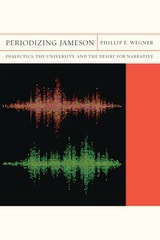
Periodizing Jameson
Dialectics, the University, and the Desire for NarrativePhillip E. Wegner
Northwestern University Press, 2014
For a half century, the American intellectual Fredric Jameson has been a driving force in literary and cultural theory. In Periodizing Jameson, Phillip E. Wegner builds upon Jameson’s unique dialectical method to demonstrate the value of Jameson’s tools—periodization, the fourfold hermeneutic, and the Greimasian semiotic square, among others—and to develop virtuoso readings of Jameson’s own work and the history of the contemporary American university in which it unfolds.
Wegner shows how Jameson’s work intervenes in particular social, cultural, and political situations, using his scholarship both to develop original explorations of nineteenth-century fiction, popular films, and other promiment theorists, and to examine the changing fortunes of theory itself. In this way, Periodizing Jameson casts new light on the potential of and challenges to humanist intellectual work in the present.
Political Film
The Dialectics of Third CinemaMike Wayne
Pluto Press, 2001
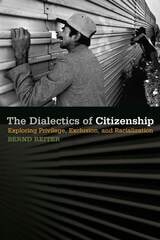
The Dialectics of Citizenship
Exploring Privilege, Exclusion, and RacializationBernd Reiter
Michigan State University Press, 2013
The Dialectics of Legal Repression
Black Rebels Before the American Criminal CourtsIsaac D. Balbus
Russell Sage Foundation, 2015
The Dialectics of Our America
Genealogy, Cultural Critique, and Literary HistoryJosé David Saldívar
Duke University Press, 1991
Saldívar pursues this goal through an array of oppositional critical and creative practices. He analyzes a range of North American writers of color (Rolando Hinojosa, Gloria Anzaldúa, Arturo Islas, Ntozake Shange, and others) and Latin American authors (José Martí, Roberto Fernández Retamar, Gabriel García Márquez, and others), whose work forms a radical critique of the dominant culture, its politics, and its restrictive modes of expression. By doing so, Saldívar opens the traditional American canon to a dialog with other voices, not just the voices of national minorities, but those of regional cultures different from the prevalent anglocentric model.
The Dialectics of Our America, in its project to expand the “canon” and define a pan-American literary tradition, will make a critical difference in ongoing attempts to reconceptualize American literary history.
The Dialectics of Shopping
Daniel Miller
University of Chicago Press, 2001
Miller's companions are mostly women who confront these contradictions as they shop. They placate their children with items that combine nutrition with taste or usefulness with style. They decide between shopping at the local store or at the impersonal, but less expensive, mall. They tell of their sympathy for environmental concerns but somehow avoid much ethical shopping. They are faced with a selection of shops whose shifts and mergers often reveal extraordinary stories of their own. Filled with entertaining—and thoroughly familiar—stories of shoppers and shops, this book will interest scholars across a broad range of disciplines.

The Philippine Temptation
Dialectics of Philippines-U.S. Literary RelationsE. San Juan
Temple University Press, 1996