Results by title
27 books match the query 'Dialects'

A Grammar Of Misantla Totonac
Carolyn Mackay
University of Utah Press, 1999

A Grammar of Spoken Brazilian Portuguese
Earl W. Thomas
Vanderbilt University Press, 1987
American Regional Dialects
A Word GeographyCraig M. Carver
University of Michigan Press, 1987
An Introduction to the Shoshoni Language
Dammen DaigwapeDrusilla Gould
University of Utah Press, 2003
Listen to the open source audio companion to this book:
An Introduction to the Shoshoni Language Chapter 1
An Introduction to the Shoshoni Language Chapter 2
An Introduction to the Shoshoni Language Chapter 3
An Introduction to the Shoshoni Language Chapter 4
An Introduction to the Shoshoni Language Chapter 5
An Introduction to the Shoshoni Language Chapter 6
An Introduction to the Shoshoni Language Chapter 7
An Introduction to the Shoshoni Language Chapter 8
Annotated Bibliography of Southern American English
James B. McMillan
University of Alabama Press, 1989
The only book-length bibliography on the speech of the American South, this volume focuses on the pronunciation, vocabulary, grammar, naming practices, word play, and other aspects of language that have interested researchers and writers for two centuries. Compiled here are the works of linguists, historians, anthropologists, sociologists, and educators, as well as popular commentators.
With over 3,800 entries, this invaluable resource is a testament to the significance of Southern speech, long recognized as a distinguishing feature of the South, and the abiding interest of Southerners in their speech as a mark of their identity. The entries encompass Southern dialects in all their distinctive varieties—from Appalachian to African American, and sea islander to urbanite.
Appalachian Englishes in the Twenty-First Century
Kirk Hazen
West Virginia University Press, 2020
A portal to the language scholarship of the last thirty years, Appalachian Englishes in the Twenty-First Century translates state-of-the-art research for a nonspecialist audience, while setting the agenda for further study of language in one of America’s most recognized regions.
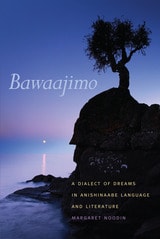
Bawaajimo
A Dialect of Dreams in Anishinaabe Language and LiteratureMargaret Noodin
Michigan State University Press, 2014
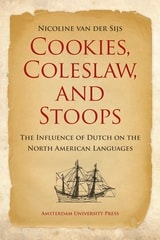
Cookies, Coleslaw, and Stoops
The Influence of Dutch on the North American LanguagesNicoline van der Sijs
Amsterdam University Press, 2010
From Santa Claus (after the Dutch folklore saint Sinterklaas) and his sleigh (the pronunciation of the Dutch slee is almost identical) to a dumbhead talking poppycock, the contributions of the Dutch language to American English are indelibly embedded to some of our most vernacular terms and expressions. The menu in most of our restaurants sports some originally Dutch names, and even our dollar is named after a Dutch coin (daalder). In this captivating volume, the renowned linguist Nicoline van der Sijs glosses over 300 Dutch loan words like these that travelled to the New World on board the Dutch ship the Halve Maan, captained by Henry Hudson, which dropped anchor in Manhattan more than 400 years ago. Surprisingly, the Dutch also gave several Native American languages words for everyday things like “pants”, “cat” and “turkey”. Lively and accessible, the information presented in this volume charts the journey of these words into the American territory and languages, from more obscure uses which maybe have survived in only regional dialects to such ubiquitous contributions to our language like Yankee, cookie, and dope. Each entry marks the original arrival of its term into American English and adds up-to-date information on its evolving meaning, etymology, and regional spread. Not to be missed by anyone with a passion for the history behind our everyday expressions, Cookies, Coleslaw and Stoops is the perfect gift for the linguistic adventurer in us all.
Dialect and Dichotomy
Literary Representations of African American SpeechLisa Cohen Minnick
University of Alabama Press, 2007
Applies linguistics methods for a richer understanding of literary texts and spoken language.
Dialect and Dichotomy outlines the history of dialect writing in English and its influence on linguistic variation. It also surveys American dialect writing and its relationship to literary, linguistic, political, and cultural trends, with emphasis on African American voices in literature.
Furthermore, this book introduces and critiques canonical works in literary dialect analysis and covers recent, innovative applications of linguistic analysis of literature. Next, it proposes theoretical principles and specific methods that can be implemented in order to analyze literary dialect for either linguistic or literary purposes, or both. Finally, the proposed methods are applied in four original analyses of African American speech as represented in major works of fiction of the American South—Mark Twain's Adventures of Huckleberry Finn, Charles W. Chesnutt's The Conjure Woman, William Faulkner's The Sound and the Fury, and Zora Neale Hurston's Their Eyes Were Watching God.
Dialect and Dichotomy is designed to be accessible to audiences with a variety of linguistic and literary backgrounds. It is an ideal research resource and course text for students and scholars interested in areas including American, African American, and southern literature and culture; linguistic applications to literature; language in the African American community; ethnicity and representation; literary dialect analysis and/or computational linguistics; dialect writing as genre; and American English.
Dictionary Of The Maya Language
As Spoken in Hocaba YucatanVictoria Bricker
University of Utah Press, 1998
The Maya language of Yucatan is known as Yucate by linguists, but its speakers refer to it as May. Dialiectical differences are minimal across the peninsula, and the more than 750,000 speakers of Maya can be understood wherever they go. Moreover, it is not only a living language but is of great use to epigraphers working on ancient Maya glyphs.
This dictionary is the culmination of fourteen years’ labor centering on the town and dialect of Hocaba. Whereas other dictionaries of may use Latin paradigms, this is the first to provide a comprehensive, systematic listing of the stems that can be derived from each root and that give Maya its distinctive character. The entries cover the full range of Maya speech, from simple expressions and idioms to compound stems. Maya sample sentences provide a window into the richness of everyday communication, with its mixture of wit, epithets, insults, riddles, aphorisms, and exchanges of information, including a wonderful assortment of metaphorical expressions like "peccary’s eyelashes" for a type of bean, "the end of the road" for marriage, and a verb meaning "to draw breath with puckered mouth after eating chili." Among the cultural domains encompassed by the dictionary are agriculture, architecture, astronomy, culinary practices and recipes, education, folklore, games, humor, medical prescriptions, ritual, toys, and weaving, many of which have roots in the Precolumbian past. In addition to the dictionary entries, this work also contains a short grammar, a botanical index, and bibliography.
Essays in Linguistics
Dialectology, Grammar, and Lexicography in Honor of James B. McmillanJames C. Raymond
University of Alabama Press, 2004
"Raymond and Russell have fashioned a lively, useful volume. . . . The ability and integrity of the contributors make much of the difference, but the editors have given the book direction by soliciting state of the art essays in three fields . . . dialectology (the articles represent area linguistics at its best), grammar and usage (Algeo on usage shibboleths is particularly fine), and lexicography (a delight)."
—Choice
"These essays are quietly unassuming in tone but highly useful."
—Language in Society

Good God but You Smart!
Language Prejudice and Upwardly Mobile CajunsNichole E. Stanford
Utah State University Press, 2016
The study investigates the complicated motivations and cultural concessions of upwardly mobile Cajuns who “choose” to self-censor—to speak Standardized English over the Cajun English that carries their cultural identity. Drawing on surveys of English teachers in four Louisiana colleges, previously unpublished archival data, and Pierre Bourdieu’s theory of the legitimate language, author Nichole Stanford explores how socioeconomic and political pressures rooted in language prejudice make code switching, or self-censoring in public, seem a responsible decision. Yet teaching students to skirt others’ prejudice toward certain dialects only puts off actually dealing with the prejudice. Focusing on what goes on outside classrooms, Stanford critiques code switching and cautions users of code meshing that pedagogical responses within the educational system are limited by the reproductive function of schools. Each theory section includes parallel memoir sections in the Cajun tradition of storytelling to open an experiential window to the study without technical language.
Through its explication of language legitimacy and its grounding in lived experience, Good God but You Smart! is an essential addition to the pedagogical canon of language minority studies like those of Villanueva, Gilyard, Smitherman, and Rose.
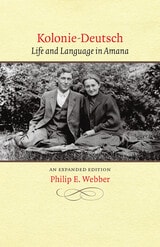
Kolonie-Deutsch
Life and Language in Amana, An Expanded EditionPhilip E. Webber
University of Iowa Press, 1993
Founded as a communal society in 1855 by German Pietists, the seven villages of Iowa’s Amana Colonies make up a community whose crafts, architecture, and institutions reflect—and to an extent perpetuate—the German heritage of earlier residents. In this intriguing blend of sociolinguistic research and stories from Colonists both past and present, Philip Webber examines the rich cultural and linguistic traditions of the Amanas.
Although the Colonies are open to the outside world, particularly after the Great Change of 1932, many distinctive vestiges of earlier lifeways survive, including the local variety of German known by its speakers as Kolonie-Deutsch. Drawing upon interviews with more than fifty Amana-German speakers in 1989 and 1990, Webber explores the nuances of this home-grown German, signaling the development of local microdialects, the changing pattern in the use of German in the Colonies, and the reciprocal influence of English and German on residents’ speech. By letting his sources tell their own stories of earlier days, in which the common message seems to be wir haben fun gehabt or “we had fun working together,” he illuminates the history and unique qualities of each Colony through the prism of language study.
Webber’s introduction to this paperback edition provides an up-to-date itinerary for visitors to the Colonies, information about recent publications on Amana history and culture, and an overview of expanded research opportunities for language study and historical inquiry. The result is an informative and engaging study that will be appreciated by linguists, anthropologists, and historians as well as by general readers interested in these historic villages.
Language Use and Language Change in Brunei Darussalam
Mis Sea#100Peter W. Martin
Ohio University Press, 1996
The oil-rich sultanate of Brunei Darussalam is located on the northern coast of Borneo between the two Malaysian states of Sarawak and Sabah. Though the country is small in size and in population, the variety of language use there provides a veritable laboratory for linguists in the fields of Austronesian linguistics, bilingual studies, and sociolinguistic studies, particularly those dealing with language shift.
This useful reference is divided into three sections: one on varieties of the Malay language used in the country, one on other indigenous languages, and one on the role and form of the English used there. Contributors to the collection include Bruneian scholars as well as established experts in the fields of Austronesian linguistics, sociolinguistics studies, and the description of new varieties of English.
Language Variety in the South Revisited
Cynthia Bernstein
University of Alabama Press, 1994
Top linguists from diverse fields address language varieties in the South.
Language Variety in the South
Perspectives in Black and WhiteMichael B. Montgomery
University of Alabama Press, 1986
Language and Power Reader
Representations of Race in a "Post-Racist" EraRobert Eddy
Utah State University Press, 2014
A Language and Power Reader organizes reading and writing activities for undergraduate students, guiding them in the exploration of racism and cross-racial rhetorics.
Introducing texts written from and about versions of English often disrespected by mainstream Americans, A Language and Power Reader highlights English dialects and discourses to provoke discussions of racialized relations in contemporary America. Thirty selected readings in a range of genres and from writers who work in ?alternative? voices (e.g., Pidgin, African American Language, discourse of international and transnational English speakers) focus on disparate power relations based on varieties of racism in America and how those relations might be displayed, imposed, or resisted across multiple rhetorics. The book also directs student participation and discourse. Each reading is followed by comments and guides to help focus conversation.
Research has long shown that increasing a student?s metalinguistic awareness improves a student?s writing. No other reader available at this time explores the idea of multiple rhetorics or encourages their use, making A Language and Power Reader a welcome addition to writing classrooms.
Lexical Change and Variation in the Southeastern United States, 1930-1990
Ellen Johnson
University of Alabama Press, 1996
This book discusses words used in the Southeast and how they have changed
during the 20th century. It also describes how the lexicon varies according
to the speaker's age, race, education, sex, and place of residence
(urban versus rural; coastal versus piedmont versus mountain). Data collected
in the 1930s as part of the Linguistic Atlas of the Middle and South Atlantic
States project were compared with data collected in 1990 from similar speakers
in the same communities.
The results show that region was the most important
factor in differentiating dialects in the 1930s but that it is the least
important element in the 1990s, with age, education, race, and age all
showing about the same influence on the use of vocabulary. An appendix
contains a tally of the responses given by 78 speakers to 150 questions
about vocabulary items, along with speakers' commentary. Results
from the 1930s may be compared to those from 1990, making this a treasure
trove for anyone interested in regional terms or in how our speech is changing
as the South moves from an agricultural economy through industrialization
and into the information age.
Linguistic Diversity and National Unity
Language Ecology in ThailandWilliam A. Smalley
University of Chicago Press, 1994
Smalley contends that because the people of Thailand perceive their social hierarchy as the normal order, Standard Thai, spoken by members of the higher levels of society, prevails as the uncontested national language. By examining the hierarchy of Thailand's diverse languages and dialects in light of Thai history, education, culture, and religion, Smalley shows how Thailand has been able to keep its many ethnic groups at peace.
Linguistic Diversity and National Unity explores the intricate relationship between language and power and the ways in which social and linguistic rank can be used to perpetuate order.
New Perspectives on Language Variety in the South
Historical and Contemporary ApproachesMichael D. Picone
University of Alabama Press, 2015
Beginning with an introduction to American Indian languages of the Southeast, five fascinating essays discuss indigenous languages, including Caddo, Ofo, and Timucua, and evidence for the connection between the Pre-Columbian Southeast and the Caribbean.
Five essays explore the earlier Englishes of the South, covering topics such as the eighteenth century as the key period in the differentiation of Southern American English and the use of new quantitative methods to trace the transfer of linguistic features from England to America. They examine a range of linguistic resources, such as plantation overseers’ writings, modern blues lyrics, linguistic databases, and lexical and locutional compilations that reveal the region’s distinctive dialectal traditions.
New Perspectives on Language Variety in the South: Historical and Contemporary Approaches widens the scope of inquiry into the linguistic influences of the African diaspora as evidenced in primary sources and records. A comprehensive essay redefines the varieties of French in Louisiana, tracing the pathway from Colonial Louisiana to the emergence of Plantation Society French in a diglossic relationship with Louisiana Creole. A further essay maps the shift from French to English in family documents.
An assortment of essays on English in the contemporary South touch on an array of compelling topics from discourse strategies to dialectal emblems of identity to stereotypes in popular perception.
Essays about recent Latino immigrants to the South bring the collection into the twenty-first century, taking into account the dramatic increase in the population of Spanish speakers and illuminating the purported role of “Spanglish,” the bilingual lives of Spanish-speaking Latinos in Mississippi, and the existence of regional Spanish dialectal diversity.
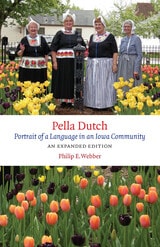
Pella Dutch
Portrait of a Language in an Iowa Community, An Expanded EditionPhilip E. Webber
University of Iowa Press, 1988
Speaking of Alabama
The History, Diversity, Function, and Change of LanguageEdited by Thomas E. Nunnally
University of Alabama Press, 2019
Thomas E. Nunnally’s fascinating volume presents essays by linguists who examine with affection and curiosity the speech varieties occurring both past and present across Alabama. Taken together, the accounts in this volume offer an engaging view of the major features that characterize Alabama’s unique brand of southern English.
Written in an accessible manner for general readers and scholars alike, Speaking of Alabama includes such subjects as the special linguistic features of the Southern drawl, the “phonetic divide” between north and south Alabama, “code-switching” by African American speakers in Alabama, pejorative attitudes by Alabama speakers toward their own native speech, the influence of foreign languages on Alabama speech to the vibrant history and continuing influence of non-English languages in the state, as well as ongoing changes in Alabama’s dialects.
Adding to these studies is a foreword by Walt Wolfram and an afterword by Michael B. Montgomery, both renowned experts in southern English, which place both the methodologies and the findings of the volume into their larger contexts and point researchers to needed work ahead in Alabama, the South, and beyond. The volume also contains a number of useful appendices, including a guide to the sounds of Southern English, a glossary of linguistic terms, and online sources for further study.
Language, as presented in this collection, is never abstract but always examined in the context of its speakers’ day-to-day lives, the driving force for their communication needs and choices. Whether specialist or general reader, Alabamian or non-Alabamian, all readers will come away from these accounts with a deepened understanding of how language functions between individuals, within communities, and across regions, and will gain a new respect for the driving forces behind language variation and language change.

The Afro-Bolivian Spanish Determiner Phrase
A Microparametric AccountSandro Sessarego
The Ohio State University Press, 2014
This dialect presents phenomena that offer a real challenge to current linguistic theory. The Afro-Bolivian Spanish Determiner Phrase elaborates on the importance of enhancing a stronger dialogue between formal generative theory and sociolinguistic methodology, in line with recent work in the field of minimalist syntax. Sessarego’s study combines sociolinguistic techniques of data collection with generative models of data analysis to obtain more fine-grained, empirically testable generalizations.
The Politics of Appalachian Rhetoric
Amanda E Hayes
West Virginia University Press, 2018
In exploring the ways that Appalachian people speak and write, Amanda E. Hayes raises the importance of knowing and respecting communication styles within a marginalized culture. Diving deep into the region’s historical roots—especially those of the Scotch-Irish and their influence on her own Appalachian Ohio—Hayes reveals a rhetoric with its own unique logic, utility, and poetry.
Hayes also considers the headwinds against Appalachian rhetoric, notably ideologies about poverty and the biases of the school system. She connects these to challenges that Appalachian students face in the classroom and pinpoints pedagogical and structural approaches for change.
Throughout, Hayes blends conventional scholarship with autobiography, storytelling, and language, illustrating Appalachian rhetoric’s validity as a means of creating and sharing knowledge.

Utah English
David Ellingson Eddington
University of Utah Press, 2023
Is English in Utah truly unique? If so, what makes it different? Which stereotypes about how Utahns speak are completely off base and which are accurate? To answer these questions, linguist David Eddington surveyed more than 1,700 Utahns in an effort to better understand and systematize the peculiarities of English spoken in the Beehive State. This resulting book is a sophisticated data analysis that presents results in an accessible and often humorous fashion.
Utah is linguistically interesting for a variety of reasons. The massive numbers of immigrants who flocked there in the first years of European settlement, its relative isolation until completion of the transcontinental railroad, and its large Latter-day Saint population signaled greater linguistic commonality than is often the case in other western states. The book argues that religious affiliation, or lack thereof, might particularly play a role in the features that make up Utah English.
An accessible study of dialect in Utah, this book explores how social and geographic factors influence the pronunciations and regional expressions that characterize Utah English. Reflecting years of dealing with misconceptions about dialect both in and out of the classroom, Eddington covers vocabulary, individual words, syntax, vowels, and consonants, blending a serious and sometimes humorous approach to his research.
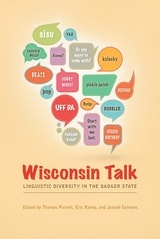
Wisconsin Talk
Linguistic Diversity in the Badger StateEdited by Thomas Purnell, Eric Raimy, and Joseph Salmons
University of Wisconsin Press, 2013
An engaging survey for both general readers and language scholars, Wisconsin Talk brings together perspectives from linguistics, history, cultural studies, and geography to illuminate why language matters in our everyday lives. The authors highlight such topics as:
• words distinctive to the state
• how recent and earlier immigrants have negotiated cultural and linguistic challenges
• the diversity of bilingual speakers that enriches our communities
• how maps can convey the stories of language
• the relation of Wisconsin's Indian languages to language loss worldwide.
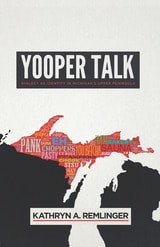
Yooper Talk
Dialect as Identity in Michigan's Upper PeninsulaKathryn A. Remlinger
University of Wisconsin Press, 2019
Drawing on sixteen years of fieldwork, including interviews with seventy-five lifelong residents of the UP, Kathryn Remlinger examines how the idea of a unique Yooper dialect emerged. Considering UP English in relation to other regional dialects and their speakers, she looks at local identity, literacy practices, media representations, language attitudes, notions of authenticity, economic factors, tourism, and contact with immigrant and Native American languages. The book also explores how a dialect becomes a recognizable and valuable commodity: Yooper talk (or "Yoopanese") is emblazoned on t-shirts, flags, postcards, coffee mugs, and bumper stickers.
Yooper Talk explains linguistic concepts with entertaining examples for general readers and also contributes to interdisciplinary discussions of dialect and identity in sociolinguistics, anthropology, dialectology, and folklore.