Results by title
3 books match the query 'Dietz, Maggie'

If You Would Let Me
Maggie Dietz
Four Way Books, 2026
If You Would Let Me uses the myth of Persephone and Demeter to explore, in an utterly contemporary idiom, the hellish descents and unequivocal love of a mother and an adolescent child. The old story is reimagined in new terms—a present-day Persephone’s cycles of psychic affliction giving rise to botched facial piercings, social media ghostings, and squalls of physical fury—and revoiced in poems that sing Demeter’s rage, the depths of maternal grief, the seasons of erasure and renewal. In an electric transposition of classic lore onto modern descriptive modes, Dietz casts the imperiling pubescence and anxiety of middle school as canonically significant and dangerously chimerical: “Persephone and her friends brought / Waxed paper cups of ice cream / To the meadow by the river,” where “Their laughter made ripples a heron / Mistook for alewives underwater” while “Under some of their shirts” grew “The first hiccups of puffy nipples.” Throughout these teenage transformations and the distances they grow, Dietz remains as constant as a lodestar, offering unwavering light for her child to see by in order to return. “You must know what I mean even if / You do not know you know: Child, // When you called my name I heard you / Though your cries could find no wind.” Formally meticulous and sonically intricate, these poems hear as much as they make themselves heard, harnessing ancient energies to create a picture of our recycled world—a story for our own times, one not only familiar but perennially, timelessly true.
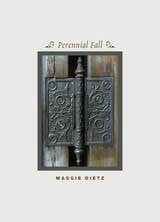
Perennial Fall
Maggie Dietz
University of Chicago Press, 2006
Dietz creates a world alive with detail and populated with the everyday and strange: amusement-park horses named Virgil and Sisyphus, squirrels hanging over tree branches “like fish.” By turns humorous and pained, direct and mysterious, elegiac and elegant, the poems trace for us the journey and persistence of the spirit toward and through its “perennial fall”—both the season and the human condition. Cumulatively, the work moves toward a fragile transcendence, surrendering to difficulty, splendor, and strangeness.
“In Perennial Fall, distinct, hard-edged images create a haunting counter-play of distortion, troubled insight or menace. The simultaneous clarity and shadow has the quality of a dream that can be neither forgotten nor settled. This is a spectacular debut and more than that—a wonderful book.”—Robert Pinsky
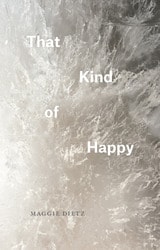
That Kind of Happy
Maggie Dietz
University of Chicago Press, 2016
If I slept too long, forgive me.
A north wind quickened the window frames
so the room pitched like a moving train
and the pillow’s whiff of hickory
and shaving soap conjured your body
beside me. So I slept in the berth
as the train chuffed on, unburdened
by waking’s cold water, ignorant
of pain, estrangement, hunger and
the crucial fuel the boiler burned
to keep the minutes’ pistons churning
while I slept. Forgive me.
That Kind of Happy, the long-awaited second collection by award-winning poet Maggie Dietz, explores the sharp, profound tension between a disquieted inner life and quotidian experience. Central to the book are poems that take up two major life events: becoming a mother and losing a father within a short stretch of time. Here, at the intersection of joy and grief, of persistence and attrition, Dietz wrestles with the questions posed by such conflicting experiences, revealing a mind suspicious of quick fixes and dissatisfied with easy answers. The result is a book as anguished as it is distinguished.