Results by title
7 books match the query 'Digital Culture'

@ is for Activism
Dissent, Resistance and Rebellion in a Digital CultureJoss Hands
Pluto Press, 2011
@ is For Activism examines the transformation of politics through digital media, including digital television, online social networking and mobile computing.
Joss Hands maps out how political relationships have been reconfigured and new modes of cooperation, deliberation and representation have emerged. This analysis is applied to the organisation and practice of alternative politics, showing how they have developed and embraced the new political and technological environment.
Hands offers a comprehensive critical survey of existing literature, as well as an original perspective on networks and political change. He includes many case studies including the anti-war and global justice movements, peer production, user created TV and 'Twitter' activism. @ is For Activism is essential for activists and students of politics and media.

Consumer Identities
Agency, Media and Digital CultureEdited by Candice Roberts and Myles Ethan Lascity
Intellect Books, 2019
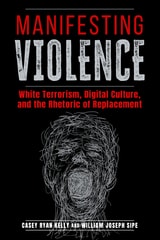
Manifesting Violence
White Terrorism, Digital Culture, and the Rhetoric of ReplacementCasey Ryan Kelly and William Joseph Sipe
University of Alabama Press, 2025
When communication becomes the engine of white supremacist violence.
Manifesting Violence: White Terrorism, Digital Culture, and the Rhetoric of Replacement by Casey Ryan Kelly and William Joseph Sipe is a compelling exploration of how the digital world has become a fertile ground for white supremacist ideology. Through an in-depth analysis of white supremacist manifestos, online rhetoric, and the myth of “white genocide,” Kelly and Sipe uncover the disturbing ways in which digital culture facilitates the spread of racist ideology and the radicalization of individuals. By examining the language of white nationalism—calls to defend the white race, family, and children—Kelly and Sipe reveal how these messages, often disguised as entertainment or humor, gradually transform passive consumers into active participants in a dangerous ideology.
Manifesting Violence sheds light on the alarming shift from organized white supremacist groups to a decentralized digital arena where hate speech is disguised as humor and online conversations foster a culture of violence. Kelly and Sipe’s thorough investigation of this growing digital ecosystem offers a chilling glimpse into the dark underbelly of online extremism. A must-read for anyone seeking to understand the growing threat of hate-motivated violence and the urgent need to address its roots in digital culture, Kelly and Sipe offer rich insights to readers, researchers, academics, and policymakers concerned about extremism, online radicalization, and white supremacy.
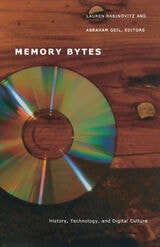
Memory Bytes
History, Technology, and Digital CultureLauren Rabinovitz and Abraham Geil, eds.
Duke University Press, 2004
These essays from scholars in the social sciences and humanities cover topics related to science and medicine, politics and war, mass communication, philosophy, film, photography, and art. Whether describing how the cultural and legal conflicts over player piano rolls prefigured controversies over the intellectual property status of digital technologies such as mp3 files; comparing the experiences of watching QuickTime movies to Joseph Cornell’s “boxed relic” sculptures of the 1930s and 1940s; or calling for a critical history of electricity from the Enlightenment to the present, Memory Bytes investigates the interplay of technology and culture. It relates the Information Age to larger and older political and cultural phenomena, analyzes how sensory effects have been technologically produced over time, considers how human subjectivity has been shaped by machines, and emphasizes the dependence of particular technologies on the material circumstances within which they were developed and used.
Contributors. Judith Babbitts, Scott Curtis, Ronald E. Day, David Depew, Abraham Geil, Sharon Ghamari-Tabrizi, Lisa Gitelman, N. Katherine Hayles, John Durham Peters, Lauren Rabinovitz, Laura Rigal, Vivian Sobchack, Thomas Swiss
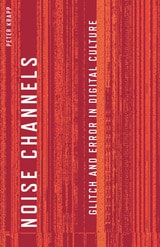
Noise Channels
Glitch and Error in Digital CulturePeter Krapp
University of Minnesota Press, 2011
To err is human; to err in digital culture is design. In the glitches, inefficiencies, and errors that ergonomics and usability engineering strive to surmount, Peter Krapp identifies creative reservoirs of computer-mediated interaction. Throughout new media cultures, he traces a resistance to the heritage of motion studies, ergonomics, and efficiency; in doing so, he shows how creativity is stirred within the networks of digital culture.
Noise Channels offers a fresh look at hypertext and tactical media, tunes into laptop music, and situates the emergent forms of computer gaming and machinima in media history. Krapp analyzes text, image, sound, virtual spaces, and gestures in noisy channels of computer-mediated communication that seek to embrace—rather than overcome—the limitations and misfires of computing. Equally at home with online literature, the visual tactics of hacktivism, the recuperation of glitches in sound art, electronica, and videogames, or machinima as an emerging media practice, he explores distinctions between noise and information, and how games pivot on errors at the human–computer interface.
Grounding the digital humanities in the conditions of possibility of computing culture, Krapp puts forth his insight on the critical role of information in the creative process.
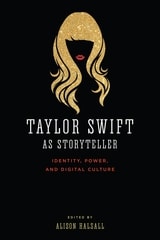
Taylor Swift as Storyteller
Identity, Power, and Digital CultureEdited by Alison Halsall
The Ohio State University Press, 2027
Taylor Swift as Storyteller examines one of the most influential cultural figures of the twenty-first century as both artist and “star text,” arguing that Swift’s global impact is shaped through the dynamic interplay of music, media, fandom, and branding. Bringing together literary scholars, ethnographers, and musicologists, this collection positions Swift as not just a pop figure but a transmedial construct.
Contributors explore how Swift’s carefully curated personae—from girl-next-door to feminist icon to “tortured poet”—generate powerful affective connections with audiences while also functioning as strategic marketing tools. At the same time, contributors retheorize authorship and control in the digital age. By foregrounding the roles of management, branding, and platform circulation, and by interrogating the participatory roles of Swifties as cocreators of meaning, Taylor Swift as Storyteller complicates the idea of singular authorship. Attending to questions of feminism, authorship, nostalgia, and literary adaptation, this collection ultimately reveals how Swift’s enterprise both reflects and reshapes contemporary media culture, illuminating the complex relationship between narrative, identity, and power in the digital age.
Contributors:
Natalie Abbott, Alexander Carpenter, Zixiao Chen, Katie E. Cline, Jennifer Duggan, Rachel M. Friars, Andrea LeMahieu Glaws, Wendy J. Glenn, Alison Halsall, Roxanne Harde, Juliette Holder, Erika Kvistad, Zhimou Li, Sarah E. Maier, Catherine McCarthy, Elly McCausland, Laura Carman McClintock, Adrianna Mirabal, Linh S. Nguy?n, Hazel O’Brien, Anah-Jayne Samuelson, L. M. Schmidt, Katlin Marisol Sweeney-Romero
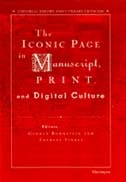
The Iconic Page in Manuscript, Print, and Digital Culture
George Bornstein and Theresa Tinkle, Editors
University of Michigan Press, 1998
The material features of texts as physical artifacts--their "bibliographic codes" --have over the last decade excited increasing interest in a variety of disciplines. The Iconic Page in Manuscript, Print, and Digital Culture gathers essays by an extraordinarily distinguished group of scholars to offer the most comprehensive examination of these issues yet, drawing on examples from literature, history, the fine arts, and philosophy.
Fittingly, the volume contains over two dozen illustrations that display the iconic features of the works analyzed--from Alfred the Great's Boethius through medieval manuscripts to the philosophy of C. S. Peirce and the dustjackets on works by F. Scott Fitzgerald and William Styron.
The Iconic Page in Manuscript, Print, and Digital Culture will be groundbreaking reading for scholars in a wide range of fields.
George Bornstein is C. A. Patrides Professor of English, University of Michigan. Theresa Tinkle is Associate Professor of English, University of Michigan.