Results by title
26 books match the query 'Digital libraries'

Building Digital Libraries
Kyle Banerjee
American Library Association, 2018
Building Digital Libraries
American Library Association, 2008
Data Management for Libraries
Carly A. Strasser
American Library Association, 2013
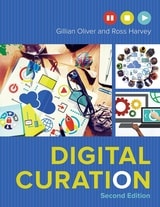
Digital Curation
Gillian Oliver
American Library Association, 2016
As an in-depth explanation of the entire digital curation lifecycle, from creation to appraisal to preservation to organization/access to transformation, the first edition of this text set a benchmark for both thoroughness and clarity. Boasting the expert guidance of international authorities Oliver and Harvey, this revamped and expanded edition widens the scope to address continuing developments in the strategies, technological approaches, and activities that are part of this rapidly changing field. In addition to current practitioners, those pursuing a career as librarian, archivist, or records manager will find this definitive survey invaluable. Filled with up-to-date best practices, it covers such important topics as
- the scope and incentives of digital curation, detailing Digital Curation Centre's (DCC) lifecycle model as well as the Data Curation Continuum;
- key requirements for digital curation, from description and representation to planning and collaboration;
- the value and utility of metadata;
- considering the needs of producers and consumers when creating an appraisal and selection policy for digital objects;
- the paradigm shift by institutions towards cloud computing and its impact on costs, storage, and other key aspects of digital curation;
- the quality and security of data;
- new and emerging data curation resources, including innovative digital repository software and digital forensics tools;
- mechanisms for sharing and reusing data, with expanded sections on open access, open data, and open standards initiatives; and
- processes to ensure that data are preserved and remain usable over time.
Useful as both a teaching text and day-to-day working guide, this book outlines the essential concepts and techniques that are crucial to preserving the longevity of digital resources.
Digital Curation
A How-To-Do-It Manual for LibrariansPam Hackbart-Dean
American Library Association, 2010
Digital Library Programs for Libraries and Archives
Developing, Managing, and Sustaining Unique Digital CollectionsAaron D. Purcell
American Library Association, 2016
Digital Preservation Essentials
Christopher Prom
Society of American Archivists, 2016
Getting Started with Digital Collections
Scaling to Fit Your OrganizationJane D. Monson
American Library Association, 2017
Google and the Myth of Universal Knowledge
A View from EuropeJean-Noël Jeanneney
University of Chicago Press, 2006
The recent announcement that Google will digitize the holdings of several major libraries sent shock waves through the book industry and academe. Google presented this digital repository as a first step towards a long-dreamed-of universal library, but skeptics were quick to raise a number of concerns about the potential for copyright infringement and unanticipated effects on the business of research and publishing.
Jean-Noël Jeanneney, president of France’s Bibliothèque Nationale, here takes aim at what he sees as a far more troubling aspect of Google’s Library Project: its potential to misrepresent—and even damage—the world’s cultural heritage. In this impassioned work, Jeanneney argues that Google’s unsystematic digitization of books from a few partner libraries and its reliance on works written mostly in English constitute acts of selection that can only extend the dominance of American culture abroad. This danger is made evident by a Google book search the author discusses here—one run on Hugo, Cervantes, Dante, and Goethe that resulted in just one non-English edition, and a German translation of Hugo at that. An archive that can so easily slight the masters of European literature—and whose development is driven by commercial interests—cannot provide the foundation for a universal library.
As a leading librarian, Jeanneney remains enthusiastic about the archival potential of the Web. But he argues that the short-term thinking characterized by Google’s digital repository must be countered by long-term planning on the part of cultural and governmental institutions worldwide—a serious effort to create a truly comprehensive library, one based on the politics of inclusion and multiculturalism.
Hacking the Academy
New Approaches to Scholarship and Teaching from Digital HumanitiesDaniel J. Cohen and Tom Scheinfeldt, Editors
University of Michigan Press, 2013
On May 21, 2010, Daniel J. Cohen and Tom Scheinfeldt posted the following provocative questions online:
“Can an algorithm edit a journal? Can a library exist without books? Can students build and manage their own learning management platforms? Can a conference be held without a program? Can Twitter replace a scholarly society?”
As recently as the mid-2000s, questions like these would have been unthinkable. But today serious scholars are asking whether the institutions of the academy as they have existed for decades, even centuries, aren’t becoming obsolete. Every aspect of scholarly infrastructure is being questioned, and even more importantly, being hacked. Sympathetic scholars of traditionally disparate disciplines are canceling their association memberships and building their own networks on Facebook and Twitter. Journals are being compiled automatically from self-published blog posts. Newly minted PhDs are forgoing the tenure track for alternative academic careers that blur the lines between research, teaching, and service. Graduate students are looking beyond the categories of the traditional CV and building expansive professional identities and popular followings through social media. Educational technologists are “punking” established technology vendors by rolling out their own open source infrastructure.
Here, in Hacking the Academy, Daniel J. Cohen and Tom Scheinfeldt have gathered a sampling of the answers to their initial questions from scores of engaged academics who care deeply about higher education. These are the responses from a wide array of scholars, presenting their thoughts and approaches with a vibrant intensity, as they explore and contribute to ongoing efforts to rebuild scholarly infrastructure for a new millennium.
Improving the Visibility and Use of Digital Repositories
Kenneth Arlitsch
American Library Association, 2013
Jump Start Your Career
Jane D. Monson
American Library Association, 2012
Making Your Tools Work for You
Max Eckard
Society of American Archivists, 2020
Marketing Your Library's Electronic Resources
Marie R. Kennedy
American Library Association, 2018
New Top Technologies Every Librarian Needs to Know
A LITA GuideKenneth J. Varnum
American Library Association, 2019
Reinventing the Library for Online Education
Frederick Stielow
American Library Association, 2013
Rhetoric and the Digital Humanities
Edited by Jim Ridolfo and William Hart-Davidson
University of Chicago Press, 2015
Rhetoric and the Digital Humanities is a timely, multidisciplinary collection that is the first to bridge scholarship in rhetorical studies and the digital humanities. It offers much-needed guidance on how the theories and methodologies of rhetorical studies can enhance all work in digital humanities, and vice versa. Twenty-three essays over three sections delve into connections, research methodology, and future directions in this field. Jim Ridolfo and William Hart-Davidson have assembled a broad group of more than thirty accomplished scholars. Read together, these essays represent the cutting edge of research, offering guidance that will energize and inspire future collaborations.
SpecLab
Digital Aesthetics and Projects in Speculative ComputingJohanna Drucker
University of Chicago Press, 2009
Nearly a decade ago, Johanna Drucker cofounded the University of Virginia’s SpecLab, a digital humanities laboratory dedicated to risky projects with serious aims. In SpecLab she explores the implications of these radical efforts to use critical practices and aesthetic principles against the authority of technology based on analytic models of knowledge.
Inspired by the imaginative frontiers of graphic arts and experimental literature and the technical possibilities of computation and information management, the projects Drucker engages range from Subjective Meteorology to Artists’ Books Online to the as yet unrealized ’Patacritical Demon, an interactive tool for exposing the structures that underlie our interpretations of text. Illuminating the kind of future such experiments could enable, SpecLab functions as more than a set of case studies at the intersection of computers and humanistic inquiry. It also exemplifies Drucker’s contention that humanists must play a role in designing models of knowledge for the digital age—models that will determine how our culture will function in years to come.
The Culture of Digital Scholarship in Academic Libraries
Robin Chin Roemer
American Library Association, 2019
At the heart of digital scholarship are universal questions, lessons, and principles relating both to the mission of higher education and the shared values that make an academic library culture. But while global in aspirations, digital scholarship starts with local culture drawn from the community. Editors Chin Roemer and Kern invite you into their institutional workspace, the University of Washington, gathering voices from a range of positions that speak to the facets of digital scholarship. This mosaic of perspectives reveals the challenges, questions, and personalities that sit at the nexus of academic libraries and digital scholarship culture. Reflecting on UW’s approach, you’ll gain insights for your own institution on topics such as
- ways to create awareness of digital services through training;
- supporting students as creators of content;
- blending existing analog collections with ongoing digital initiatives using a media lab;
- creating a campus-wide, discipline agnostic, data repository service;
- how a popular digital storytelling workshop spawned digital scholarship across campus;
- digital scholarship consultations, viewed from an instructional technologist’s approach;
- the place of digital scholarship in the fabric of a revitalized urban community;
- four strategies for teaching research skills within an online-only bachelor’s degree program; and
- assessment findings from focus groups, surveys, digital pedagogy projects, and Omeka case studies.
By thoroughly exploring a single institution, this unique volume elucidates the many ways in which digital scholarship can express the values, priorities, opportunities, and challenges of the community’s intellectual and technical environment.
The High-Impact Digital Library
Innovative Approaches for Outreach and InstructionAnna Neatrour, Jeremy Myntti, Rachel Jane Wittmann, Rebekah Cummings, Jane Monson, and Megan Myres McMillan, in collaboration with Core Publishing
American Library Association, 2025
- discusses the results of a unique survey that provides new and structured information on digital library outreach and instruction;
- presents outreach case studies illustrating uses of social media promotion, integration of digital collections into teaching and instruction activities, partnerships with external campus units or community organizations, and other activities;
- explores many types of instruction, from drop-in class sessions and training to course-integrated instruction and ways that digital library practitioners can contribute to the Open Educational Resources (OER) and open pedagogy movements;
- details the digital humanities and digital scholarship programs developed at the University of Utah by many of the authors through cross-departmental collaboration;
- describes the ways in which the pandemic spurred many institutions to use rapid response collecting to practice community engagement; and
- speculates on future directions for outreach and instruction for digital libraries.
The Kovacs Guide to Electronic Library Collection Development
Essential Core Subject Collections, Selection Criteria, and GuidelinesAmerican Library Association, 2009
Traces of the Old, Uses of the New
The Emergence of Digital Literary StudiesAmy E. Earhart
University of Michigan Press, 2015
Using Libguides to Enhance Library Services
Aaron Dobbs
American Library Association, 2013
Using Massive Digital Libraries
Andrew Weiss
American Library Association, 2014
Web 2.0 Tools and Strategies for Archives and Local History Collections
American Library Association, 2010
Whole Digital Library Handbook
Diane Kresh
American Library Association, 2007