Results by title
19 books match the query 'Digitization'
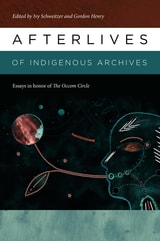
Afterlives of Indigenous Archives
Edited by Ivy Schweitzer and Gordon Henry
Dartmouth College Press, 2019
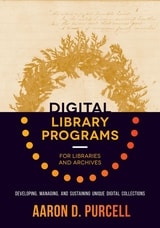
Digital Library Programs for Libraries and Archives
Developing, Managing, and Sustaining Unique Digital CollectionsAaron D. Purcell
American Library Association, 2016
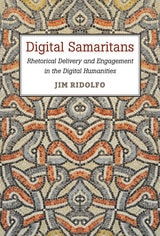
Digital Samaritans
Rhetorical Delivery and Engagement in the Digital HumanitiesJim Ridolfo
University of Michigan Press, 2015

Digitizing Your Collection
Public Library Success StoriesSusanne Caro
American Library Association, 2015
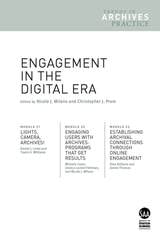
Engagement in the Digital Era
Christopher Prom
Society of American Archivists, 2020
Forging the Future of Special Collections
Arnold Hirshon
American Library Association, 2016
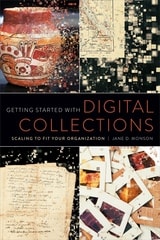
Getting Started with Digital Collections
Scaling to Fit Your OrganizationJane D. Monson
American Library Association, 2017
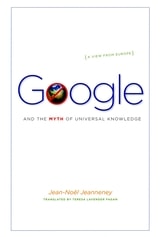
Google and the Myth of Universal Knowledge
A View from EuropeJean-Noël Jeanneney
University of Chicago Press, 2006
The recent announcement that Google will digitize the holdings of several major libraries sent shock waves through the book industry and academe. Google presented this digital repository as a first step towards a long-dreamed-of universal library, but skeptics were quick to raise a number of concerns about the potential for copyright infringement and unanticipated effects on the business of research and publishing.
Jean-Noël Jeanneney, president of France’s Bibliothèque Nationale, here takes aim at what he sees as a far more troubling aspect of Google’s Library Project: its potential to misrepresent—and even damage—the world’s cultural heritage. In this impassioned work, Jeanneney argues that Google’s unsystematic digitization of books from a few partner libraries and its reliance on works written mostly in English constitute acts of selection that can only extend the dominance of American culture abroad. This danger is made evident by a Google book search the author discusses here—one run on Hugo, Cervantes, Dante, and Goethe that resulted in just one non-English edition, and a German translation of Hugo at that. An archive that can so easily slight the masters of European literature—and whose development is driven by commercial interests—cannot provide the foundation for a universal library.
As a leading librarian, Jeanneney remains enthusiastic about the archival potential of the Web. But he argues that the short-term thinking characterized by Google’s digital repository must be countered by long-term planning on the part of cultural and governmental institutions worldwide—a serious effort to create a truly comprehensive library, one based on the politics of inclusion and multiculturalism.
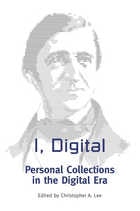
I, Digital
Personal Collections in the Digital EraChristopher A. Lee
Society of American Archivists, 2011
When it comes to personal collections, we live in exciting times. Individuals are living their lives in ways that are increasingly mediated by digital technologies — digital photos and video footage, music, the social web, e-mail,and other day-to-day interactions. Although this mediation presents many technical challenges for long-term preservation, it also provides unprecedented opportunities for documenting the lives of individuals.
Ten authors — Robert Capra, Adrian Cunningham, Tom Hyry, Leslie Johnston, Christopher (Cal) Lee, Sue McKemmish, Cathy Marshall, Rachel Onuf, Kristina Spurgin, and Susan Thomas — share their expertise on the various aspects of the management of digital information in I, Digital: Personal Collections in the Digital Era.
The volume is divided in three parts:
Chapters explore issues,challenges, and opportunities in the management of personal digital collections, focusing primarily on born-digital materials generated and kept by individuals.
Contributions to I, Digital represent the depth in thinking about how cultural institutions can grapple with new forms of documentation, and how individuals manage--and could better manage--digital information that is part of contemporary life.
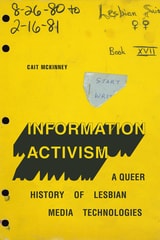
Information Activism
A Queer History of Lesbian Media TechnologiesCait McKinney
Duke University Press, 2020
Module 8
Becoming a Trusted Digital RepositorySteve Marks
Society of American Archivists, 2015
New Technologies and Renaissance Studies
Edited by William R. Bowen and Raymond G. Siemens
Iter Press, 2008
The first volume of the series, New Technologies and Renaissance Studies, presents a collection of contributions to one ongoing forum for the dialogue which lies at the heart of the book series, the annual "conference within a conference" of the same name which takes place during the Renaissance Society of America gathering, dedicated specifically to the intersection of computational methods and Renaissance studies. Papers in this volume exemplify those fruitful and productive exchanges, from their inception at the 2001 meeting in Chicago to the 2005 meeting in Cambridge.
New Technologies and Renaissance Studies II
Edited by Tassie Gniady, Kris McAbee, Jessica Murphy
Iter Press, 2014
In the fourth volume of the New Technologies in Medieval and Renaissance Studies series, volume editors Tassie Gniady, Kris McAbee, and Jessica Murphy bring together some of the best work from the New Technologies in Medieval and Renaissance Studies panels at the Renaissance Society of America (RSA) annual meetings for the years 2004–2010. These essays demonstrate a dedication to grounding the use of “newest” practices in the theories of the early modern period. At the same time, the essays are interested in the moment—the needs of scholars then, the theories of media that informed current understanding, and the tools used to conduct studies.
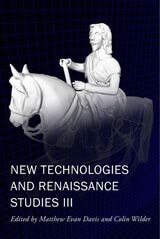
New Technologies and Renaissance Studies III
Edited by Matthew Evan Davis and Colin Wilder
Iter Press, 2022
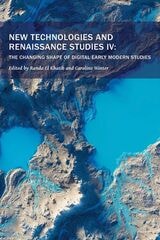
New Technologies and Renaissance Studies IV
The Changing Shape of Digital Early Modern StudiesEdited by Randa El Khatib and Caroline Winter
Iter Press, 2025
A collection of essays engaging with digital scholarship and new technologies.
Contributors to this volume engage with digital scholarship in several ways: by creating digital projects, often in multidisciplinary, collaborative environments; by applying digital methodologies and tools to explore research questions; and by speculating about the potential directions that digital scholarship can take to tackle existing research areas that could benefit from new perspectives. Together, the chapters demonstrate how various digital approaches—from network analysis to web mapping, VR and AR technologies, digital editions, databases, and archives—are all contributing in creative and effective ways to expand our knowledge of the past, to help ask and answer questions at a scale that was unimaginable before the digital turn, and to reshape early modern studies in the twenty-first century.
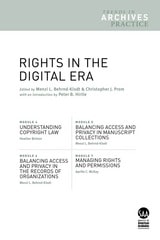
Rights in the Digital Era
All rights reserved. No part of this publication may be reproduced, stored in a retrieval system, or transmitted in any form or by any means without prior permission from the publisher.
Society of American Archivists, 2015
About Rights in the Digital Era:
MODULE 4Understanding Copyright Law
Heather Briston
Describes the main principles of copyright law and outlines strategies for addressing common issues, special topics, and digital projects.
MODULE 5
Balancing Access and Privacy in Manuscript Collections
Menzi L. Behrnd-Klodt
Introduces basic access and privacy laws, concepts, definitions, and professional ethical standards affecting manuscript materials and private and family papers.
MODULE 6
Balancing Access and Privacy in the Records of Organizations
Menzi L. Behrnd-Klodt
Introduces basic access and privacy laws, concepts, definitions, and professional ethical standards affecting the management of records created by organizations, businesses, agencies, and other entities.
MODULE 7
Managing Rights and Permissions
Aprille C. McKay
Provides practical guidance to help archivists transfer, clear, manage, and track rights information in analog and digital archives.
About Trends in Archives Practice:
This open-ended series by the Society of American Archivists features brief, authoritative treatments—written and edited by top-level professionals—that fill significant gaps in archival literature. The goal of this modular approach is to build agile, user-centered resources. Modules treat discrete topics relating to the practical management of archives and manuscript collections in the digital age. Select modules are clustered together by topic (as they are here) and are available in print or electronic format. Each module also is available separately in electronic format so that readers can mix and match modules that best satisfy their needs and interests. Stay on trend with Trends in Archives Practice!

Sport History in the Digital Era
Edited by Gary Osmond and Murray G. Phillips
University of Illinois Press, 2015
Chapters consider how the philosophical and theoretical understanding of the meaning of history influence a willingness to engage with digital history, and conceptualize the relationship between history making and the digital era. As the writers show, digital media's mostly untapped potential for studying the recent past via blogs, chat rooms, gambling sites, and the like forge a symbiosis between sports and the internet, and offer historians new vistas to explore and utilize.
Sport History in the Digital Era also shows how the best digital history goes beyond a static cache of curated documents. Instead, it becomes a truly public history that serves as a dynamic site of enquiry and discussion. In such places, scholars enter into a give-and-take with individuals while inviting the audience to grapple with, rather than passively absorb, the evidence being offered.
Timely and provocative, Sport History in the Digital Era affirms how the information revolution has transformed sport and sport history--and shows the road ahead.
Contributors include Douglas Booth, Mike Cronin, Martin Johnes, Matthew Klugman, Geoffery Z. Kohe, Tara Magdalinski, Fiona McLachlan, Bob Nicholson, Rebecca Olive, Gary Osmond, Murray G. Phillips, Stephen Robertson, Synthia Sydnor, Holly Thorpe, and Wayne Wilson.
The Complete Guide to Personal Digital Archiving
Brianna H. Marshall
American Library Association, 2017
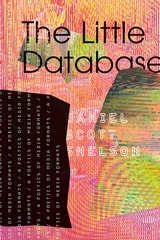
The Little Database
A Poetics of Media FormatsDaniel Scott Snelson
University of Minnesota Press, 2025
A poetics for reading the everyday objects that populate a hard drive
Bespoke online archives like PennSound and Eclipse host an astounding array of “old media” artifacts, posing a handcrafted counterpoint to the immense databases aggregated by digital titans like Google and Facebook. In The Little Database, Daniel Scott Snelson argues for the significance of these comparatively “small” collections, exploring how digital archives dramatically transform the artifacts they host and how they might help us better understand our own private collections in turn.
Examining curated collections such as Textz, UbuWeb, and the Electronic Poetry Center, Snelson explores media-specific works by poets and artists, including William Carlos Williams, Tracie Morris, bill bissett, Nam June Paik, and Vicki Bennett. He develops creative tools and contingent methods for reading cultural data, whether found on the internet or in our own collections of TXT, JPG, MP3, and MOV artifacts, presenting case studies to show how these objects have come to find revised meaning in their digital contexts. Along the way, experimental poetic interludes give readers practical entry points into the creative practice of producing new meanings in any given little database.
Inventive and interdisciplinary, The Little Database grapples with the digitized afterlives of cultural objects, showing how the past is continually reconfigured to shape the present. It invites readers to find playful and personal means for unpacking their own data collections, in the process discovering idiosyncratic ways to explore and connect with digital archives.
Retail e-book files for this title are screen-reader friendly with images accompanied by short alt text and/or extended descriptions.