Results by title
2 books match the query 'Disaster films'

Film on The Faultline
Edited by Alan Wright
Intellect Books, 2015
Film has always played a crucial role in the imagination of disaster. Earthquakes, especially, not only shift the ground beneath our feet but also herald a new way of thinking or being in the world. Following recent seismic events in countries as dissimilar as Iran, Chile and Haiti, Japan and New Zealand, national films have emerged that challenge ingrained political, economic, ethical, and ontological categories of modernity. Film on the Faultline explores the fractious relationship between cinema and seismic experience and addresses the important role that cinema can play in the wake of such events as forms of popular memory and personal testimony.
[more]
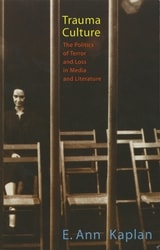
Trauma Culture
The Politics of Terror and Loss in Media and LiteratureKaplan, E. Ann
Rutgers University Press, 2005
It may be said that every trauma is two traumas or ten thousand-depending on the number of people involved. How one experiences and reacts to an event is unique and depends largely on one's direct or indirect positioning, personal psychic history, and individual memories. But equally important to the experience of trauma are the broader political and cultural contexts within which a catastrophe takes place and how it is "managed" by institutional forces, including the media.
In Trauma Culture, E. Ann Kaplan explores the relationship between the impact of trauma on individuals and on entire cultures and nations. Arguing that humans possess a compelling need to draw meaning from personal experience and to communicate what happens to others, she examines the artistic, literary, and cinematic forms that are often used to bridge the individual and collective experience. A number of case studies, including Sigmund Freud's Moses and Monotheism, Marguerite Duras' La Douleur, Sarah Kofman's Rue Ordener, Rue Labat, Alfred Hitchcock's Spellbound, and Tracey Moffatt's Night Cries, reveal how empathy can be fostered without the sensationalistic element that typifies the media.
From World War II to 9/11, this passionate study eloquently navigates the contentious debates surrounding trauma theory and persuasively advocates the responsible sharing and translating of catastrophe.
[more]