Results by title
5 books match the query 'Disasters in literature'
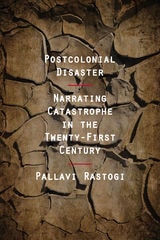
Postcolonial Disaster
Narrating Catastrophe in the Twenty-First CenturyPallavi Rastogi
Northwestern University Press, 2020
Rastogi creates a narratology for postcolonial disaster fiction and brings concepts from Disaster Studies into the realm of literary analysis.
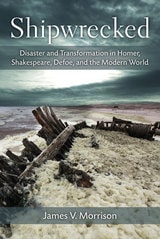
Shipwrecked
Disaster and Transformation in Homer, Shakespeare, Defoe, and the Modern WorldJames V. Morrison
University of Michigan Press, 2014
The recurrent treatment of shipwrecks in the creative arts demonstrates an enduring fascination with this archetypal scene: a shipwreck survivor confronting the elements. It is remarkable, for example, that the characters in the 2004 television show Lost share so many features with those from Homer’s Odyssey and Shakespeare’s The Tempest.
For survivors who are stranded on an island for some period of time, shipwrecks often present the possibility of a change in political and social status—as well as romance and even paradise. In each of the major shipwreck narratives examined, the poet or novelist links the castaways’ arrival on a new shore with the possibility of a new sort of life. Readers will come to appreciate the shift in attitude toward the opportunities offered by shipwreck: older texts such as the Odyssey reveals a trajectory of returning to the previous order. In spite of enticing new temptations, Odysseus—and some of the survivors in The Tempest—revert to their previous lives, rejecting what many might consider paradise. Odysseus is reestablished as king; Prospero travels back to Milan. In such situations, we may more properly speak of potential transformations. In contrast, many recent shipwreck narratives instead embrace the possibility of a new sort of existence. That even now the shipwreck theme continues to be treated, in multiple media, testifies to its long-lasting appeal to a very wide audience.
The Culture of Disaster
Marie-Hélène Huet
University of Chicago Press, 2012
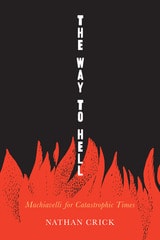
The Way to Hell
Machiavelli for Catastrophic TimesNathan Crick
University of Alabama Press, 2024
An incisive and erudite survey of Machiavelli, the catastrophes of his times and ours, and his counsel for responding to an era of constant crises.
Catastrophe looms. Political, environmental, epidemic, and military crises arrive with increasing frequency. In The Way to Hell, Nathan Crick argues that our perilous times call for the strongest medicine in the Western canon: Machiavelli. Crick reminds contemporary readers about the Florentine master’s advice—that one must learn the road to Hell precisely to avoid taking it.
Like a knowledgeable friend, Crick offers contemporary readers a guide to Machiavelli’s world, work, and warnings. He takes in the sweep of Western history, comparing Machiavelli’s work with ancient sources such as Cicero and Thucydides. And as Machiavelli has never stopped provoking comment, Crick treats readers to a feast of responses to Machiavelli’s work—caustic, learned, and humorous—in the five centuries since he lived.
Including both Machiavelli’s best-known works, The Prince and Discourses on Livy, as well as his personal correspondence and comic plays, Crick asks anew the questions that bedeviled Machiavelli’s beloved Florentine republic: When is force necessary? When are lies justified? Is cruelty defensible? When does social protest slip into violent revolution? What is the correct response to catastrophe?
Like Machiavelli himself, The Way to Hell is witty, stimulating, and challenging. In a world seemingly on the road to Hell, Machiavelli offers an alternative route. His bracing vision exhorts readers to see the dangers in their path and to take action with vigor and determination. Far from a vision of cynicism, Machiavelli offers a beacon of hope for a world that seems on the brink.
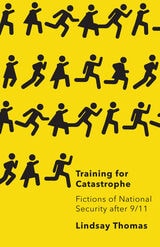
Training for Catastrophe
Fictions of National Security after 9/11Lindsay Thomas
University of Minnesota Press, 2021
A timely, politically savvy examination of how impossible disasters shape the very real possibilities of our world
Why would the normally buttoned-down national security state imagine lurid future scenarios like a zombie apocalypse? In Training for Catastrophe, author Lindsay Thomas shows how our security regime reimagines plausibility to focus on unlikely and even unreal events rather than probable ones. With an in-depth focus on preparedness (a pivotal, emergent national security paradigm since 9/11) she explores how fiction shapes national security.
Thomas finds fiction at work in unexpected settings, from policy documents and workplace training manuals to comics and video games. Through these texts—as well as plenty of science fiction—she examines the philosophy of preparedness, interrogating the roots of why it asks us to treat explicitly fictional events as real. Thomas connects this philosophical underpinning to how preparedness plays out in contemporary politics, emphasizing how it uses aesthetic elements like realism, genre, character, and plot to train people both to regard some disasters as normal and to ignore others.
Training for Catastrophe makes an important case for how these documents elicit consent and compliance. Thomas draws from a huge archive of texts—including a Centers for Disease Control comic about a zombie apocalypse, the work of Audre Lorde, and the political thrillers of former national security advisor Richard Clarke—to ask difficult questions about the uses and values of fiction. A major statement on how national security intrudes into questions of art and life, Training for Catastrophe is a timely intervention into how we confront disasters.