Results by title
4 books match the query 'Discomfort'

Abject Animals
Discomfort in Human–Animal CompanionshipJulien Dugnoille
Michigan State University Press, 2027
Abject Animals: Discomfort in Human–Animal Companionship explores the emotional contradictions and ethical tensions at the heart of human–animal relationships through a cross-cultural, multispecies ethnography of cats and dogs in the UK, France, and South Korea. Framing cats and dogs as “abject animals,” Julien Dugnoille examines how the treatment of animals can generate discomfort—emotional, moral, and bodily—through their commodification in cafés, markets, shelters, and homes. Drawing on Kristeva’s theory of abjection alongside the ideas of Bataille, Blanchot, and Weil, the book interrogates the commodified intimacy of contemporary human–animal companionship, revealing how labor, cuteness, and care mask underlying hierarchies and exploitation. Through richly detailed fieldwork and autoethnographic reflection, it critiques normative ideas of “healthy” companionship, arguing instead for forms of interspecies attunement that embrace discomfort and resist instrumentalization. Abject Animals is both a theoretical intervention and a call for more ethical, ego-disrupting relationships with the nonhuman.

Aesthetics of Discomfort
Conversations on Disquieting ArtFrederick Aldama and Herbert Lindenberger
University of Michigan Press, 2016

Design and Discomfort
Teaching Shakespeare and RaceEdited by Laura B. Turchi
Arizona Center for Medieval and Renaissance Studies, 2025
Design and Discomfort confronts the complexities of teaching Shakespeare in today’s classrooms, where discussions of race, bias, and historical legacies can provoke discomfort—but also transformation. Edited by Laura B. Turchi, this collection brings together educators and teaching artists who share innovative strategies for rethinking Shakespeare’s role in education.
Rather than treating Shakespeare as an untouchable authority, the contributors explore how his works can be a springboard for broader conversations about identity and justice. They advocate for performance-based and student-driven approaches that help students see themselves—their communities, their families, and their lived experiences—in the complex and seemingly distant world of Shakespeare.
This open-access volume provides both conceptual essays and practical lesson designs for educators navigating the intersections of Shakespeare and race. By embracing discomfort as part of the learning process, Design and Discomfort reframes how Shakespeare should be taught in classrooms today.
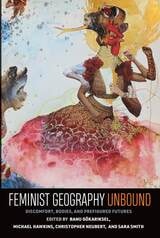
Feminist Geography Unbound
Discomfort, Bodies, and Prefigured FuturesBanu Gokariksel
West Virginia University Press, 2021
Feminist Geography Unbound is a call to action—to expand imaginations and to read and travel more widely and carefully through terrains that have been cast as niche, including Indigenous and decolonial feminisms, Black geographies, and trans geographies. The original essays in this collection center three themes to unbind and enable different feminist futures: discomfort as a site where differences generate both productive and immobilizing frictions, gendered and racialized bodies as sites of political struggle, and the embodied work of building the future.
Drawing on diverse theoretical backgrounds and a range of field sites, contributors consider how race, gender, citizenship, and class often determine who feels comfort and who is tasked with producing it. They work through bodies as terrains of struggle that make claims to space and enact political change, and they ask how these politics prefigure the futures that we fear or desire. The book also champions feminist geography as practice, through interviews with feminist scholars and interludes in which feminist collectives speak to their experience inhabiting and transforming academic spaces. Feminist Geography Unbound is grounded in a feminist geography that has long forced the discipline to grapple with the production of difference, the unequal politics of knowledge production, and gender’s constitutive role in shaping social life.