Results by title
7 books match the query 'Discoveries in geography'

At the Moon's Inn
Andrew Lytle
University of Alabama Press, 2009
At the Moon’s Inn, first published in 1941, provides a fictional account of De Soto’s famous Spanish expedition to La Florida and through the southeastern United States between 1539 and 1543. The novel begins in Spain in 1538, where De Soto and his chief lieutenants, veterans of the campaigns in South America, pledge themselves to a new enterprise to explore and exploit La Florida. The narrative follows them on their voyage to Cuba, where they rest and obtain additional supplies, then set sail for the area now known as Tampa Bay. Lytle’s brilliant historical novel takes the readers with the conquistadores through the hot, humid land, where despite their advantage in military technology they found they must rely on the Indians for food. The author explores the cultural confrontation that seriously weakened the Indians, while the Spaniards’ dreams of gold gradually turned to hopes of survival in the hostile environment.
Drawing his facts from the 1939 United States De Soto Commission Report and from the surviving historical chronicles of the expedition, Lytle weaves a fascinating tale that brings to life the history of Spanish efforts to establish a controlling presence in the New World during the first half of the 16th century.
In his introduction, Douglas Jones places At the Moon’s Inn within the context of the documentary record, as well as within the framework of its distinguished author’s career.
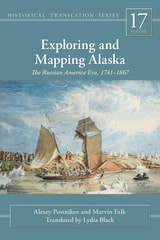
Exploring and Mapping Alaska
The Russian America Era, 1741-1867Alexey Postnikov and Marvin Falk
University of Alaska Press, 2015
Exploring and Mapping Alaska focuses on this foundational period in Arctic cartography. Russia spurred a golden era of cartographic exploration, while shrouding their efforts in a veil of secrecy. They drew both on old systems developed by early fur traders and new methodologies created in Europe. With Great Britain, France, and Spain following close behind, their expeditions led to an astounding increase in the world’s knowledge of North America.
Through engrossing descriptions of the explorations and expert navigators, aided by informative illustrations, readers can clearly trace the evolution of the maps of the era, watching as a once-mysterious region came into sharper focus. The result of years of cross-continental research, Exploring and Mapping Alaska is a fascinating study of the trials and triumphs of one of the last great eras of historic mapmaking.
Natives of My Person
George Lamming
University of Michigan Press, 1992
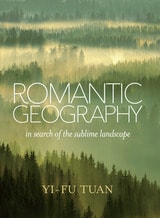
Romantic Geography
In Search of the Sublime LandscapeYi-Fu Tuan
University of Wisconsin Press, 2013
Yi-Fu Tuan established a global reputation for deepening the field of geography by examining its moral, universal, philosophical, and poetic potentials and implications. In Romantic Geography, he considers the human tendency to find salvation in geographies that cater not so much to survival needs (or even to good, comfortable living) as to the passionate and romantic aspirations of their nature.
The Great Ages of Discovery
How Western Civilization Learned About a Wider WorldStephen J. Pyne
University of Arizona Press, 2021
Historian and MacArthur Fellow Stephen J. Pyne identifies three great ages of discovery in his fascinating new book. The first age of discovery ranged from the early 15th to the early 18th century, sketched out the contours of the globe, aligned with the Renaissance, and had for its grandest expression the circumnavigation of the world ocean. The second age launched in the latter half of the 18th century, spanning into the early 20th century, carrying the Enlightenment along with it, pairing especially with settler societies, and had as its prize achievement the crossing of a continent. The third age began after World War II, and, pivoting from Antarctica, pushed into the deep oceans and interplanetary space. Its grand gesture is Voyager’s passage across the solar system. Each age had in common a galvanic rivalry: Spain and Portugal in the first age, Britain and France—followed by others—in the second, and the USSR and USA in the third.
With a deep and passionate knowledge of the history of Western exploration, Pyne takes us on a journey across hundreds of years of geographic trekking. The Great Ages of Discovery is an interpretive companion to what became Western civilization’s quest narrative, with the triumphs and tragedies that grand journey brought, the legacies of which are still very much with us.

The Librarian's Atlas
The Shape of Knowledge in Early Modern SpainSeth Kimmel
University of Chicago Press, 2024
A history of early modern libraries and the imperial desire for total knowledge—now in paperback.
Medieval scholars imagined the library as a microcosm of the world, but as novel early modern ways of managing information facilitated empire in both the New and Old Worlds, the world became a projection of the library. In The Librarian’s Atlas, Seth Kimmel offers a sweeping material history of how the desire to catalog books coincided in the sixteenth and seventeenth centuries with the aspiration to control territory. Through a careful study of library culture in Spain and Morocco—close readings of catalogs, marginalia, indexes, commentaries, and maps—Kimmel reveals how the booklover’s dream of a comprehensive and well-organized library shaped an expanded sense of the world itself.
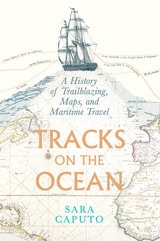
Tracks on the Ocean
A History of Trailblazing, Maps, and Maritime TravelSara Caputo
University of Chicago Press, 2024
Sara Caputo’s Tracks on the Ocean is a sweeping history of how we have understood routes of travel over the ocean and how we came to represent that movement as a cartographical line. Focusing on the representation of sea journeys in the Western world from the early sixteenth century to the present, Caputo deftly argues that the depiction of these lines is inextricable from European imperialism, the rise of modernity, and attempts at mastery over nature. Caputo recounts the history of ocean tracks through an array of lively stories and characters, from the expeditions of Captain James Cook in the eighteenth century to tracks depicted in Moby Dick and popular culture of the nineteenth century to the use of navigational techniques by the British navy. She discusses how tracks evolved from tools of surveying into tools of surveillance and, eventually, into paths of environmental calamity. The impulse to record tracks on the ocean is, Caputo argues, reflective of an ongoing desire for order, schematization, and personal visibility, as well as occupation and permanent ownership—in this case over something that is unoccupiable and impossible to truly possess. Both beautifully written and deeply researched, Tracks on the Ocean shares how the lines drawn on maps tell the audacious and often tragic and violent stories of ocean voyages.