Results by title
13 books match the query 'Discovering'

City Watch
Discovering The Uncommon ChicagoJon Anderson
University of Iowa Press, 2000
In forty-five years as one of Chicago's liveliest journalists for Time, Life, and the Chicago Tribune, Jon Anderson has established a reputation for picking up on what someone once called "the beauty of the specific fact." Part "Talk of the Town," part On the Road with Charles Kuralt, Anderson's twice-a-week "City Watch" columns in the Chicago Tribune seek out interesting and unexpected people and places from the everyday life of what the author calls the "most typical American big city." In the process he discovers the joys and triumphs of ordinary people.
Anderson writes with wit and insight about those who find themselves inspired or obsessed with alternative ways of viewing life or getting through the day. Like the man who started with one light pole, then painted all the poles in his southside neighborhood. Or the founder of Cats-Are-Purrsons-Too, a nun who lives with sixty-seven cats. Or the philosopher who, with no financial success, still publishes a newsletter called "The Meaning of Life." After years of hunting down moments of everyday life that have drama and meaning, Anderson offers a book that has curious power, because all of its stories are true.
Drawn from the best of Anderson's columns, City Watch introduces readers to an eclectic mix of social clubs, subcultures, and minor celebrities. From Foraging Friends, a group of penniless ecologists who forage for wild foods in a county forest preserve, to the annual Dumpster Diver fashion show, from the Oakton Elementary School chess team to a group that calls itself Some Chicago Anarchists, readers will discover the characters and events that define Chicago's local color.
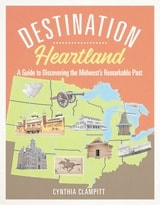
Destination Heartland
A Guide to Discovering the Midwest's Remarkable PastCynthia Clampitt
University of Illinois Press, 2022
An informative handbook and introduction to the Midwest's colorful past, Destination Heartland provides travelers with a knowledgeable companion on the highways and backroads of history.
States covered in the book: Illinois, Indiana, Iowa, Kansas, Michigan, Minnesota, Missouri, Nebraska, North Dakota, Ohio, South Dakota, and Wisconsin.
Discovering the Desert
The Legacy of the Carnegie Desert Botanical LaboratoryWilliam G. McGinnies
University of Arizona Press, 1981
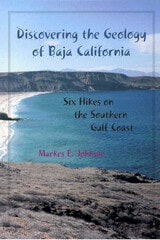
Discovering the Geology of Baja California
Six Hikes on the Southern Gulf CoastMarkes E. Johnson
University of Arizona Press, 2009
For those who wish to unlock the mysteries of Baja California, geologist Markes Johnson offers the key. He has taken a body of technical research on the geology and paleontology of the region and made it accessible in plain language for anyone who visits the peninsula, whether for study or recreation. His book teaches general concepts in coastal geomorphology and tectonics, as well as the basic geological and natural history of the Gulf of California, in a conversive, intellectually stimulating fashion.
Johnson's guide takes the form of six day-long hikes in the area of Punta Chivato on the east coast of the southern Baja California peninsula. Punta Chivato is presented as a microcosm of the entire region; it can enable visitors to better understand major themes in the natural history of the Gulf of California and its geological past. All of the hikes begin at the southeast corner of the Punta Chivato promontory and loop out in different directions. Each circuit is designed to minimize overlap with adjacent hikes and to maximize the visitor's exposure to instructive variations in the landscape. Each chapter features additional reflections on a geologist of another time and place who has advanced the field in a way that elucidates the material covered in that chapter. Through these asides, readers will learn the basic lessons about how geologists read the secrets hidden in landscapes.
Discovering the Geology of Baja California invites visitors to these shores to explore not only rocks and fossils but also the continuum of past ecosystems with the ecology of the present. It offers both an unparalleled guide to a remote area and a new understanding of life caught in an endless cycle of change.

Discovering the Laws of Life
Sir John Templeton
Templeton Press, 2009
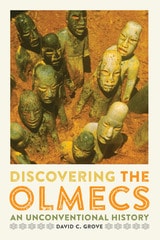
Discovering the Olmecs
An Unconventional HistoryBy David C. Grove
University of Texas Press, 2014
The Olmecs are renowned for their massive carved stone heads and other sculptures, the first stone monuments produced in Mesoamerica. Seven decades of archaeological research have given us many insights into the lifeways of the Olmecs, who inhabited parts of the modern Mexican states of Veracruz and Tabasco from around 1150 to 400 BC, and there are several good books that summarize the current interpretations of Olmec prehistory. But these formal studies don’t describe the field experiences of the archaeologists who made the discoveries. What was it like to endure the Olmec region’s heat, humidity, mosquitoes, and ticks to bring that ancient society to light? How did unforeseen events and luck alter carefully planned research programs and the conclusions drawn from them? And, importantly, how did local communities and individuals react to the research projects and discoveries in their territories?
In this engaging book, a leading expert on the Olmecs tells those stories from his own experiences and those of his predecessors, colleagues, and students. Beginning with the first modern explorations in the 1920s, David Grove recounts how generations of archaeologists and local residents have uncovered the Olmec past and pieced together a portrait of this ancient civilization that left no written records. The stories are full of fortuitous discoveries and frustrating disappointments, helpful collaborations and deceitful shenanigans. What emerges is an unconventional history of Olmec archaeology, a lively introduction to archaeological fieldwork, and an exceptional overview of all that we currently know about the Olmecs.

Discovering the Scottish Revolution 1692-1746
Neil Davidson
Pluto Press, 2003
Davidson explores the political and economic changes of these years, revealing how social and economic power was transferred from one class to another. He describes how Scotland was transformed from a backward and feudal economy to a new centre of emergent capitalism. He traces the economic and social crisis that led to Scotland's incorporation into the Union in 1707, but argues that the Union did not lead to the transformation of Scottish society. The decisive period was instead the aftermath of the last Jacobite revolt in 1746, whose failure was integral to the survival and consolidation of British, and ultimately global capitalism.
'His opinions are bound to cause controversy and discussion ... a good thing as Scottish history desperately needs the airing and voicing of new approaches.'
John R Young, Albion.
‘What is so good about Neil Davidson’s brave study is that he brings a Marxist perspective to bear on Scottish history in very clear and readable prose. Quotations and statistics drawn from uncannily wide reading will make this book of great value even to those who disagree with it.’
Angus Calder, author of Revolutionary Empire and Revolving Culture: Notes from the Scottish Republic

Discovering the Secrets of Soft-Paste Porcelain at the Saint-Cloud Manufactory, ca. 1690-1766
Bertrand Rondot
Bard Graduate Center, 1999
Economics Transformed
Discovering the Brilliance of MarxRobert Albritton
Pluto Press, 2007

Revolutionary Blacks
Discovering the Frank Brothers, Freeborn Men of Color, Soldiers of IndependenceShirley L. Green
Westholme Publishing, 2026
In Revolutionary Blacks: Discovering the Frank Brothers, Freeborn Men of Color, Soldiers of Independence historian Shirley L. Green takes the reader on a journey based on her family’s history, rooted in its oral tradition. Putting together the pieces of this puzzle through archival research, interviews, and DNA evidence, the author authenticates and expands the family’s oral history. In addition to providing context and substance to the Black experience during the war years, the author underscores the significant distinction between free Blacks in military service and those who had been enslaved, and how they responded in different ways to the harsh realities of racism. An original and important contribution to American history, Revolutionary Blacks presents a complex account of Black life during the Revolutionary Era and demonstrates that free men of color shared with white soldiers the desire to improve their condition in life and to maintain their families safely in postcolonial North America.
The Iowa Lakeside Laboratory
A Century of Discovering the Nature of NatureMichael J. Lannoo
University of Iowa Press, 2012
Today’s huge array of environmental problems can best be solved by people who have learned about nature within nature at a place with a long history of research and observation, people who thoroughly understand and appreciate nature’s cogs and wheels. Lakeside Lab and biological research stations like it have never been more relevant to science and to society at large than they are today. Michael Lannoo convinces us that while Lakeside’s past is commendable, its future, grounded in ecological principles, will help shape a more sustainable society.

The Spiritual Journey of Charles Fillmore
Discovering the Power WithinNeal Vahle
Templeton Press, 2008
The Spiritual Journey of Charles Fillmore sheds new light on the life and work of an essential spiritual pioneer. In this landmark new biography, author Neal Vahle uses thorough new research, interviews with those who knew Fillmore, and his intimate familiarity with Fillmore's writings to introduce readers to the intriguing cofounder of the Unity movement. Beyond standard biography, Vahle's comprehensive treatment also extensively details Fillmore's era's philosophical and spiritual landscape. It gives readers an excellent overview of the metaphysical movement's evolution through time.
Wading Right In
Discovering the Nature of WetlandsCatherine Owen Koning and Sharon M. Ashworth
University of Chicago Press, 2019
In Wading Right In, Catherine Owen Koning and Sharon M. Ashworth take us on a journey into wetlands through stories from the people who wade in the muck. Traveling alongside scientists, explorers, and kids with waders and nets, the authors uncover the inextricably entwined relationships between the water flows, natural chemistry, soils, flora, and fauna of our floodplain forests, fens, bogs, marshes, and mires. Tales of mighty efforts to protect rare orchids, restore salt marshes, and preserve sedge meadows become portals through which we visit major wetland types and discover their secrets, while also learning critical ecological lessons.
The United States still loses wetlands at a rate of 13,800 acres per year. Such loss diminishes the water quality of our rivers and lakes, depletes our capacity for flood control, reduces our ability to mitigate climate change, and further impoverishes our biodiversity. Koning and Ashworth’s stories captivate the imagination and inspire the emotional and intellectual connections we need to commit to protecting these magical and mysterious places.