Results by title
26 books match the query 'Discrimination in medical care'
American Eldercide
How It Happened, How to Prevent ItMargaret Morganroth Gullette
University of Chicago Press, 2024
A bracing spotlight on the avoidable causes of the COVID-19 Eldercide in the United States.
Twenty percent of the Americans who have died of COVID since 2020 have been older and disabled adults residing in nursing homes—even though they make up fewer than 1 percent of the US population. Something about this catastrophic loss of life in government-monitored facilities has never added up.
Until now. In American Eldercide, activist and scholar Margaret Morganroth Gullette investigates this tragic public health crisis with a passionate voice and razor-sharp attention to detail, showing us that nothing about it was inevitable. By unpacking the decisions that led to discrimination against nursing home residents, revealing how governments, doctors, and media reinforced ageist or ableist biases, and collecting the previously little-heard voices of the residents who survived, Gullette helps us understand the workings of what she persuasively calls an eldercide.
Gullette argues that it was our collective indifference, fueled by the heightened ageism of the COVID-19 era, that prematurely killed this vulnerable population. Compounding that deadly indifference is our own panic about aging and a social bias in favor of youth-based decisions about lifesaving care. The compassion this country failed to muster for the residents of our nursing facilities motivated Gullette to pen an act of remembrance, issuing a call for pro-aging changes in policy and culture that would improve long-term care for everyone.
Arc of Interference
Medical Anthropology for Worlds on EdgeJoão Biehl and Vincanne Adams, editors
Duke University Press, 2023
Contributors. Vincanne Adams, João Biehl, Davíd Carrasco, Lawrence Cohen, Jean Comaroff, Robert Desjarlais, Paul Farmer, Marcia Inhorn, Janis H. Jenkins, David S. Jones, Salmaan Keshavjee, Arthur Kleinman, Margaret Lock, Adriana Petryna
Babylost
Racism, Survival, and the Quiet Politics of Infant Mortality, from A to ZMonica J. Casper
Rutgers University Press, 2021

Body and Soul
The Black Panther Party and the Fight against Medical DiscriminationAlondra Nelson
University of Minnesota Press, 2013
Between its founding in 1966 and its formal end in 1980, the Black Panther Party blazed a distinctive trail in American political culture. The Black Panthers are most often remembered for their revolutionary rhetoric and militant action. Here Alondra Nelson deftly recovers an indispensable but lesser-known aspect of the organization’s broader struggle for social justice: health care. The Black Panther Party’s health activism—its network of free health clinics, its campaign to raise awareness about genetic disease, and its challenges to medical discrimination—was an expression of its founding political philosophy and also a recognition that poor blacks were both underserved by mainstream medicine and overexposed to its harms.
Drawing on extensive historical research as well as interviews with former members of the Black Panther Party, Nelson argues that the Party’s focus on health care was both practical and ideological. Building on a long tradition of medical self-sufficiency among African Americans, the Panthers’ People’s Free Medical Clinics administered basic preventive care, tested for lead poisoning and hypertension, and helped with housing, employment, and social services. In 1971, the party launched a campaign to address sickle-cell anemia. In addition to establishing screening programs and educational outreach efforts, it exposed the racial biases of the medical system that had largely ignored sickle-cell anemia, a disease that predominantly affected people of African descent.
The Black Panther Party’s understanding of health as a basic human right and its engagement with the social implications of genetics anticipated current debates about the politics of health and race. That legacy—and that struggle—continues today in the commitment of health activists and the fight for universal health care.
Care without Pathology
How Trans- Health Activists Are Changing MedicineChristoph Hanssmann
University of Minnesota Press, 2023
Examining trans- healthcare as a key site through which struggles for health and justice take shape
Over the past two decades, medical and therapeutic approaches to transgender patients have changed radically, from treating a supposed pathology to offering gender-affirming care. Based on ethnographic fieldwork in New York City and Buenos Aires, Care without Pathology moves across the Americas to show how trans- health activists have taken on the project of depathologization.
In New York, Christoph Hanssmann examines activist attempts to overturn bans on using public health dollars to fund trans- health care. In Argentina, he traces how trans- activists marshaled medical statistics and personal biographies to reveal state violence directed against trans- people and travestis. Hanssmann also demonstrates the importance of understanding transphobia in the broader context of gendered racism, ableism, and antipoverty, arguing for the rise of a thoroughly coalition-based mass mobilization.
Care without Pathology highlights the distributive arguments activists made to access state funding for health care, combating state arguments that funding trans- health care is too specialized, too expensive, and too controversial. Hanssmann situates trans- health as a crucible within which sweeping changes are taking place—with potentially far-reaching effects on the economic and racial barriers to accessing care.
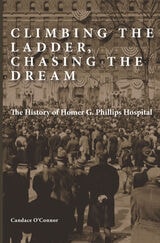
Climbing the Ladder, Chasing the Dream
The History of Homer G. Phillips HospitalCandace O’Connor
University of Missouri Press, 2022
When the beautiful, up-to-date hospital opened, it attracted more black residents than any other such program in the United States. Patients also flocked to the hospital, as did nursing students who found there excellent training, ready employment, and a boost into the middle class. For decades, the hospital thrived; by the 1950s, three-quarters of African-American babies in St. Louis were born at Homer G.
But the 1960s and 1970s brought less need for all-black hospitals, as faculty, residents, and patients were increasingly welcome in the many newly integrated institutions. Ever-tightening city budgets meant less money for the hospital, and in 1979, despite protests from the African-American community, HGPH closed. Years later, the venerated, long-vacant building came to life again as the Homer G. Phillips Senior Living Community.
Candace O’Connor draws upon contemporary newspaper articles, institutional records, and dozens of interviews with former staff members to create the first, full history of the Homer G. Phillips Hospital. She also brings new facts and insights into the life and mysterious murder (still an unsolved case) of the hospital’s namesake, a pioneering Black attorney and civil rights activist who led the effort to build the sorely needed medical facility in the Ville neighborhood.
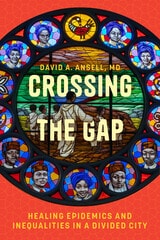
Crossing the Gap
Healing Epidemics and Inequalities in a Divided CityDavid A. Ansell, MD
University of Chicago Press, 2026
A doctor, a disinvested neighborhood, and a radical experiment to close America’s death gap.
Two girls are born in the same Chicago hospital. Their neighborhoods—just seven train stops apart—will shape their futures and help determine how long they live. One will celebrate her eighty-fifth birthday. The other will die before sixty-five.
This is the death gap: lives lost too soon. Crossing the Gap asks how a city with world-class hospitals can tolerate an epidemic of premature death—and tells the story of the people fighting to end it.
In his landmark book The Death Gap, physician and health equity leader David A. Ansell exposed how structural racism and poverty shorten lives. He moves beyond diagnosis in Crossing the Gap to explore what happens when a major medical center joins forces with pastors, community organizers, residents, and young leaders on Chicago’s West Side to redefine what a hospital owes its neighbors. Part medical memoir and part urban chronicle, Crossing the Gap follows groundbreaking initiatives such as West Side United and the Sankofa Wellness Village as they confront decades of disinvestment and work to build healthier communities.
Through stories of collaboration, courage, conflict, and community leadership, Ansell shows how neighborhood voices, rigorous data, and moral imagination can transform health systems from bystanders into partners for change—not just in one city but throughout the nation.

Emergency
COVID-19 and the Uneven Valuation of LifeClaire Laurier Decoteau
University of Chicago Press, 2024
The COVID-19 pandemic inaugurated a state of emergency unprecedented for most Americans. Some could observe this emergency from the relative safety of their homes, but those in marginalized communities, without access to the same privileges, were forced to risk their health and well-being.
In Emergency, sociologist Claire Laurier Decoteau documents and theorizes the emergencies of COVID-19 by looking at the experiences of Chicagoans and the policies that shaped their lives. She describes the uneven racial impact of COVID-19 on Black and Latinx Chicagoans as a crisis within a crisis, caused by a convergence of emergencies: a state of emergency that protected white supremacy and wealth, the slow emergencies racially marginalized populations have faced for decades due to the long-term gutting of care infrastructure and deindustrialization, and the sacrifice “essential workers” were asked to make to protect the United States economy. As Decoteau shows, the city’s “racial equity” project used data to determine which communities would be given scarce resources, but once positivity or death rates declined, resources were retracted and redistributed elsewhere. City officials thus attempted to manage these converging emergencies by manipulating epidemiological data and orchestrating systems for interpreting that data. Decoteau makes clear that the emergencies precipitated by COVID-19 long predated the pandemic, and that we will continue to live with their compounding crises if we do not tackle their structural underpinnings.
Indigenous Health and Justice
Edited by Karen Jarratt-Snider and Marianne O. Nielsen
University of Arizona Press, 2024

Just Enough to Put Him Away Decent
Death Care, Life Extension, and the Making of a Healthier South, 1900-1955Kristine M. McCusker
University of Illinois Press, 2023
Kristine McCusker charts the dramatic transformation that took place when southerners in particular and Americans in general changed their thinking about when one should die, how that death could occur, and what decent burial really means. As she shows, death care evolved from being a community act to a commercial one where purchasing a purple coffin and hearse ride to the cemetery became a political statement and the norm. That evolution also required interactions between perfect strangers, especially during the world wars as families searched for their missing soldiers. In either case, being put away decent, as southerners called burial, came to mean something fundamentally different in 1955 than it had just fifty years earlier.
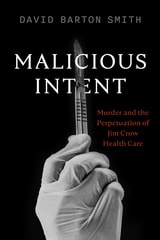
Malicious Intent
Murder and the Perpetuation of Jim Crow Health CareDavid Barton Smith
Vanderbilt University Press, 2023
Race-related disparities in American death rates, exacerbated once again by the COVID-19 pandemic, have persisted since the birth of the modern US medical system a century ago. A unique but perpetually unequal history has prevented the United States from providing the kind of health care assurances that are taken for granted in other industrialized nations. The underlying story is one of political, medical, and bureaucratic machinations, all motivated by a deliberate Jim Crow systemic design. In Malicious Intent, David Barton Smith traces the Jean Cowsert story and the cold case of her death as a through line to explain the construction and fulfillment of an unequal health care system that would rather sacrifice many than provide for Black Americans.
Cowsert’s suspicious death came at a key moment in the struggle for universal health care in the wealthiest country on earth. Malicious Intent is a history of those failed efforts and a story of selective amnesia about one doctor’s death and the movement she fought for.

Materia Medica
Black Women, White Doctors, and Spectacular GynecologyNicole N. Ivy
Duke University Press, 2026
Nested Ecologies
A Multilayered Ethnography of Functional MedicineRosalynn A. Vega
University of Texas Press, 2023
How functional medicine leverages systems biology and epigenetic science to treat the microbiome and reverse chronic disease.
Each body is a system within a system—an ecology within the larger context of social, political, economic, cultural, and environmental factors. This is one of the lessons of epigenetics, whereby structural inequalities are literally encoded in our genes. But our ecological embeddedness extends beyond DNA, for each body also teems with trillions of bacteria, yeast, and fungi, all of them imprints of our individual milieus. Nested Ecologies asks what it would mean to take seriously our microbial being, given that our internal ecologies are shaped by inequalities embedded in our physical and social environments.
Further, Rosalynn Vega argues that health practices focused on patients’ unique biology inadvertently reiterate systemic inequities. In particular, functional medicine—which attempts to heal chronic disease by leveraging epigenetic science and treating individual microbiomes—reduces illness to problems of “lifestyle,” principally diet, while neglecting the inability of poor people to access nutrition. Functional medicine thus undermines its own critique of the economics of health care. Drawing on novel digital ethnographies and reflecting on her own experience of chronic illness, Vega challenges us to rethink not only the determinants of well-being but also what it is to be human.
No Alternative
Childbirth, Citizenship, and Indigenous Culture in MexicoBy Rosalynn A. Vega
University of Texas Press, 2018
Recent anthropological scholarship on “new midwifery” centers on how professional midwives in various countries are helping women reconnect with “nature,” teaching them to trust in their bodies, respecting women’s “choices,” and fighting for women’s right to birth as naturally as possible. In No Alternative, Rosalynn A. Vega uses ethnographic accounts of natural birth practices in Mexico to complicate these narratives about new midwifery and illuminate larger questions of female empowerment, citizenship, and the commodification of indigenous culture, by showing how alternative birth actually reinscribes traditional racial and gender hierarchies.
Vega contrasts the vastly different birthing experiences of upper-class and indigenous Mexican women. Upper-class women often travel to birthing centers to be delivered by professional midwives whose methods are adopted from and represented as indigenous culture, while indigenous women from those same cultures are often forced by lack of resources to use government hospitals regardless of their preferred birthing method. Vega demonstrates that women’s empowerment, having a “choice,” is a privilege of those capable of paying for private medical services—albeit a dubious privilege, as it puts the burden of correctly producing future members of society on women’s shoulders. Vega’s research thus also reveals the limits of citizenship in a neoliberal world, as indigeneity becomes an object of consumption within a transnational racialized economy.
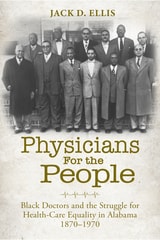
Physicians for the People
Black Doctors and the Struggle for Health-Care Equality in Alabama, 1870–1970Jack D. Ellis with a foreword by Alan I Marcus
University of Alabama Press, 2025
WINNER OF THE JAMES F. SULZBY AWARD
Healing against the odds—Black doctors, bold resistance, and the fight for medical justice in Alabama.
Physicians for the People chronicles the remarkable stories of 241 Black doctors who practiced medicine in Alabama during the Jim Crow era. Historian Jack D. Ellis reveals the ingenuity and resilience of these trailblazing doctors who defied segregation by establishing hospitals and clinics and providing vital healthcare to underserved Black communities.
This meticulously researched work draws on archival sources, oral histories, and an unparalleled database to dismantle the myth of a monolithic medical system in the Jim Crow South. Jack D. Ellis argues that the post–Civil War lives of Black physicians, dentists, pharmacists, nurses, and midwives hold special significance, illuminating both the causes of health care disparities among African Americans and the reasons for their continued underrepresentation in the medical professions.
Offering much of interest to students and scholars of Black history, medical history, and the civil rights movement, Physicians for the People exposes the deliberate exclusion faced by Black doctors within the white medical establishment and their ongoing fight for racial equality in medicine.
Radical Health
Unwellness, Care, and Latinx Expressive CultureJulie Avril Minich
Duke University Press, 2023
Seen But Not Heard
What Medical Records Don’t Tell Us About Women’s LivesJennifer M. Silva
Russell Sage Foundation, 2026
Medical clinicians, who are already overworked and burned out, are increasingly expected to understand and treat systemic social issues like poverty and racism. One aspect of this is documenting patient’s social risk factors in electronic health records (EHRs). But EHRs do not aways give the full story. Critically, they omit patients’ voices and perspectives about their lives, care, and whether their needs are being met. In Seen But Not Heard, sociologist Jennifer M. Silva and epidemiologist Annemarie G. Hirsch explore the gaps between what clinicians document in EHRs and women’s lived experiences.
Drawing on interviews with 87 non-college-educated, economically disadvantaged women living in rural America and their health records from a large, non-profit health system, Silva and Hirsch find that the stories that medical records provide and the stories that women tell about themselves differ dramatically. Medical charts often translate women’s suffering into sterile diagnostic codes, prescriptions, and treatment plans. Some women felt heard by their clinicians, believed they received adequate care. Many of these women thought their clinicians went above and beyond to help meet their needs by offering them information on how to apply for benefits like food stamps or childcare subsidies and helping them obtain necessary items like mattress covers and winter coats. More often, however, women felt that clinicians were detached from their everyday struggles to survive, whether that meant keeping their families intact even in the face of violence or finding money to pay the never-ending string of bills.
Silva and Hirsch argue that because the system of healthcare delivery interprets social problems as individual failings it often reproduces long-standing injurious stereotypes of women as hysterical, recalcitrant, impure, and gluttonous. For some healthcare providers, knowledge about patients’ social risk factors can become a source of control and punishment, such as denying patients care or reporting patients to child welfare services. Patients described clinicians mobilizing harmful stereotypes about marriage and motherhood, race, and poverty during their appointments. Some of the women’s most traumatic experiences in the healthcare system were completely missing from their EHRs. These troubling experiences ultimately deter women from accessing healthcare, discourages them from sharing their experiences with clinicians, and in some cases, makes their health and social problems worse. Silva and Hirsch offer several policies and practices that would improve women’s experiences in clinical encounters, such as training clinicians in trauma-informed and culturally responsive care, as well as national investments in housing, food security, transportation, and environmental justice.
Seen But Not Heard is a disturbing but necessary examination of the ways vulnerable women are often failed by the healthcare system and offers solutions that will allow healthcare workers to better address the structural barriers faced by their patients.
Sick Work
Exhaustion, Labor, and Invisible IllnessEmily Lim Rogers
Duke University Press, 2026
Sickening
Anti-Black Racism and Health Disparities in the United StatesAnne Pollock
University of Minnesota Press, 2021
An event-by-event look at how institutionalized racism harms the health of African Americans in the twenty-first century
A crucial component of anti-Black racism is the unconscionable disparity in health outcomes between Black and white Americans. Sickening examines this institutionalized inequality through dramatic, concrete events from the past two decades, revealing how unequal living conditions and inadequate medical care have become routine.
From the spike in chronic disease after Hurricane Katrina to the lack of protection for Black residents during the Flint water crisis—and even the life-threatening childbirth experience for tennis star Serena Williams—author Anne Pollock takes readers on a journey through the diversity of anti-Black racism operating in healthcare. She goes beneath the surface to deconstruct the structures that make these events possible, including mass incarceration, police brutality, and the hypervisibility of Black athletes’ bodies. Ultimately, Sickening shows what these shocking events reveal about the everyday racialization of health in the United States.
Concluding with a vital examination of racialized healthcare during the COVID pandemic and the Black Lives Matter rebellions of 2020, Sickening cuts through the mind-numbing statistics to vividly portray healthcare inequalities. In a gripping and passionate style, Pollock shows the devastating reality and consequences of systemic racism on the lives and health of Black Americans.

Structures of Indifference
An Indigenous Life and Death in a Canadian CityMary Jane Logan McCallum
University of Manitoba Press, 2018
Tell Me Why My Children Died
Rabies, Indigenous Knowledge, and Communicative JusticeCharles L. Briggs and Clara Mantini-Briggs
Duke University Press, 2016
The City and the Hospital
The Paradox of Medically Overserved CommunitiesDaniel Skinner, Jonathan R. Wynn, and Berkeley Franz
University of Chicago Press, 2023
An enduring paradox of urban public health is that many communities around hospitals are economically distressed and, counterintuitively, medically underserved. In The City and the Hospital two sociologists, Jonathan R. Wynn and Berkeley Franz, and a political scientist, Daniel Skinner, track the multiple causes of this problem and offer policy solutions.
Focusing on three urban hospitals—Connecticut’s Hartford Hospital, the flagship of the Hartford Healthcare system; the Cleveland Clinic, which coordinates with other providers for routine care while its main campus provides specialty care; and the University of Colorado Hospital, a rare example of an urban institution that relocated to a new community—the authors analyze the complicated relationship between a hospital and its neighborhoods. On the one hand, hospitals anchor the communities that surround them, often staying in a neighborhood for decades. Hospitals also craft strategies to engage with the surrounding community, many of those focused on buying locally and hiring staff from their surrounding area. On the other hand, hospitals will often only provide care to the neighboring community through emergency departments, reserving advanced medical care and long-term treatment for those who can pay a premium for it. In addition, the authors show, hospitals frequently buy neighborhood real estate and advocate for development programs that drive gentrification and displacement.
To understand how urban healthcare institutions work with their communities, the authors address power, history, race, and urbanity as much as the workings of the medical industry. These varied initiatives and effects mean that understanding urban hospitals requires seeing them in a new light—not only as medical centers but as complicated urban forces.
The Death Gap
How Inequality KillsDavid A. Ansell, MD
University of Chicago Press, 2017
While the contrasts and disparities among Chicago’s communities are particularly stark, the death gap is truly a nationwide epidemic—as Ansell shows, there is a thirty-five-year difference in life expectancy between the healthiest and wealthiest and the poorest and sickest American neighborhoods. If you are poor, where you live in America can dictate when you die. It doesn’t need to be this way; such divisions are not inevitable. Ansell calls out the social and cultural arguments that have been raised as ways of explaining or excusing these gaps, and he lays bare the structural violence—the racism, economic exploitation, and discrimination—that is really to blame. Inequality is a disease, Ansell argues, and we need to treat and eradicate it as we would any major illness. To do so, he outlines a vision that will provide the foundation for a healthier nation—for all.
Inequality is all around us, and often the distance between high and low life expectancy can be a matter of just a few blocks. But geography need not be destiny, urges Ansell. In The Death Gap he shows us how we can face this national health crisis head-on and take action against the circumstances that rob people of their dignity and their lives.
The Death Gap
How Inequality KillsDavid A. Ansell, MD
University of Chicago Press, 2021
While the contrasts and disparities among Chicago’s communities are particularly stark, the death gap is truly a nationwide epidemic—as Ansell shows, there is a thirty-five-year difference in life expectancy between the healthiest and wealthiest and the poorest and sickest American neighborhoods. If you are poor, where you live in America can dictate when you die. It doesn’t need to be this way; such divisions are not inevitable. Ansell calls out the social and cultural arguments that have been raised as ways of explaining or excusing these gaps, and he lays bare the structural violence—the racism, economic exploitation, and discrimination—that is really to blame. Inequality is a disease, Ansell argues, and we need to treat and eradicate it as we would any major illness. To do so, he outlines a vision that will provide the foundation for a healthier nation—for all.
As the COVID-19 mortality rates in underserved communities proved, inequality is all around us, and often the distance between high and low life expectancy can be a matter of just a few blocks. Updated with a new foreword by Chicago mayor Lori Lightfoot and an afterword by Ansell, The Death Gap speaks to the urgency to face this national health crisis head-on.
Therapy Tech
The Digital Transformation of Mental HealthcareEmma Bedor Hiland
University of Minnesota Press, 2021
A pointed look at the state of tech-based mental healthcare and what we must do to change it
Proponents of technology trumpet it as the solution to the massive increase in the mental distress that confronts our nation. They herald the arrival of algorithms, intelligent chatbots, smartphone applications, telemental healthcare services, and more—but are these technological fixes really as good as they seem? In Therapy Tech, Emma Bedor Hiland presents the first comprehensive study of how technology has transformed mental healthcare, showing that this revolution can’t deliver what it promises.
Far from providing a solution, technological mental healthcare perpetuates preexisting disparities while relying on the same failed focus on personal responsibility that has let us down before. Through vivid, in-depth case studies, Therapy Tech reveals these problems, covering issues including psychosurveillance on websites like Facebook and 7 Cups of Tea, shortcomings of popular AI “doctors on demand” like Woebot, Wysa, and Joy, and even how therapists are being conscripted into the gig economy.
Featuring a vital coda that brings Therapy Tech up to date for the COVID era, this book is the first to give readers a large-scale analysis of mental health technologies and the cultural changes they have enabled. Both a sobering dissection of the current state of mental health and a necessary warning of where things are headed, Therapy Tech makes an important assertion about how to help those in need of mental health services today.
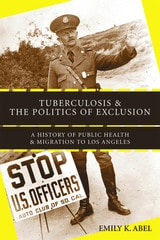
Tuberculosis and the Politics of Exclusion
A History of Public Health and Migration to Los AngelesAbel, Emily K.
Rutgers University Press, 2007
Winner of the 2008 Arthur J. Viseltear Prize from the American Public Health Association and Nominated for the 2008 William H. Welch Medal, AAHM
Though notorious for its polluted air today, the city of Los Angeles once touted itself as a health resort. After the arrival of the transcontinental railroad in 1876, publicists launched a campaign to portray the city as the promised land, circulating countless stories of miraculous cures for the sick and debilitated. As more and more migrants poured in, however, a gap emerged between the city’s glittering image and its dark reality.
Emily K. Abel shows how the association of the disease with “tramps” during the 1880s and 1890s and Dust Bowl refugees during the 1930s provoked exclusionary measures against both groups. In addition, public health officials sought not only to restrict the entry of Mexicans (the majority of immigrants) during the 1920s but also to expel them during the 1930s.
Abel’s revealing account provides a critical lens through which to view both the contemporary debate about immigration and the U.S. response to the emergent global tuberculosis epidemic.