Results by title
4 books match the query 'Disrupting'
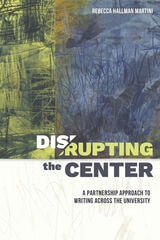
Disrupting the Center
A Partnership Approach to Writing Across the UniversityRebecca Hallman Martini
Utah State University Press, 2021
Using on-site research and critical ethnographic study from one university writing center, Rebecca Hallman Martini establishes an innovative, cross-disciplinary partnership approach to writing instruction in which peer tutoring plays an integral curricular role. Case studies detail three partnerships that respond directly to existing or potential disruptive innovations in higher education and showcase important concepts: mapping mutual benefit and stakeholder engagement in an online studio/hybrid first-year writing program partnership in response to online education, creating negotiated space to work through ethical issues involved when working with a public-private partnership to develop a required extracurricular portfolio project in a business school, and building transformational partnerships through establishing a writing-in-the-professions curriculum in the College of Engineering in response to career readiness initiatives.
Disrupting the Center uses interviews, observations, focus groups, analysis of consultations, meetings, and shared documents such as annual reports, budgets, assessment data, assignments, and syllabi to generate a wide view of how systems work. Writing centers are flexible university-wide service spaces where students go for one-on-one and group writing support that can become dynamic spaces for writing pedagogy by disrupting, revitalizing, and reinventing the epistemic foundations of current rhetoric and composition landscapes and traditional approaches to writing.
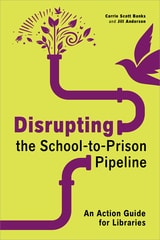
Disrupting the School-to-Prison Pipeline
An Action Guide for LibrariesCarrie Scott Banks and Jill Anderson
American Library Association, 2026
The school-to-prison pipeline impacts communities across the country; often, this system and families impacted by it remain invisible. But librarians, educators, and others who work with youth know first-hand that libraries and reading can be life-altering for youth impacted by incarceration. Written by public librarians who have supported youth before, during, and after incarceration, this book draws from their own experiences while showcasing insights from other library workers, researchers, educators, people who work in the juvenile justice fields, and mental health professionals. Designed to empower libraries and their staff to provide children and teens with information, visibility, knowledge and skills, recreation, and role models, it shares practical strategies for helping youth avoid the school-to-prison pipeline or contend with it. Readers will discover
- a concise explanation of the school-to-prison pipeline, including statistics on how and why it disproportionately impacts LGBTQ+, BIPOC, and disabled youth;
- concrete, proven strategies for disrupting youth incarceration pathways by giving young people the tools and support they need to avoid incarceration;
- steps for bolstering youth engagement during out of school time;
- guidance on how to align disciplinary approaches with trauma-informed practices when dealing with rowdy youth and other disruptive behavior;
- an overview of what libraries are doing to provide programs and services inside a youth facility, including literacy support, high school equivalency/GED programs, and televisiting;
- strategies for combatting the isolation of children of incarcerated parents by creating inclusive and welcoming library environments;
- information about the complex and difficult process of reentry for incarcerated youth, with adaptable ideas and lessons from the work being done in libraries for reentering adults; and
- an inspiring vision, extrapolating from work in adjacent fields, of what libraries can do to overcome barriers to bringing more youth into the library.
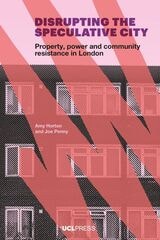
Disrupting the Speculative City
Property, Power and Community Resistance in LondonAmy Horton and Joe Penny
University College London, 2024
Disrupting the Speculative City tells the story of how the Haringey Development Vehicle community coalition, defeated one of the most ambitious programs of state-led gentrification in London. Drawing on the accounts of those at the heart of local statecraft and grassroots organizations, and analyzing crucial developments in property investment, this book explores a significant and inspirational success for campaigners in London, where social cleansing has become the default outcome of redevelopment.

Toxic Dynamics
Disrupting, Dismantling, and Transforming Academic Library CultureRussell Michalak
Assoc of College & Research Libraries, 2024
Toxic Dynamics: Disrupting, Dismantling, and Transforming Academic Library Culture provides practical solutions for confronting these complex issues and innovative ways to promote a healthy and sustainable work culture. It addresses critical and timely challenges such as faculty versus staff or us versus them mentality, unionization, gendered labor, organizational change, self-care, tenure, and promotion. Authors from all sizes and types of academic libraries provide evidence-based solutions to mitigate the negative effects of toxicity, change management strategies, and ways to confront and challenge values that harm library workers and their well-being.
By understanding the root causes of toxic cultures, recognizing their impact, and implementing solutions, leaders can create a more supportive and positive work environment and improve morale, retention, and productivity. Toxic Dynamics is an important resource for anyone interested in improving workplace culture and addressing issues related to toxicity and inequity, and for library leaders at all levels.