Results by title
8 books match the query 'Distance'

Action at a Distance
John Durham Peters
University of Minnesota Press, 2020
How are human actions shaped by the materiality of media?
Contemporary media leads us more than ever to an ‘acting at a distance,’ an acting entangled with the materiality of communication and the mediality of transmission. This book explores this crucial phenomenon thereby introducing urgent questions of human interaction, the binding and breaking of time and space, and the entanglement of the material and the immaterial.
Three vivid inquiries deal with histories and theories of mediality and materiality: John Durham Peters looks at episodes of simultaneity and synchronization. Christina Vagt discusses the agency of computer models against the backdrop of aesthetic theories by Henri Bergson and Hans Blumenberg, and Florian Sprenger discusses early electrical transmissions through copper wire and the temporality of instantaneity.
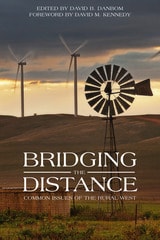
Bridging the Distance
Common Issues of the Rural WestDavid B. Danbom
University of Utah Press, 2015
The essays in Bridging the Distance are fresh, informative, and insightful examinations of the complex problems facing the rural West. This is a book that will spur both conversations and the search for solutions.
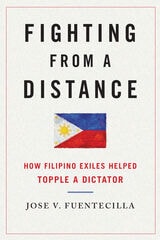
Fighting from a Distance
How Filipino Exiles Helped Topple a DictatorJose V. Fuentecilla
University of Illinois Press, 2013
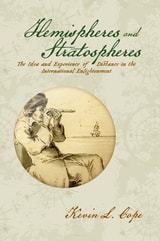
Hemispheres and Stratospheres
The Idea and Experience of Distance in the International EnlightenmentKevin L. Cope
Bucknell University Press, 2021
Published by Bucknell University Press. Distributed worldwide by Rutgers University Press.
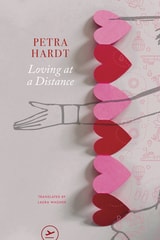
Loving at a Distance
Petra Hardt
Seagull Books, 2022
Traveling from the Silicon Valley through the college towns of Berkeley and Stanford, Loving at a Distance is a touching memoir that describes a European bibliophile’s experiences in the high-tech sectors of California. Living on two different continents is always a big challenge for a family. In a pandemic, however, that challenge becomes almost insurmountable.
An aging German grandmother, Petra Hardt finds that her regular journeys across the Atlantic to visit her children and grandchildren in California aren’t really helping her understand the Californian way of life and work. With self-irony and laconism, she details the connections and confusions between generations, exploring how different lifestyles and attitudes have affected her relationships. Her relatable experience of trying to bond with loved ones across distance is one shared by millions of other families around the world.
The personal impressions and observations are complemented by flashbacks to the author’s career in the international book trade. Why were the business trips to Beijing, Beirut, and Kolkata so easy to manage, while living in California is so hard? Showing us the world through Hardt’s grandmotherly eyes, Loving at a Distance is a tender and lively memoir about different ways of living and working in the age of globalism.
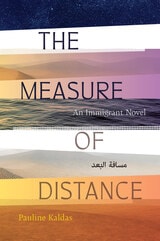
The Measure of Distance
An Immigrant NovelPauline Kaldas
University of Arkansas Press, 2023
This family saga begins when Salim, the eldest of three brothers, moves to Cairo at the start of the twentieth century with dreams of opening his own bakery. His decision to leave his ancestral village of Kom Ombo despite his parents’ objections reverberates across generations, kicking off a series of migrations that shape the lives of his family and their descendants throughout the decades that follow. These migrations only intensify after the revolution of 1952—with Misha, Salim’s eldest grandchild, being the first to flee to “Amreeka,” his annual phone calls home becoming briefer and briefer with each passing year.
Culminating with the 2011 protests in Tahrir Square, Pauline Kaldas’s The Measure of Distance is a detailed portrait of immigration against the backdrop of an Egypt in constant flux and an America that is always falling short of the fantasy. Alternating between tales of those who migrate and those who stay, this expansive novel follows its characters as they determine the course of their lives, often choosing one uncertainty over another as they migrate to new lands or plant their roots more firmly in their homeland.

Twelve Views from the Distance
Mutsuo Takahashi
University of Minnesota Press, 2012
From one of the foremost poets in contemporary Japan comes this entrancing memoir that traces a boy’s childhood and its intersection with the rise of the Japanese empire and World War II. Originally published in 1970, this translation is the first available in English.
In twelve chapters that visit and revisit critical points in his boyhood, Twelve Views from the Distance presents a vanished time and place through the eyes of an accomplished poet. Recounting memories from his youth, Mutsuo Takahashi captures the full range of his internal life as a boy, shifting between his experiences and descriptions of childhood friendships, games, songs, and school. With great candor, he also discusses the budding awareness of his sexual preference for men, providing a rich exploration of one man’s early queer life in a place where modern, Western-influenced models of gay identity were still unknown.
Growing up poor in rural southwestern Japan, far from the urban life that many of his contemporaries have written about, Takahashi experienced a reality rarely portrayed in literature. In addition to his personal remembrances, the book paints a vivid portrait of rural Japan, full of oral tradition, superstition, and remnants of customs that have quickly disappeared in postwar Japan. With profuse local color and detail, he re-creates the lost world that was the setting for his beginnings as a gay man and poet.
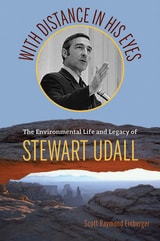
With Distance in His Eyes
The Environmental Life and Legacy of Stewart UdallScott Raymond Einberger
University of Nevada Press, 2018
What can we learn from this farsighted individual?
In a day and age of partisan politics, poor congressional approval ratings, and global warming and climate change, this captivating biography offers a profound and historical record into Udall’s life-long devotion to environmental issues he cared about most deeply—issues more relevant today than they were then. Intimate moments include Udall’s learning of the Kennedy assassination, his push for civil rights for African Americans, his meeting in the U.S.S.R. with Nikita Khrushchev—the first Kennedy cabinet member to do so—and his warnings about global warming 50 years prior to Al Gore’s Nobel Prize-winning film.