Results by title
8 books match the query 'Divide'
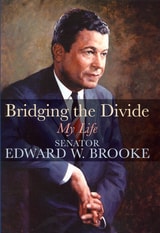
Bridging the Divide
My LifeEdward W. Brooke
Rutgers University Press, 2006
President Lyndon Johnson never understood it. Neither did President Richard Nixon. How could a black man, a Republican no less, be elected to the United States Senate from liberal, Democratic Massachusetts-a state with an African American population of only 2 percent?
The mystery of Senator Edward Brooke's meteoric rise from Boston lawyer to Massachusetts attorney general to the first popularly elected African American U.S. senator with some of the highest favorable ratings of any Massachusetts politician confounded many of the best political minds of the day. After winning a name for himself as the first black man to be elected a state's attorney general, as a crime fighter, and as the organizer of the Boston Strangler Task Force, this articulate and charismatic man burst on the national scene in 1966 when he ran for the Senate.
In two terms in the Senate during some of the most racially tormented years of the twentieth century, Brooke, through tact, personality, charm, and determination, became a highly regarded member of "the most exclusive club in the world." The only African American senator ever to be elected to a second term, Brooke established a reputation for independent thinking and challenged the powerbrokers and presidents of the day in defense of the poor and disenfranchised.
In this autobiography, Brooke details the challenges that confronted African American men of his generation and reveals his desire to be measured not as a black man in a white society but as an individual in a multiracial society. Chided by some in the white community as being "too black to be white" and in the black community as "too white to be black," Brooke sought only to represent the people of Massachusetts and the national interest.
His story encompasses the turbulent post-World War II years, from the gains of the civil rights movement, through the riotous 1960s, to the dark days of Watergate, with stories of his relationships with the Kennedys, Martin Luther King Jr., Lyndon Johnson, Richard Nixon, Henry Kissinger, Colin Powell, and future senator Hillary Clinton. Brooke also speaks candidly of his personal struggles, including his bitter divorce from his first wife and, most recently, his fight against cancer.
A dramatic, compelling, and inspirational account, Brooke's life story demonstrates the triumph of the human spirit, offering lessons about politics, life, reconciliation, and love.

Connect and Divide
The Practice Turn in Media StudiesEdited by Erhard Schüttpelz, Ulrike Bergermann, Monika Dommann, Jeremy Stolow, and Nadine Taha
Diaphanes, 2018
This new anthology takes stock of our empirical and historical understanding of the two-sided nature of media and tracks the recent turn in media studies to examining practice itself. A unique discussion of the intersection of media theory and practice theory, Connect and Divide explores how distributions of knowledge, labor, and power may be hidden in what remains untraceable about media, shedding vital light on the social implications of media theory today.

Crossing the Divide
Representations of Deafness in BiographyRachel M. Hartig
Gallaudet University Press, 2006
This remarkable volume examines the process by which three deaf, French biographers from the 19th and 20th centuries attempted to cross the cultural divide between deaf and hearing worlds through their work. The very different approach taken by each writer sheds light on determining at what point an individual’s assimilation into society endanger his or her sense of personal identity.
Author Hartig begins by assessing the publications of Jean-Ferdinand Berthier (1803-1886). Berthier wrote about Auguste Bébian, Abbé de l’Epée, and Abbé Sicard, all of whom taught at the National Institute for the Deaf in Paris. Although Berthier presented compelling portraits of their entire lives, he paid special attention to their political and social activism, his main interest.
Yvonne Pitrois (1880-1937) pursued her particular interest in the lives of deaf-blind people. Her biography of Helen Keller focused on her subject’s destiny in conjunction with her unique relationship with Anne Sullivan. Corinne Rocheleau-Rouleau (1881-1963) recounted the historical circumstances that led French-Canadian pioneer women to leave France. The true value of her work resides in her portraits of these pioneer women: maternal women, warriors, religious women, with an emphasis on their lives and the choices they made.
Crossing the Divide reveals clearly the passion these biographers shared for narrating the lives of those they viewed as heroes of an emerging French deaf community. All three used the genre of biography not only as a means of external exploration but also as a way to plumb their innermost selves and to resolve ambivalence about their own deafness.
Detroit
Race Riots, Racial Conflicts, and Efforts to Bridge the Racial DivideJoe T. Darden and Richard Thomas
Michigan State University Press, 2013
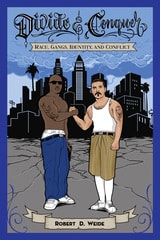
Divide & Conquer
Race, Gangs, Identity, and ConflictRobert D. Weide
Temple University Press, 2022
Hyper-criminalization and the normalization of violence was an integral aspect of Robert Weide’s formative years growing up in Los Angeles in the 1980s and 1990s, where Sureño, Crip, and Blood gangs maintained a precarious coexistence, often punctuated by racialized gang violence. His insider status informs Divide & Conquer, which considers how the capitalist economy, the race concept, and nationalist ideology have made gang members the instruments of their own oppression, resulting in racialized sectarian conflicts spanning generations between African American and Latino gangs in Los Angeles and California’s prisons.
While gang members may fail to appreciate the deeper historical and conceptual foundations of these conflicts, they rarely credit naked bigotry as the root cause. As Weide asserts, they divide themselves according to inherited groupist identities, thereby turning them against one another in protracted blood feuds across gang lines and racial lines.
Weide explores both the historical foundations and the conceptual and cultural boundaries and biases that divide gang members across racial lines, detailing case studies of specific racialized gang conflicts between Sureño, Crip, and Blood gangs. Weide employs mixed-methods research, having spent nearly a decade on ethnographic fieldwork and conducted over one hundred formal interviews with gang members and gang enforcement officers concerning taboo subjects like prison and gang politics, and transracial gang membership.
Divide & Conquer concludes with encouraging developments in recent years, as gang members themselves, on their own volition, have intervened to build solidarity and bring racialized gang conflicts between them to an end.

Divide and Pacify
Strategic Social Policies and Political Protests in Post-Communist DemocraciesPieter Vanhuysse
Central European University Press, 2006
Despite dramatic increases in poverty, unemployment, and social inequalities, the Central and Eastern European transitions from communism to market democracy in the 1990s have been remarkably peaceful. This book proposes a new explanation for this unexpected political quiescence. It shows how reforming governments in Poland, Hungary and the Czech Republic have been able to prevent massive waves of strikes and protests by the strategic use of welfare state programs such as pensions and unemployment benefits.
Divide and Pacify explains how social policies were used to prevent massive job losses with softening labor market policies, or to split up highly aggrieved groups of workers in precarious jobs by sending some of them onto unemployment benefits and many others onto early retirement and disability pensions. From a narrow economic viewpoint, these policies often appeared to be immensely costly or irresponsibly populist. Yet a more inclusive social-scientific perspective can shed new light on these seemingly irrational policies by pointing to deeper political motives and wider sociological consequences.

Divide, Provide and Rule
An Integrative History of Poverty Policy, Social Reform, and Social Policy in Hungary under the Habsburg MonarchySusan Zimmermann
Central European University Press, 2011

Learning To Divide The World
Education at Empire’s EndJohn Willinsky
University of Minnesota Press, 2000