Results by title
17 books match the query 'Dixon, Wheeler Winston'
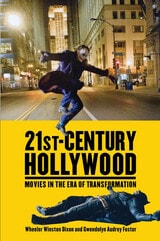
21st-Century Hollywood
Movies in the Era of TransformationDixon, Wheeler Winston
Rutgers University Press, 2011
They are shot on high-definition digital cameras—with computer-generated effects added in postproduction—and transmitted to theaters, websites, and video-on-demand networks worldwide. They are viewed on laptop, iPod, and cell phone screens. They are movies in the 21st century—the product of digital technologies that have revolutionized media production, content distribution, and the experience of moviegoing itself.
21st-Century Hollywood introduces readers to these global transformations and describes the decisive roles that Hollywood is playing in determining the digital future for world cinema. It offers clear, concise explanations of a major paradigm shift that continues to reshape our relationship to the moving image. Filled with numerous detailed examples, the book will both educate and entertain film students and movie fans alike.
A History of Horror
Wheeler Winston Dixon
Rutgers University Press, 2010
Arranged by decades, with outliers and franchise films overlapping some years, this one-stop sourcebook unearths the historical origins of characters such as Dracula, Frankenstein, and the Wolfman and their various incarnations in film from the silent era to comedic sequels. A History of Horror explores how the horror film fits into the Hollywood studio system and how its enormous success in American and European culture expanded globally over time.
Dixon examines key periods in the horror film-in which the basic precepts of the genre were established, then banished into conveniently reliable and malleable forms, and then, after collapsing into parody, rose again and again to create new levels of intensity and menace. A History of Horror, supported by rare stills from classic films, brings over fifty timeless horror films into frightfully clear focus, zooms in on today's top horror Web sites, and champions the stars, directors, and subgenres that make the horror film so exciting and popular with contemporary audiences.
A History of Horror, 2nd Edition
Wheeler Winston Dixon
Rutgers University Press, 2023
Ever since horror leapt from popular fiction to the silver screen in the late 1890s, viewers have experienced fear and pleasure in exquisite combination. Wheeler Winston Dixon's fully revised and updated A History of Horror is still the only book to offer a comprehensive survey of this ever-popular film genre.
Arranged by decades, with outliers and franchise films overlapping some years, this one-stop sourcebook unearths the historical origins of characters such as Dracula, Frankenstein, and the Wolfman and their various incarnations in film from the silent era to comedic sequels. In covering the last decade, this new edition includes coverage of the resurgence of the genre, covering the swath of new groundbreaking horror films directed by women, Black and queer horror films, and a new international wave in body horror films.
A History of Horror explores how the horror film fits into the Hollywood studio system, how the distribution and exhibition of horror films have changed in a post-COVID world, and how its enormous success in American and European culture expanded globally over time.
Dixon examines key periods in the horror film-in which the basic precepts of the genre were established, then banished into conveniently reliable and malleable forms, and then, after collapsing into parody, rose again and again to create new levels of intensity and menace. A History of Horror, supported by rare stills from classic films, brings over sixty timeless horror films into frightfully clear focus, zooms in on today's top horror Web sites, and champions the stars, directors, and subgenres that make the horror film so exciting and popular with contemporary audiences.
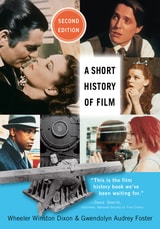
A Short History of Film
Dixon, Wheeler Winston
Rutgers University Press, 2013
Wheeler Winston Dixon and Gwendolyn Audrey Foster present new and amended coverage of the industry in addition to updating the birth and death dates and final works of notable directors. Their expanded focus on key films brings the book firmly into the digital era and chronicles the death of film as a production medium.
The book takes readers through the invention of the kinetoscope, the introduction of sound and color between the two world wars, and ultimately the computer-generated imagery of the present day. It details significant periods in world cinema, including the early major industries in Europe, the dominance of the Hollywood studio system in the 1930s and 1940s, and the French New Wave of the 1960s. Attention is given to small independent efforts in developing nations and the more personal independent film movement that briefly flourished in the United States, the significant filmmakers of all nations, and the effects of censorship and regulation on production everywhere. In addition, the authors incorporate the stories of women and other minority filmmakers who have often been overlooked in other texts.
Engaging and accessible, this is the best one-stop source for the history of world film available for students, teachers, and general audiences alike.
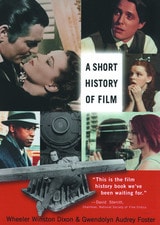
A Short History of Film
Dixon, Wheeler Winston
Rutgers University Press, 2008
Beginning with precursors of what we call moving pictures, Wheeler Winston Dixon and Gwendolyn Audrey Foster lead a fast-paced tour through the invention of the kinetoscope, the introduction of sound and color between the two world wars, and ultimately the computer generated imagery of the present day. They detail significant periods in world cinema, including the early major industries in Europe, the dominance of the Hollywood studio system in the 1930s and 1940s, and the French New Wave of the 1960s. Special attention is also given to small independent efforts in developing nations and the corresponding more personal independent film movement that briefly flourished in the United States, the significant filmmakers of all nations, censorship and regulation and how they have affected production everywhere, and a wide range of studios and genres. Along the way, the authors take great care to incorporate the stories of women and other minority filmmakers who have often been overlooked in other texts.
Compact and easily readable, this is the best one-stop source for the history of world film available to students, teachers, and general audiences alike.
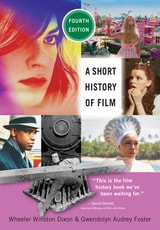
A Short History of Film, Fourth Edition
Wheeler Winston Dixon
Rutgers University Press, 2026
This updated and expanded edition of A Short History of Film provides an accessible overview of the major movements, directors, studios, and genres from the 1880s to the present. Succinct yet comprehensive, with more than 250 rare stills and illustrations, this edition provides new information on contemporary horror, comic book, and franchise films; issues surrounding women and minority filmmakers; the effects of the COVID-19 pandemic on movies worldwide; the shift from film to digital production; the rising use of artificial intelligence in cinema; and the impact of streaming on the industry.
Beginning with the precursors of moving pictures, Wheeler Winston Dixon and Gwendolyn Audrey Foster lead a fast-paced tour through the invention of the kinetoscope, the introduction of sound and color between the two world wars, and ultimately the computer-generated imagery of the present day. They detail significant periods in world cinema, including the creation of early major industries in Europe, the dominance of the Hollywood studio system in the 1930s and 1940s, and the French New Wave of the 1960s. They also highlight independent efforts in developing nations and the corresponding more personal independent film movement that briefly flourished in the United States.
Compact and easily readable, this is a vital history of international cinema is a one-stop resource for students, teachers, and general readers alike.
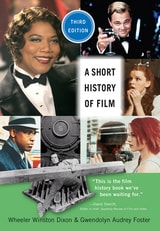
A Short History of Film, Third Edition
Dixon, Wheeler Winston
Rutgers University Press, 2018
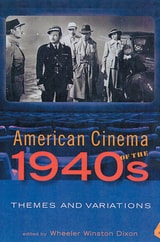
American Cinema of the 1940s
Themes and VariationsDixon, Wheeler Winston
Rutgers University Press, 2005
The 1940s was a watershed decade for American cinema and the nation. Shaking off the grim legacy of the Depression, Hollywood launched an unprecedented wave of production, generating some of its most memorable classics, including Citizen Kane, Rebecca, The Lady Eve, Sergeant York, and How Green Was My Valley. In 1942, Hollywood joined the national war effort with a vengeance, creating a series of patriotic and escapist films, such as Casablanca, Mrs. Miniver, The Road to Morocco, and Yankee Doodle Dandy.
With the end of the war, returning GIs faced a new America, in which the country had been transformed overnight. Film noir reflected a new public mood of pessimism and paranoia, in such classic films of betrayal and conflict as Kiss of Death, Force of Evil, Caught, and Apology for Murder, depicting a poisonous universe of femme fatales, crooked lawyers, and corrupt politicians.
With the threat of the atom bomb lurking in the background and the beginnings of the Hollywood Blacklist, the 1940s was a decade of crisis and change. Featuring essays by a group of respected film scholars and historians, American Cinema of the 1940s brings this dynamic and turbulent decade to life. Illustrated with many rare stills and filled with provocative insights, the volume will appeal to students, teachers, and to all those interested in cultural history and American film of the twentieth century.
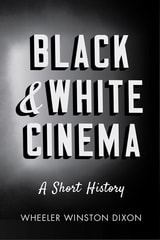
Black and White Cinema
A Short HistoryWheeler Winston Dixon
Rutgers University Press, 2015
Black and White Cinema is the first study to consider the use of black-and-white as an art form in its own right, providing a comprehensive and global overview of the era when it flourished, from the 1900s to the 1960s. Acclaimed film scholar Wheeler Winston Dixon introduces us to the masters of this art, discussing the signature styles and technical innovations of award-winning cinematographers like James Wong Howe, Gregg Toland, Freddie Francis, and Sven Nykvist. Giving us a unique glimpse behind the scenes, Dixon also reveals the creative teams—from lighting technicians to matte painters—whose work profoundly shaped the look of black-and-white cinema.
More than just a study of film history, this book is a rallying cry, meant to inspire a love for the artistry of black-and-white film, so that we might work to preserve this important part of our cinematic heritage. Lavishly illustrated with more than forty on-the-set stills, Black and White Cinema provides a vivid and illuminating look at a creatively vital era.
Cinema and Modernity
Pomerance, Murray
Rutgers University Press, 2006
The modern impulse gave us captivating technology and dark anxiety, rampant mobility and a world filled with strangers, the futuristic city and a fragmentation of experience. Motion pictures––the quintessence of modernism––entered into this cultural, technical, and philosophical richness with a vast public appeal and a jarring new vision of what life could be.
In Cinema and Modernity, Murray Pomerance brings together new essays by seventeen leading scholars to explore the complexity of the essential connection between film and modernity. Among the many films considered are Detour, Shock Corridor, The Last Laugh, Experiment in Terror, The Great Dictator, Leave Her to Heaven, The Talented Mr. Ripley, Eyes Wide Shut, Sunrise, The Crowd, The Shape of Things to Come, The War of the Worlds, The Day the Earth Stood Still, Scarlet Street, Shadow of a Doubt, Stella Dallas, The Blue Angel, Sullivan’s Travels, and Catch Me If You Can.
City That Never Sleeps
New York and the Filmic ImaginationPomerance, Murray
Rutgers University Press, 2007
The glittering skyscrapers of such films as On the Town have shadowed the characteristic seedy streets in which desperate, passionate stories have played out-as in Scandal Sheet and The Pawnbroker. In other films, the city is a cauldron of bright lights, technology, empire, egotism, fear, hunger, and change--the scenic epitome of America in the modern age.
From Street Scene and Breakfast at Tiffany's to Rosemary's Baby, The Warriors, and 25th Hour, the sixteen essays in this book explore the cinematic representation of New York as a city of experience, as a locus of ideographic characters and spaces, as a city of moves and traps, and as a site of allurement and danger. Contributors consider the work of Woody Allen, Blake Edwards, Alfred Hitchcock, Gregory La Cava, Spike Lee, Sidney Lumet, Vincente Minnelli, Roman Polanski, Martin Scorsese, Andy Warhol, and numerous others.
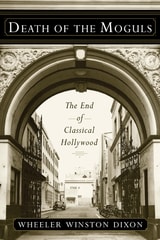
Death of the Moguls
The End of Classical HollywoodWheeler Winston Dixon
Rutgers University Press, 2012
Death of the Moguls is a detailed assessment of the last days of the “rulers of film.” Wheeler Winston Dixon examines the careers of such moguls as Harry Cohn at Columbia, Louis B. Mayer at MGM, Jack L. Warner at Warner Brothers, Adolph Zukor at Paramount, and Herbert J. Yates at Republic in the dying days of their once-mighty empires. He asserts that the sheer force of personality and business acumen displayed by these moguls made the studios successful; their deaths or departures hastened the studios’ collapse. Almost none had a plan for leadership succession; they simply couldn't imagine a world in which they didn’t reign supreme.
Covering 20th Century-Fox, Selznick International Pictures, Metro-Goldwyn-Mayer, Paramount Pictures, RKO Radio Pictures, Warner Brothers, Universal Pictures, Republic Pictures, Monogram Pictures and Columbia Pictures, Dixon briefly introduces the studios and their respective bosses in the late 1940s, just before the collapse, then chronicles the last productions from the studios and their eventual demise in the late 1950s and early 1960s. He details such game-changing factors as the de Havilland decision, which made actors free agents; the Consent Decree, which forced the studios to get rid of their theaters; how the moguls dealt with their collapsing empires in the television era; and the end of the conventional studio assembly line, where producers had rosters of directors, writers, and actors under their command.
Complemented by rare, behind-the-scenes stills, Death of the Moguls is a compelling narrative of the end of the studio system at each of the Hollywood majors as television, the de Havilland decision, and the Consent Decree forced studios to slash payrolls, make the shift to color, 3D, and CinemaScope in desperate last-ditch efforts to save their kingdoms. The aftermath for some was the final switch to television production and, in some cases, the distribution of independent film.
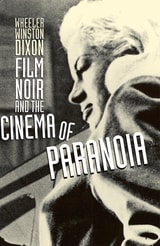
Film Noir and the Cinema of Paranoia
Dixon, Wheeler Winston
Rutgers University Press, 2009
Wheeler Winston Dixon's comprehensive work engages readers in an overview of noir and fatalist film from the mid-twentieth century to the present, ending with a discussion of television, the Internet, and dominant commercial cinema. Beginning with the 1940s classics, Film Noir and the Cinema of Paranoia moves to the "Red Scare" and other ominous expressions of the 1950s that contradicted an American split-level dream of safety and security. The dark cinema of the 1960s hosted films that reflected the tensions of a society facing a new and, to some, menacing era of social expression. From smaller studio work to the vibrating pulse of today's "click and kill" video games, Dixon boldly addresses the noir artistry that keeps audiences in an ever-consumptive stupor.
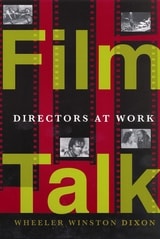
Film Talk
Directors at WorkDixon, Wheeler Winston
Rutgers University Press, 2007
The answers to these questions, along with many more little-known facts and insights, can be found in Film Talk, an in-depth, behind-the-scenes look at filmmaking from the 1940s to the present. In eleven intimate and revealing interviews, contemporary film directors speak frankly about their work-their successes and their disappointments, their personal aspirations, struggles, relationships, and the politics that affect the industry.
A medley of directors including those working in pop culture and documentary, as well as feminist filmmakers, social satirists, and Hollywood mavericks recount stories that have never before been published. Among them are Monte Hellman, the auteur of the minimalist masterpiece Two-Lane Blacktop; Albert Maysles, who with his late brother David, created some of the most important documentaries of the 1960s, including Salesman and The Beatles: What's Happening?; Robert Downey Sr., whose social satires Putney Swope and Greaser's Palace paved the way for a generation of filmmakers; Bennett Miller, whose film Capote won an Academy Award in 2005; and Jamie Babbit, a lesbian crossover director whose low-budget film But I'm a Cheerleader! became a mainstream hit.
The candid conversations, complimented by more than fifty photographs, including many that are rare, make this book essential reading for aspiring moviemakers, film scholars, and everyone interested in the how movies are made and who the fascinating individuals are who make them.
Film and Television After 9/11
Edited by Wheeler Winston Dixon
Southern Illinois University Press, 2004
In Film and Television After 9/11, editor Wheeler Winston Dixon and eleven other distinguished film scholars discuss the production, reception, and distribution of Hollywood and foreign films after the terrorist attacks of September 11, 2001, and examine how moviemaking has changed to reflect the new world climate.
While some contemporary films offer escapism, much of mainstream American cinema since 9/11 is centered on the desire for a “just war” in which military reprisals and escalation of warfare appear to be both inevitable and justified. Films of 2002 such as Black Hawk Down, Collateral Damage, and We Were Soldiers demonstrate a renewed audience appetite for narratives of conflict, reminiscent of the wave of filmmaking that surrounded American involvement in World War II.
The attacks on the World Trade Center and the Pentagon galvanized the American public initially, yet film critics wonder how this will play out over time. Film and Television After 9/11 is the first book to provide original insights into topics ranging from the international reception of post-9/11 American cinema, re-viewing films of our shared cinematic past in light of the attacks, and exploring parallels between post-9/11 cinema and World War II-era productions.
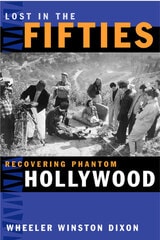
Lost in the Fifties
Recovering Phantom HollywoodWheeler Winston Dixon
Southern Illinois University Press, 2005
Lost in the Fifties: Recovering Phantom Hollywood reveals two 1950s: an era glorified in Hollywood movies and a darker reality reflected in the esoteric films of the decade. Renowned film scholar Wheeler Winston Dixon turns to the margins—the television shows and films of a hidden Hollywood—to offer an authentic view of the 1950s that counters the Tinsel-town version. Dixon examines the lost films and directors of the decade. Contrasting traditional themes of love, marriage, and family, Dixon’s 1950s film world unveils once-taboo issues of rape, prostitution, and gangs. Television shows such as Captain Midnight and Ramar of the Jungle are juxtaposed with the cheerful world of I Love Lucy and Howdy Doody. Highlighting directors including Herbert L. Strock, Leslie Martinson, Arnold Laven, and Charles Haas, Dixon provides new insights on the television series Racket Squad, Topper, and The Rifleman and the teen films I Was a Teenage Werewolf and High School Confidential.
Geared for scholars and students of film and pop culture, Lost in the Fifties includes twenty-five photos—many previously unpublished—and draws on rare interviews with key directors, actors, and producers. The volume provides the first detailed profile of the most prolific producer in Hollywood history, Sam Katzman, and his pop culture classics Rock Around the Clock and Earth vs. The Flying Saucers. Dixon profiles, for the first time, B-movie phenomenon Fred F. Sears, who directed more than fifty touchstone films of a generation, including the noir thriller Chicago Syndicate, the criminal career story Cell 2455 Death Row, and the 3-D color western The Nebraskan. Also profiled is Ida Lupino, the only woman to direct in Hollywood in the 1950s, who tackled issues of bigamy, teenage pregnancy, and sports corruption in The Bigamist, The Hitch-Hiker, Outrage, Never Fear, Not Wanted, and Hard, Fast and Beautiful, when no major studio would touch such controversial topics. Dixon also looks at the era’s social guidance films, which instructed adolescents in acceptable behavior, proper etiquette, and healthy hygiene.
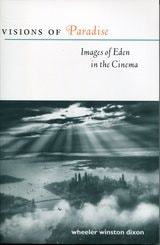
Visions of Paradise
Images of Eden in the CinemaDixon, Wheeler Winston
Rutgers University Press, 2006
Depictions of sex, violence, and crime abound in many of today's movies, sometimes making it seem that the idyllic life has vanished-even from our imaginations. But as shown in this unique book, paradise has not always been lost. For many years, depictions of heaven, earthly paradises, and utopias were common in popular films.
Illustrated throughout with intriguing, rare stills and organized to provide historical context, Visions of Paradise surveys a huge array of films that have offered us glimpses of life free from strife, devoid of pain and privation, and full of harmony. In films such as Moana, White Shadows in the South Seas, The Green Pastures, Heaven Can Wait, The Enchanted Forest, The Bishop's Wife, Carousel, Bikini Beach, and Elvira Madigan, characters and the audience partake in a vision of personal freedom and safety-a zone of privilege and protection that transcends the demands of daily existence.
Many of the films discussed are from the 1960s-perhaps the most edenic decade in contemporary cinema, when everything seemed possible and radical change was taken for granted. As Dixon makes clear, however, these films have not disappeared with the dreams of a generation; they continue to resonate today, offering a tonic to the darker visions that have replaced them.