Results by title
15 books match the query 'Do'
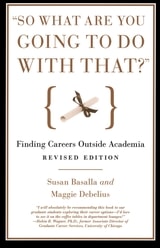
"So What Are You Going to Do with That?"
Finding Careers Outside AcademiaSusan Basalla and Maggie Debelius
University of Chicago Press, 2007
With “So What Are You Going to Do with That?” Susan Basalla and Maggie Debelius—Ph.D.’s themselves—answer all those questions with a resounding “Yes!” A witty, accessible guide full of concrete advice for anyone contemplating the jump from scholarship to the outside world, “So What Are You Going to Do with That?” covers topics ranging from career counseling to interview etiquette to translating skills learned in the academy into terms an employer can understand and appreciate. Packed with examples and stories from real people who have successfully made this daunting—but potentially rewarding— transition, and written with a deep understanding of both the joys and difficulties of the academic life, this fully revised and up-to-date edition will be indispensable for any graduate student or professor who has ever glanced at her CV, flipped through the want ads, and wondered, “What if?”
“I will absolutely be recommending this book to our graduate students exploring their career options—I’d love to see it on the coffee tables in department lounges!”—Robin B. Wagner, former associate director for graduate career services, University of Chicago
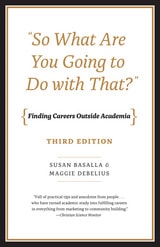
"So What Are You Going to Do with That?"
Finding Careers Outside Academia, Third EditionSusan Basalla and Maggie Debelius
University of Chicago Press, 2014
In this third edition of “So What Are You Going to Do with That?”, thoroughly revised with new advice for students in the sciences, Susan Basalla and Maggie Debelius—PhDs themselves—answer all those questions with a resounding “Yes!” A witty, accessible guide full of concrete advice for anyone contemplating the jump from scholarship to the outside world, “So What Are You Going to Do with That?” covers topics ranging from career counseling to interview etiquette to how to translate skills learned in the academy into terms an employer can understand and appreciate. Packed with examples and stories from real people who have successfully made this daunting—but potentially rewarding—transition, and written with a deep understanding of both the joys and difficulties of the academic life, this fully updated guide will be indispensable for any graduate student or professor who has ever glanced at his or her CV, flipped through the want ads, and wondered, “What if?”
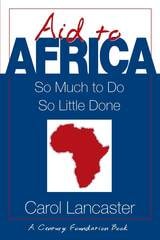
Aid to Africa
So Much To Do, So Little DoneCarol Lancaster
University of Chicago Press, 1999
This balanced but tough-minded analysis does not reject the potential usefulness of foreign aid but does offer recommendations for fundamental changes in how governments and multilateral aid agencies can operate more effectively.
Do the Americas Have a Common Literature?
Gustavo Pérez Firmat, ed.
Duke University Press, 1990
The essays here place the literature of the Americas in a hemispheric context by drawing on approaches derived from various schools of contemporary critical thought—Marxism, feminism, culture studies, semiotics, reception aesthetics, and poststructuralism. As part of their search for a distinctly New World literary idiom, the contributors engage not only the major North American and Spanish American writers, but also such “marginal” or “minor” literatures as Chicano, African American, Brazilian, and Québecois. In identifying areas of agreement and confluence, this work lays the groundwork for finding historical, ideological, and cultural homogeneity in the imaginative writing of the Americas.
Contributors. Lois Parkinson Zamora, David T. Haberly, José David Saldívar, Antonio Benítez-Rojo, José Piedra, Doris Sommer, Enrico Mario Santí, Eduardo González, John Irwin, Wendy B. Faris, René Prieto, Jonathan Monroe, Gustavo Pérez Firmat
First, Do No Harm
Power, Oppression, and Violence in HealthcareEdited by Nancy L. Diekelmann
University of Wisconsin Press, 2002
First, Do No Harm shows how health care professionals, with the best intentions of providing excellent, holistic health care, can nonetheless perpetuate violence against vulnerable patients. The essays investigate the need to rethink contemporary healthcare practices in ways that can bring the art and science of medicine back into sorely needed balance.
These ground-breaking studies by noted scholars question commonly held assumptions in contemporary healthcare that underlie oppressive power dynamics and even violence for patients and their families. The contributors discuss such topics as women and violence, life-support technologies, and healthcare professionals’ own experiences as patients. First, Do No Harm opens the discourse for reaching new understandings, from reassessing the meaning of "quality of life" to questioning the appropriateness of the very language used by healthcare professionals. It will be welcomed by healthcare workers and by scholars in nursing, medicine, and the allied health sciences.
Happy Tails Across New Jersey
Things to See and Do with Your Dog in the Garden StateGoodspeed, Diane
Rutgers University Press, 2006
In this first-of-its-kind guidebook, Diane Goodspeed brings the encouraging news to pet lovers that their furry friends are welcome to many of New Jersey's beaches, trails, parks, swim holes, and even stores. Whether you are hiking in the Kittatinny Mountains, going for a run on the beach, or playing fetch along the Delaware River, you and your dog can explore New Jersey together. From transportation and equipment to basic obedience and fitness conditioning, this guide contains all the information you need to get your dog out the door for exciting adventures in every season.
Organized by county for easy reference, you will find information about county, state, and national parks that will welcome your canine companion. The book also functions as a convenient handbook for shops, covering everything from high-end pet stores and large chains to independently run dog bakeries. Goodspeed identifies training facilities, the most reputable and well-established dog trainers, as well as shelters, rescue centers, and every dog park across the state. Whether you are a long-time dog owner, or new to the canine scene, you will be surprised by how many dog-friendly events, including walk-a-thons, fairs, canine sporting competitions, town festivals, dog parades, and fundraising events for rescue groups occur annually throughout New Jersey.
Finally, with your leash in one hand and this indispensable and all-inclusive guide in the other, you can enjoy the exciting recreational opportunities available in the Garden State with your favorite four-legged friend.

How to Do the History of Homosexuality
David M. Halperin
University of Chicago Press, 2002
Dealing both with male homosexuality and with lesbianism, this study imparts to the history of sexuality a renewed sense of adventure and daring. It recovers the radical design of Michel Foucault's epochal work, salvaging Foucault's insights from common misapprehensions and making them newly available to historians, so that they can once again provide a powerful impetus for innovation in the field. Far from having exhausted Foucault's revolutionary ideas, Halperin maintains that we have yet to come to terms with their startling implications. Exploring the broader significance of historicizing desire, Halperin questions the tendency among scholars to reduce the history of sexuality to a mere history of sexual classifications instead of a history of human subjectivity itself. Finally, in a theoretical tour de force, Halperin offers an altogether new strategy for approaching the history of homosexuality—one that can accommodate both ruptures and continuities, both identity and difference in sexual experiences across time and space.
Impassioned but judicious, controversial but deeply informed, How to Do the History of Homosexuality is a book rich in suggestive propositions as well as eye-opening details. It will prove to be essential reading for anyone interested in the history of sexuality.
Making Choices, Making Do
Survival Strategies of Black and White Working-Class Women during the Great DepressionLois Rita Helmbold
Rutgers University Press, 2023
More than "First, Do No Harm"
Academic Global HealthTimothy R. B. Johnson
Michigan Publishing Services, 2023
Using personal experience and narrative, as well as the voices of students, trainees, and academic colleagues, this book illustrates how an initiative beginning over thirty years ago to train obstetrician-gynecologists in Ghana can serve as a model for global engagement by universities and learners at many levels. In addition to detailing a proven sustainable model for global health programs, this book highlights the ethical and moral imperatives participants should expect and demand of truly engaged academic global health.

The Three R’s Plus
What Today’s Schools are Trying to Do and WhyRobert H. Beck
University of Minnesota Press, 1956
The Three R's Plus was first published in 1956. Minnesota Archive Editions uses digital technology to make long-unavailable books once again accessible, and are published unaltered from the original University of Minnesota Press editions.
Do the schools still teach the three R's or are they neglecting these fundamentals? Should boys and girls be made to study things that don't interest them? What's happened to the report card? Have drill and memorization a place in today's teaching methods? What are the basic ideas behind modern education?
Questions like these are constantly being asked by parents and other responsible citizens in a sincere effort to learn more about what the public schools are doing and why. Such questions deserve thoughtful and thorough answers that will provide a basis for realistic understanding and constructive thinking about present-day schools. In this book, educators themselves explain, in understandable terms, the concepts, the methods, and the aims that underlie our public school teaching today.
Thirty-one experts contribute chapters about their particular fields. The chapters are arranged in sections on Changed and Changing Conceptions, Subjects and Services, and Issues and Interest. The book explains modern educational philosophy and describes the methods of teaching, as applied to specific subject fields, that are based on these theories. The final section discusses such controversial problems as the financial support of the schools and the role of religion in the public school.
The majority of the contributors are members of the faculty of the University of Minnesota but among the authors are included also several administrators in the Minneapolis and St. Paul public school systems.
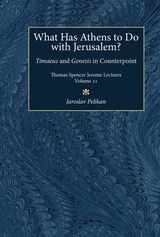
What Has Athens to Do with Jerusalem?
Timaeus and Genesis in CounterpointJaroslav Pelikan
University of Michigan Press, 1997
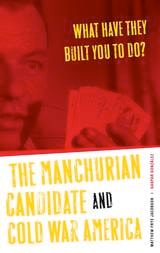
What Have They Built You to Do?
The Manchurian Candidate and Cold War AmericaMatthew Frye Jacobson
University of Minnesota Press, 2006
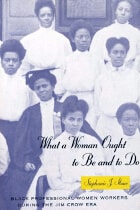
What a Woman Ought to Be and to Do
Black Professional Women Workers during the Jim Crow EraStephanie J. Shaw
University of Chicago Press, 1996
What a Woman Ought to Be and to Do brings to life a world in which African-American families, communities, and schools worked to encourage the self-confidence, individual initiative, and social responsibility of girls. Shaw shows us how, in a society that denied black women full professional status, these girls embraced and in turn defined an ideal of "socially responsible individualism" that balanced private and public sphere responsibilities. A collective portrait of character shaped in the toughest circumstances, this book is more than a study of the socialization of these women as children and the organization of their work as adults. It is also a study of leadership—of how African American communities gave their daughters the power to succeed in and change a hostile world.
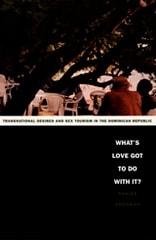
What's Love Got to Do with It?
Transnational Desires and Sex Tourism in the Dominican RepublicDenise Brennan
Duke University Press, 2004
Illuminating the complex world of Sosúa’s sex business in rich detail, Brennan draws on extensive interviews not only with sex workers and clients, but also with others who facilitate and benefit from the sex trade. She weaves these voices into an analysis of Dominican economic and migration histories to consider the opportunities—or lack thereof—available to poor Dominican women. She shows how these women, local actors caught in a web of global economic relations, try to take advantage of the foreign men who are in Sosúa to take advantage of them. Through her detailed study of the lives and working conditions of the women in Sosúa’s sex trade, Brennan raises important questions about women’s power, control, and opportunities in a globalized economy.
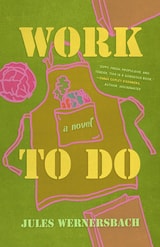
Work to Do
Jules Wernersbach
University of Iowa Press, 2026
When Eleanor founded Guadalupe Street Co-op in the early 1980s, she was in her mid-twenties and madly in love with her girlfriend, Meg. Together, they envisioned an idyllic grocery store owned by its workers and customers.
Forty years later, Guadalupe Street Co-op is an iconic Austin business with a loyal customer base, an antiquated business model, and a disgruntled staff. Roz, one of the store’s senior managers, is too caught up stalking her ex-wife online to notice that her girlfriend, Molly, is plotting with her coworkers to unionize. Roz also doesn’t see that Molly is not-so-secretly in a situationship with Randy, the dairy manager leading their collective.
Unfolding over the course of a single week during Texas hurricane season, Work to Do pings between the co-op’s first year and present day, as the unionization bid reaches fever pitch. The wind howls, the power goes out, and water creeps through the front door as questions of who owns the grocery store and who has a right to its future are posed. And will the workers ever be paid enough to buy the organic groceries they shelve?