Results by title
4 books match the query 'Dog owners'

The Companion Species Manifesto
Dogs, People, and Significant OthernessDonna J. Haraway
Prickly Paradigm Press, 2003

The Difficulty of Being a Dog
Roger Grenier
University of Chicago Press, 2000

Understanding Dogs
Clinton R. Sanders
Temple University Press, 1999
In Understanding Dogs, sociologist and faithful dog companion Clinton R. Sanders explores the day-to-day experiences of living and working with domestic dogs. Based on a decade of research in veterinary offices and hospitals, dog guide training schools, and obediences classes -- and colored with his personal experiences and observations at and outside home with his own canine companions -- Sanders's book examines how everyday dog owners come to know their animal companions as thinking, emotional, and responsive individuals.
Linking animal companionship with social as well as personal identity, Understanding Dogs uses detailed ethnographic data in viewing human and animal efforts to understand, manipulate, care for, and interact with each other. From nineteenth-century disapproval of what was seen as irresponsibly indulgent pet ownership among the poor to Bill Clinton's caring and fun-loving image and populist connection to the "common person" as achieved through his labrador companion Buddy, Sanders looks at how dogs serve not only as social facilitators but also as adornments to social identity. He also reveals how, while we often strive to teach and shape our dogs' behavior, dogs often teach us to appreciate with more awareness a nourishing meal, physical warmth, a walk in the woods, and the simple joys of the immediate moment.
Sanders devotes chapters to the specialized work of guide dog trainers; the problems and joys experienced by guide dog owners; the day-to-day work of veterinarians dealing with the healing, death, and euthanizing of their animal patients; and the everyday interactions, assumptions, and approaches of people who choose, for various reasons and in various ways, to spend their lives in the company of dogs.
Understanding Dogs will interest those who live and work with animals as well as those studying the sociology of human-animal interactions.
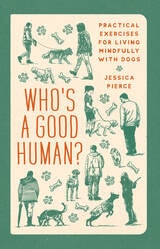
Who's a Good Human?
Practical Exercises for Living Mindfully with DogsJessica Pierce
University of Chicago Press, 2026
Most dog books focus on how to change our companion’s behavior; very few ask how we might change our own.
This workbook and journal, created by ethicist, celebrated author, and dog guardian Jessica Pierce, helps readers learn to live more mindfully with their dogs. Across ten chapters filled with exercises grounded in behavioral science and contemplative practice, Pierce invites readers to mirror their dog’s movements, savor shared silence, examine the impulse to command, reflect on past relationships with dogs, and prepare for the inevitabilities of aging and loss. She teaches readers how to view their dogs with the care of a field biologist—keeping notes, mapping relationships, and generally observing to better understand the dog’s world. She also challenges long-held assumptions about traditional dog training and asks whether our methods truly serve our dogs or simply reassure us as humans.
Many readers of Pierce’s acclaimed earlier books asked for a practical guide to help them put ideas into daily practice. For both those readers and those new to her work, this workbook is her response: a human-training manual informed by science, ethics, and lived experience. Each chapter begins with a short introduction to orient the reader, followed by self-directed exercises, reflection prompts, and shared experiences from living with her dog, Bella. Annotated further-reading sections point to both accessible books and peer-reviewed research. With its blend of gentle guidance and intellectual rigor, this workbook helps readers cultivate a more curious, collaborative, and compassionate relationship with the dogs they love.