Results by title
2 books match the query 'Drainage'
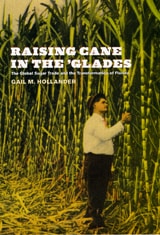
Raising Cane in the 'Glades
The Global Sugar Trade and the Transformation of FloridaGail M. Hollander
University of Chicago Press, 2008
Using, among other sources, interviews, government and corporate documents, and recently declassified U.S. State Department memoranda, Gail M. Hollander demonstrates that the development of Florida’s sugar region was the outcome of pitched battles reaching the highest political offices in the U.S. and in countries around the world, especially Cuba—which emerges in her narrative as a model, a competitor, and the regional “other” to Florida’s “self.” Spanning the period from the age of empire to the era of globalization, the book shows how the “sugar question”—a label nineteenth-century economists coined for intense international debates on sugar production and trade—emerges repeatedly in new guises. Hollander uses the sugar question as a thread to stitch together past and present, local and global, in explaining Everglades transformation.
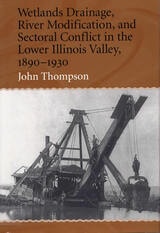
Wetlands Drainage, River Modification, and Sectoral Conflict in the Lower Illinois Valley, 1890-1930
John Thompson
Southern Illinois University Press, 2002
Thompson examines the history of the land drainage movement and the inevitable environmental changes caused by the intensification of urban and rural land use in the Midwest between sixty and one hundred years ago. He shows how institutions of land drainage were organized and operated and how the nascent drainage engineering and contracting sectors functioned. Focusing on the lower valley, Thompson also deals with drainage as it affects the nation, the Midwest, Chicago, and downstate Illinois.
Thompson is the first to address the array of interrelated physical, economic, and political circumstances caused by the development of competing and incompatible uses for the waters and the floodplain of the Illinois River when large-scale land reclamation and great volumes of water from Lake Michigan and Chicago changed land and water relationships, destroyed a major riverine fishing industry, and severely damaged renowned waterfowl hunting grounds.