Results by title
2 books match the query 'Dreamhouse'
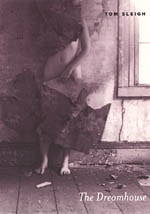
The Dreamhouse
Tom Sleigh
University of Chicago Press, 1999
In The Dreamhouse, Tom Sleigh's poetry is a medium for both revelation and linguistic invention. The meditative clarity of Sleigh's poems, his ability to range between the plain and high style with complete naturalness of intonation, and the varying and always surprising musical effects he accomplishes in each poem display his unequaled flair for innovation that is never willful or forced but which always works to forward the poems' emotional and intellectual resonances. The Dreamhouse marks Sleigh as one of the most inventive and provocative poets of his generation.
Praise for Tom Sleigh:
"Through sheer artistry, Tom Sleigh manages to write . . . in a transcendent way, and without appeal to the metaphysical assumptions transcendence usually requires. The Chain . . . floods darkness with brilliant craft."—Gray Jacobik, Boston Globe
"Tom Sleigh's second book of poems, Waking, is so fine one can hardly do justice to it in a review. . . . Sleigh is nearly as prodigal with his gifts as Yeats."—Liz Rosenberg, New York Times Book Review
[more]
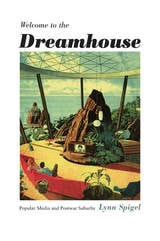
Welcome to the Dreamhouse
Popular Media and Postwar SuburbsLynn Spigel
Duke University Press, 2001
In Welcome to the Dreamhouse feminist media studies pioneer Lynn Spigel takes on Barbie collectors, African American media coverage of the early NASA space launches, and television’s changing role in the family home and its links to the broader visual culture of modern art. Exploring postwar U.S. media in the context of the period’s reigning ideals about home and family life, Spigel looks at a range of commercial objects and phenomena, from television and toys to comic books and magazines.
The volume considers not only how the media portrayed suburban family life, but also how both middle-class ideals and a perceived division between private and public worlds helped to shape the visual forms, storytelling practices, and reception of postwar media and consumer culture. Spigel also explores those aspects of suburban culture that media typically render invisible. She looks at the often unspoken assumptions about class, nation, ethnicity, race, and sexual orientation that underscored both media images (like those of 1960s space missions) and social policies of the mass-produced suburb. Issues of memory and nostalgia are central in the final section as Spigel considers how contemporary girls use television reruns as a source for women’s history and then analyzes the current nostalgia for baby boom era family ideals that runs through contemporary images of new household media technologies.
Containing some of Spigel’s well-known essays on television’s cultural history as well as new essays on a range of topics dealing with popular visual culture, Welcome to the Dreamhouse is important reading for students and scholars of media and communications studies, popular culture, American studies, women’s studies, and sociology.
[more]