Results by title
13 books match the query 'Drinking of alcoholic beverages'
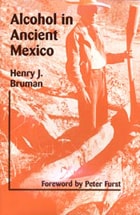
Alcohol in Ancient Mexico
Henry Bruman
University of Utah Press, 2000
Alcohol in Ancient Mexico reconstructs the variety and extent of distillation traditions in the ancient cultures of Mexico, describing in detail the various plants and processes used to make such beverages, their prevalence, and their significance for local culture.
The art of distillation arrived in Mexico with the Spaniards in the sixteenth century. However, well before that time, native skills and available resources had contributed to a well-developed tradition of intoxicating beverages, many of which are still produced and consumed.
In the 1930’s Henry Bruman visited various Mexican and Central American Indian tribes to reconstruct the variety and extent of these ancient traditions. He discerned five distinct areas defined by the culturally most significant beverages, all superimposed over the great mescal wine region. Within these five areas he noted wine made from cactus, cactus fruit, cornstalks, and mesquite pods; beer from sprouted maize; and fermented sap from pulque agaves.
Outside the mescal region he observed widespread consumption in the Yucatan of a wine made from fermented honey and balché bark, plus lesser-known beverages in other regions. He also observed the frequent inclusion in the fermentation process of alkaloid-bearing ingredients such as peyote and tobacco, plants whose roots or bark contain saponins—which act as cardiac poisons—and even poisons from certain toads.
Alcohol in Ancient Mexico also considers the relative absence of alcoholic drink in the southwestern United States, the introduction of sills following the Spanish conquest, and possible sources for the introduction of coconut wine.
Previously unpublished, the research presented here retains its relevance today, and the photographs offer a fascinating glimpse at a traditional world that has now almost vanished.
Alcohol in Latin America
A Social and Cultural HistoryEdited by Gretchen Pierce and Áurea Toxqui
University of Arizona Press, 2014
Alcohol in Latin America is the first interdisciplinary study to examine the historic role of alcohol across Latin America and over a broad time span. Six locations—the Andean region, Argentina, Brazil, Chile, Guatemala, and Mexico—are seen through the disciplines of anthropology, archaeology, art history, ethnohistory, history, and literature. Organized chronologically beginning with the pre-colonial era, it features five chapters on Mesoamerica and five on South America, each focusing on various aspects of a dozen different kinds of beverages.
An in-depth look at how alcohol use in Latin America can serve as a lens through which race, class, gender, and state-building, among other topics, can be better understood, Alcohol in Latin America shows the historic influence of alcohol production and consumption in the region and how it is intimately connected to the larger forces of history.
Beliefs, Behaviors, and Alcoholic Beverages
A Cross-Cultural SurveyMac Marshall, Editor
University of Michigan Press, 1979
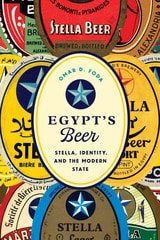
Egypt's Beer
Stella, Identity, and the Modern StateBy Omar D. Foda
University of Texas Press, 2019
Although alcohol is generally forbidden in Muslim countries, beer has been an important part of Egyptian identity for much of the last century. Egypt’s Stella beer (which only coincidentally shares a name with the Belgian beer Stella Artois) became a particularly meaningful symbol of the changes that occurred in Egypt after British Occupation.
Weaving cultural studies with business history, Egypt’s Beer traces Egyptian history from 1880 to 2003 through the study of social, economic, and technological changes that surrounded the production and consumption of Stella beer in Egypt, providing an unparalleled case study of economic success during an era of seismic transformation. Delving into archival troves—including the papers of his grandfather, who for twenty years was CEO of the company that produced Stella—Omar D. Foda explains how Stella Beer achieved a powerful presence in all popular forms of art and media, including Arabic novels, songs, films, and journalism. As the company’s success was built on a mix of innovation, efficient use of local resources, executive excellence, and shifting cultural dynamics, this is the story of the rise of a distinctly Egyptian “modernity” seen through the lens of a distinctly Egyptian brand.

Intoxicated Ways of Knowing
The Untold Story of Intoxicants and the Biological Subject in Nineteenth-Century GermanyMatthew Perkins-McVey
University of Chicago Press, 2026
Intoxicating substances can be found lurking in every corner of modern life, and Matthew Perkins-McVey’s pathbreaking book offers the untold story of how they were implicated in shifting perceptions of embodiment found in the emerging sciences of the body and mind in late-nineteenth-century Germany. Their use in this experimental context gave rise to a dynamic conception of the subject within the scientific, psychological, philosophical, and sociological milieu of the era. The history of the modern biological subject, Perkins-McVey argues, turns on “intoxicated ways of knowing.”
Intoxicated Ways of Knowing identifies the state of intoxication as a tacit form of thinking and knowing with the body. Intoxicants force us to feel, intervening directly in our perceptional awareness, and, Perkins-McVey contends, they bring latent conceptual associations into the foreground of conscious thought, engendering new ways of knowing the world. The book unfurls how intoxicants affected nineteenth-century German science and how, ultimately, the connection between mental life and intoxication is taken up in the works of Friedrich Nietzsche, Max Weber, and Sigmund Freud, bringing the biological subject out of the lab and into the worlds of philosophy, psychoanalysis, sociology, and politics.
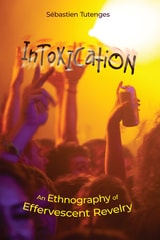
Intoxication
An Ethnography of Effervescent RevelrySébastien Tutenges
Rutgers University Press, 2023
For two decades, Sébastien Tutenges has conducted research in bars, nightclubs, festivals, drug dens, nightlife resorts, and underground dance parties in a quest to answer a fundamental question: Why do people across cultures gather regularly to intoxicate themselves?
Vivid and at times deeply personal, this book offers new insights into a wide variety of intoxicating experiences, from the intimate feeling of connection among concertgoers to the adrenaline-fueled rush of a fight, to the thrill of jumping off a balcony into a swimming pool. Tutenges shows what it means and feels to move beyond the ordinary into altered states in which the transgressive, spectacular, and unexpected take place.
He argues that the primary aim of group intoxication is the religious experience that Émile Durkheim calls collective effervescence, the essence of which is a sense of connecting with other people and being part of a larger whole. This experience is empowering and emboldening and may lead to crime and deviance, but it is at the same time vital to our humanity because it strengthens social bonds and solidarity.
The book fills important gaps in Durkheim’s social theory and contributes to current debates in micro-sociology as well as cultural criminology and cultural sociology. Here, for the first time, readers will discover a detailed account of collective effervescence in contemporary society that includes: an explanation of what collective effervescence is; a description of the conditions that generate collective effervescence; a typology of the varieties of collective effervescence; a discussion of how collective effervescence manifests in the realm of nightlife, politics, sports, and religion; and an analysis of how commercial forces amplify and capitalize on the universal human need for intoxication.
This book is also freely available online as an open access digital edition.
Download the open access ebook here. (https://www.rutgersuniversitypress.org/media/wysiwyg/documents/intoxication.pdf)

Liquor and Labor in Southern Africa
Jonathan Crush
Ohio University Press, 1992
In June 1976 political demonstrations in the black township of Soweto exploded into an insurrection that would continue sporadically and spread to urban areas across South Africa. In their assault on apartheid the youths who spearheaded the rebellion attacked and often destroyed the state institutions that they linked to their oppression: police stations, government offices, schools, and state-owned liquor outlets. In Soweto alone during the first days of the revolt protestors smashed and burned eighteen beerhalls and a similar number of bottle stores; as the rebellion spread more were destroyed. This study sets out to demonstrate that liquor outlets were not simply convenient symbols of oppression. The anger that launched gasoline bombs into beerhalls across South Africa had specific origins in deep and complicated struggles over the control of alcohol production and consumption in South Africa.
Conflict over alcohol has continuously intruded upon the lives of the black residents of southern African towns, cities, and labor compounds and upon the rural communities to which these people traced their origins. Yet the subject has received little systematic scholarly attention until now. In Liquor and Labor in Southern Africa scholars explore the complex relationship between alcohol use and the emergence of the modern urban-industrial system. In examining the role of alcohol in social control and the state, they also reveal the vibrant subcultures nurtured in beerhalls and underground shebeens and expose the bitter conflicts over alcohol that run along the fault lines of age, gender, class, and ethnicity.
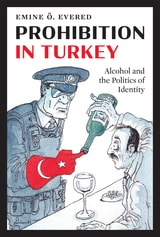
Prohibition in Turkey
Alcohol and the Politics of IdentityEmine Ö. Evered
University of Texas Press, 2024
A social history of alcohol, identity, secularism, and modernization from the late Ottoman and early Turkish republican eras to the present day.
Prohibition in Turkey investigates the history of alcohol, its consumption, and its proscription as a means to better understand events and agendas of the late Ottoman and early Turkish republican eras. Through a comprehensive examination of archival, literary, popular culture, media, and other sources, it unveils a traditionally overlooked—and even excluded—aspect of human history in a region that many do not associate with intoxicants, inebriation, addiction, and vigorous wet-dry debates.
Historian Emine Ö. Evered’s account uniquely chronicles how the Turko-Islamic Ottoman Empire developed strategies for managing its heterogeneous communities and their varied rights to produce, market, and consume alcohol, or to simply abstain. The first author to reveal this experience’s connections with American Prohibition, she demonstrates how—amid modernization, sectarianism, and imperial decline—drinking practices reflected, shifted, and even prompted many of the changes that were underway and that hastened the empire’s collapse. Ultimately, Evered’s book reveals how Turkey’s alcohol question never went away but repeatedly returns in the present, in matters of popular memory, public space, and political contestation.
Spirits Of America
A Social History Of AlcoholEric Burns
Temple University Press, 2004
The Old-Time Saloon
Not Wet - Not Dry, Just HistoryGeorge Ade
University of Chicago Press, 2016
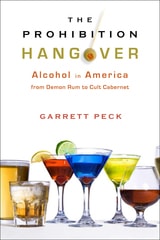
The Prohibition Hangover
Alcohol in America from Demon Rum to Cult CabernetPeck, Garrett
Rutgers University Press, 2009
In The Prohibition Hangover, Garrett Peck explores the often-contradictory social history of alcohol in America, from the end of Prohibition in 1933 to the twenty-first century. For Peck, Repeal left American society wondering whether alcohol was a consumer product or a controlled substance, an accepted staple of social culture or a danger to society. Today the legal drinking age, binge drinking, the neo-prohibitionist movement led by Mothers Against Drunk Driving, the 2005 Supreme Court decision in Granholm v. Heald that rejected discriminatory curbs on wine sales, the health benefits of red wine, advertising, and other issues remain highly contested.
Based on primary research, including hundreds of interviews with those on all sides, clergy, bar and restaurant owners, public health advocates, citizen crusaders, industry representatives, and more, as well as secondary sources, The Prohibition Hangover provides a panoramic assessment of alcohol in American culture. Traveling through the California wine country, the beer barrel backroads of New England and Pennsylvania, and the blue hills of Kentucky's bourbon trail, Peck places the concerns surrounding alcohol use within the broader context of American history, religious traditions, and governance.
Society is constantly evolving, and so are our drinking habits. Cutting through the froth and discarding the maraschino cherries, The Prohibition Hangover examines the modern American temperament toward drink amid the $189-billion-dollar-a-year industry that defines itself by the production, distribution, marketing, and consumption of alcoholic beverages.
Water Drops from Women Writers
A Temperance ReaderEdited by Carol Mattingly
Southern Illinois University Press, 2001
The temperance movement was the largest single organizing force for women in American history, uniting and empowering women seeking to enact social change. By the end of the century, more than two hundred thousand women had become members of the Woman’s Christian Temperance Union (WCTU), and numerous others belonged to smaller temperance organizations. Despite the impact of the movement, its literature has been largely neglected.
In this collection of nineteen temperance tales, Carol Mattingly has recovered and revalued previously unavailable writing by women. Mattingly’s introduction provides a context for these stories, locating the pieces within the temperance movement as well as within larger issues in women’s studies.
The temperance movement was essential to women’s awareness of and efforts to change gender inequalities in the United States during the nineteenth and early twentieth centuries. In their fiction, temperance writers protested physical and emotional abuse at the hands of men, argued for women’s rights, addressed legal concerns, such as divorce and child custody, and denounced gender-biased decisions affecting the care and rights of children. Temperance fiction by women broadens our understanding of the connections between women’s rights and temperance, while shedding light on women’s thinking and behavior in the nineteenth century.
Water Drops from Women Writers features biographical sketches of each writer as well as thirteen illustrations.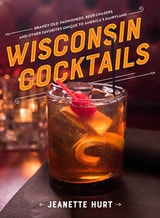
Wisconsin Cocktails
Jeanette Hurt
University of Wisconsin Press, 2020
Beyond delving into mythic origins of several classic creations, Jeanette Hurt introduces a new generation of cocktails that offer a spin on standard concoctions. She explores the state’s unique farm-to-table ethos influenced by an abundance of locally sourced ingredients. Also included are a wealth of interviews with notable mixologists, sharing numerous favorite recipes for specialty pick-me-ups that connoisseurs and home bartenders alike will be clamoring to try. A definitive account of the beverages we love, Wisconsin Cocktails insists we order our Old Fashioneds the right way—with brandy.