Results by title
11 books match the query 'Drug Addiction'
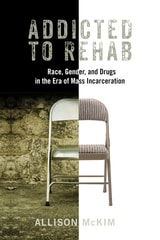
Addicted to Rehab
Race, Gender, and Drugs in the Era of Mass IncarcerationMcKim, Allison
Rutgers University Press, 2017
Winner of the 2018 Book of the Year Award from the American Society of Criminology's Division on Women and Crime
After decades of the American “war on drugs” and relentless prison expansion, political officials are finally challenging mass incarceration. Many point to an apparently promising solution to reduce the prison population: addiction treatment.
In Addicted to Rehab, Bard College sociologist Allison McKim gives an in-depth and innovative ethnographic account of two such rehab programs for women, one located in the criminal justice system and one located in the private healthcare system—two very different ways of defining and treating addiction. McKim’s book shows how addiction rehab reflects the race, class, and gender politics of the punitive turn. As a result, addiction has become a racialized category that has reorganized the link between punishment and welfare provision. While reformers hope that treatment will offer an alternative to punishment and help women, McKim argues that the framework of addiction further stigmatizes criminalized women and undermines our capacity to challenge gendered subordination. Her study ultimately reveals a two-tiered system, bifurcated by race and class.
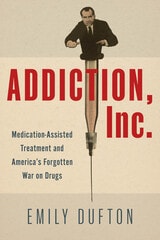
Addiction, Inc.
Medication-Assisted Treatment and America’s Forgotten War on DrugsEmily Dufton
University of Chicago Press, 2026
Despite epidemic levels of overdoses in the United States, by 2020, only twenty percent of Americans suffering from opioid use disorder (OUD) received medication-assisted treatment (MAT), the gold standard of addiction treatment, which uses methadone, buprenorphine, or naltrexone to reduce illicit drug use and curb the symptoms of withdrawal. While MAT is the most effective treatment available for OUD, it’s also the most controversial, the most expensive, and the most difficult to access. And yet, the medications at the center of this treatment—and the private industries that distribute them—generate roughly sixteen billion dollars each year, on par with national sales of coffee and pet food.
In Addiction, Inc., historian Emily Dufton explains how this promising avenue of treatment emerged during President Richard Nixon’s war on drugs in 1971 as a radical experiment in public health, when hundreds of federally-funded treatment clinics opened nationwide. Dufton then explores how these nationalized clinics gave way to an immensely profitable private industry that offers poor care at high costs to an insufficient number of people. Drawing on original research and over a hundred interviews with policymakers, medical experts, pharmaceutical lobbyists, and patients and their families, she tells a gripping story of squandered potential and missed opportunities, as MAT transformed from a revolutionary political project launched from the White House itself into a commercial success—and a public health disaster.
Urgent, eye-opening, and deeply human, Addiction, Inc. reveals how, over the past fifty years, the United States built an addiction treatment system that made recovery harder instead of easier, and what it will take to change its course.
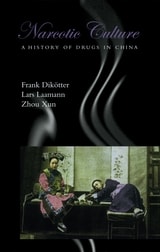
Narcotic Culture
A History of Drugs in ChinaFrank Dikötter, Lars Laamann, and Zhou Xun
University of Chicago Press, 2004
In a stunning historical reversal, Frank Dikötter, Lars Laamann, and Zhou Xun tell this different story of the relationship between opium and the Chinese. They reveal that opium actually had few harmful effects on either health or longevity; in fact, it was prepared and appreciated in highly complex rituals with inbuilt constraints preventing excessive use. Opium was even used as a medicinal panacea in China before the availability of aspirin and penicillin. But as a result of the British effort to eradicate opium, the Chinese turned from the relatively benign use of that drug to heroin, morphine, cocaine, and countless other psychoactive substances. Narcotic Culture provides abundant evidence that the transition from a tolerated opium culture to a system of prohibition produced a "cure" that was far worse than the disease.
Delving into a history of drugs and their abuses, Narcotic Culture is part revisionist history of imperial and twentieth-century Britain and part sobering portrait of the dangers of prohibition.
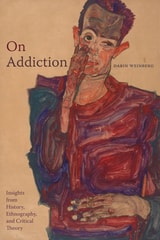
On Addiction
Insights from History, Ethnography, and Critical TheoryDarin Weinberg
Duke University Press, 2024
Opioid Reckoning
Love, Loss, and Redemption in the Rehab StateAmy C. Sullivan
University of Minnesota Press, 2021
Examines the complexity and the humanity of the opioid epidemic
America’s opioid epidemic continues to ravage families and communities, despite intense media coverage, federal legislation, criminal prosecutions, and harm reduction efforts to prevent overdose deaths. More than 450,000 Americans have died from opioid overdoses since the late 1990s. In Opioid Reckoning, Amy C. Sullivan explores the complexity of the crisis through firsthand accounts of people grappling with the reverberating effects of stigma, treatment, and recovery.
Nearly everyone in the United States has been touched in some way by the opioid epidemic, including the author and her family. Sullivan uses her own story as a launching point to learn how the opioid epidemic challenged longstanding recovery protocols in Minnesota, a state internationally recognized for pioneering addiction treatment. By centering the voices of many people who have experienced opioid use, treatment, recovery, and loss, Sullivan exposes the devastating effects of a one-size-fits-all approach toward treatment of opioid dependency. Taking a clear-eyed, nonjudgmental perspective of every aspect of these issues—drug use, parenting, harm reduction, medication, abstinence, and stigma—Opioid Reckoning questions current treatment models, healthcare inequities, and the criminal justice system. Sullivan also imagines a future where anyone suffering an opioid-use disorder has access to the individualized care, without judgment, available to those with other health problems.
Opioid Reckoning presents a captivating look at how the state that invented “rehab” addresses the challenges of the opioid epidemic and its overdose deaths while also taking readers into the intimate lives of families, medical and social work professionals, grassroots activists, and many others impacted by the crisis who contribute their insights and potential solutions. In sharing these stories and chronicling their lessons, Sullivan offers a path forward that cultivates empathy, love, and hope for anyone affected by chaotic drug use and its harms.
Rehab on the Range
A History of Addiction and Incarceration in the American WestHolly M. Karibo
University of Texas Press, 2024
2026 Texas Christian University (TCU) Texas Book Award Winner
2025 Coral Horton Tullis Memorial Prize, Texas State Historical Association
2025 Outstanding Academic Title, CHOICE
The first study of the Fort Worth Narcotic Farm, an institution that played a critical role in fusing the War on Drugs, mass incarceration, and public health in the American West.
In 1929, the United States government approved two ground-breaking and controversial drug addiction treatment programs. At a time when fears about a supposed rise in drug use reached a fevered pitch, the emergence of the nation’s first “narcotic farms” in Fort Worth, Texas, and Lexington, Kentucky, marked a watershed moment in the treatment of addiction. Rehab on the Range is the first in-depth history of the Fort Worth Narcotic Farm and its impacts on the American West. Throughout its operation from the 1930s to the 1970s, the institution was the only federally funded drug treatment center west of the Mississippi River. Designed to blend psychiatric treatment, physical rehabilitation, and vocational training, the Narcotic Farm, its proponents argued, would transform American treatment policies for the better. The reality was decidedly more complicated.
Holly M. Karibo tells the story of how this institution—once framed as revolutionary for addiction care—ultimately contributed to the turn towards incarceration as the solution to the nation’s drug problem. Blending an intellectual history of addiction and imprisonment with a social history of addicts’ experiences, Rehab on the Range provides a nuanced picture of the Narcotic Farm and its cultural impacts. In doing so, it offers crucial historical context that can help us better understand our current debates over addiction, drug policy, and the rise of mass incarceration.
The American Pipe Dream
Performance of Drug Addiction, 1890-1940Max Shulman
University of Iowa Press, 2022
Chapters look at how theatre, film, and popular culture linked the Chinese immigrant and opium smoking; the early attacks on doctors for their part in the creation of addicts; the legislation of addiction as a criminal condition; the comic portrayals of addiction; the intersection of Black, jazz, and drug cultures through cabaret performance; and the linkage between narcotic inebriation and artistic inspiration. The American Pipe Dream creates active connections between these case studies, demonstrating how this history has influenced our contemporary understanding, treatment, and legislation of drug use and addiction.
The Best Place
Addiction, Intervention, and Living and Dying Young in VancouverDanya Fast
Rutgers University Press, 2024
Winner of the CASCA Labrecque-Lee Book Prize
In both local and international imaginations, Vancouver, Canada, is often celebrated as one of the world’s most beautiful, cosmopolitan, and livable cities. Simultaneously, the city continues to be ground zero for successive waves of public health emergency and intervention, including a recent and unprecedented drug overdose crisis driven by the proliferation of illicitly manufactured fentanyl and related analogs in the local drug supply. In The Best Place: Addiction, Intervention, and Living and Dying Young in Vancouver, Danya Fast explores these politics of place from the perspectives of young people who use drugs. Those who are the subject of this book were in many ways relegated to the social, spatial, and economic margins of the city. Yet, they were also often at the very center of city life and state projects, including the project of protecting life in the context of the current overdose crisis.
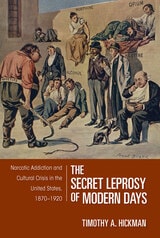
The Secret Leprosy of Modern Days
Narcotic Addiction and Cultural Crisis in the United States, 1870-1920Timothy A. Hickman
University of Massachusetts Press, 2007
Although the topic of habitual narcotic use first surfaced in the United States during the 1820s, it was not until after the Civil War that it became a subject of widespread public attention. Beginning in the 1870s, an increasingly urgent discussion of what some described as a national epidemic of “drug addiction” could be found in both medical journals and the popular press. Today, nearly a century and a half later, the term is so commonplace we speak of people being “addicted” to just about anything. Yet as Timothy A. Hickman argues in this revealing interdisciplinary study, the meaning of addiction has always been as much cultural as scientific and never fixed.
In The Secret Leprosy of Modern Days, Hickman resituates the idea of addiction within its original late nineteenth- and early twentieth-century context. Through close readings of a broad range of literary, medical, and legal texts, he shows how Americans of that era conceptualized the dangers of drug addiction in terms of other preoccupations and fears. Anxieties about the accelerating pace of technological change, the loss of personal autonomy, and the degeneration of society attributed to both foreign influences and a decline of manliness all fed into a widespread sense of cultural crisis—a crisis of which the spiraling “drug problem” was seen as both contributing cause and consequence. Not surprisingly, Hickman points out, deeply held assumptions of class, race, and gender also figured into the popular understanding of addiction. While white middle-class addicts were often depicted as helpless victims of the social and economic pressures of modern life, their less privileged and nonwhite counterparts were regarded as morally weak. Over time the distinction between “addict as patient” and “addict as criminal” came to be accepted by the emerging medical establishment and codified into law, eventually finding expression in the Harrison Narcotics Act of 1914, the first national anti-narcotic legislation in the history of the United States—and the basis for much thinking about addiction and drug policy ever since.
White Market Drugs
Big Pharma and the Hidden History of Addiction in AmericaDavid Herzberg
University of Chicago Press, 2020
These markets are widely acknowledged but no one has explained how they became so central to the medical system in a nation famous for its “drug wars”—until now. Drawing from federal, state, industry, and medical archives alongside a wealth of published sources, Herzberg re-connects America’s divided drug history, telling the whole story for the first time. He reveals that the driving question for policymakers has never been how to prohibit the use of addictive drugs, but how to ensure their availability in medical contexts, where profitability often outweighs public safety. Access to white markets was thus a double-edged sword for socially privileged consumers, even as communities of color faced exclusion and punitive drug prohibition. To counter this no-win setup, Herzberg advocates for a consumer protection approach that robustly regulates all drug markets to minimize risks while maintaining safe, reliable access (and treatment) for people with addiction.
Accomplishing this requires rethinking a drug/medicine divide born a century ago that, unlike most policies of that racially segregated era, has somehow survived relatively unscathed into the twenty-first century.
By showing how the twenty-first-century opioid crisis is only the most recent in a long history of similar crises of addiction to pharmaceuticals, Herzberg forces us to rethink our most basic ideas about drug policy and addiction itself—ideas that have been failing us catastrophically for over a century.
Women on Ice
Methamphetamine Use among Suburban WomenMiriam Boeri
Rutgers University Press, 2013
2013 Choice Outstanding Academic Title
Methamphetamine (ice, speed, crystal, shard) has been called epidemic in the United States. Yet few communities were ready for increased use of methamphetamine by suburban women. Women on Ice is the first book to study exclusively the lives of women who use the drug and its effects on their families.
In-depth interviews with women in the suburban counties of one of the largest metropolitan areas in the U.S. chronicle the details of their initiation into methamphetamine, the turning points into problematic drug use, and for a few, their escape from lives veering out of control. Their life course and drug careers are analyzed in relation to the intersecting influences of social roles, relationships, social/political structures, and political trends. Examining the effects of punitive drug policy, inadequate social services, and looming public health risks, including HIV/AIDS and hepatitis C, the book gives voice to women silenced by shame.
Boeri introduces new and developing concepts in the field of addiction studies and proposes policy changes to more broadly implement initiatives that address the problems these women face. She asserts that if we are concerned that the war on drugs is a war on drug users, this book will alert us that it is also a war on suburban families.