Results by title
2 books match the query 'Dutch Family'

A Dutch Family in the Middle Colonies
1660-1880Firth Haring Fabend
Rutgers University Press, 1991
As she traces the lives of the Harings and their neighbors, Fabend focuses on their marriage and childbearing patterns, living conditions, agricultural methods, and relative economic position. She investigates inheritance patterns, concluding that the position of women deteriorated under English law. She is equally interested in the political and religious life of the family. The Harings formed a church fitting their Pietist beliefs, and this church became central to community life. Their theology encouraged them to question religious authority, which in turn fostered the questioning of political authority. Their community became a seedbed for revolutionary activity. Fabend examines the family's position in the Revolution--primarily patriot--and the losses they suffered in that conflict.
The Harings of colonial America were ideal yeoman farmers, a class that stood well in the social hierarchy of the day. They were industrious, they prospered, and they participated in the civic life of colonial America. But once the new republic formed, they were not very visible. Fabend argues that they maintained their "Dutchness" more consciously than ever after the Revolution, which hindered their full participation in public affairs. In some ways, the fifth and sixth generations were more Dutch than the early generations.
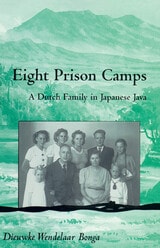
Eight Prison Camps
A Dutch Family in Japanese JavaDieuwke Wendelaar Bonga
Ohio University Press, 1996
Eldest daughter of eight children, the author grew up in Surakarta, Java, in what is now Indonesia. In the months following the bombing of Pearl Harbor, however, Dutch nationals were rounded up by Japanese soldiers and put in internment camps. Her father and brother were sent to separate men’s camps, leaving the author, her mother, and the five younger children in the women’s camp. In this and later seven other prison camps in central Java, their lives gradually deteriorated from early days of fear and crowding to near starvation, forced labor, beatings, and seeing others disappear or die. On the family’s return to Holland after the war, they found a nation recovering from German occupation and largely ignorant of the horror of the Far East experience.