Results by title
10 books match the query 'Dwelling'
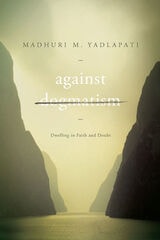
Against Dogmatism
Dwelling in Faith and DoubtMadhuri Yadlapati
University of Illinois Press, 2013
Yadlapati traces religious perspectives on trust, humility, belonging, commitment, and lively skepticism as they relate to faith and doubt. Drawing on various doctrines, scriptures, and the writings of great religious thinkers such as C. S. Lewis, Søren Kierkegaard, Karl Barth, and Raimon Panikkar, Yadlapati demonstrates how doubt can serve to enhance faith, not hinder it. Defending the rich tapestry of faith and doubt against polarization, Against Dogmatism reveals an ecumenical middle way, a spiritual approach native to traditions in which faith and doubt are interwoven in constructive and dynamic ways.
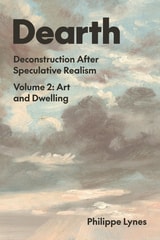
Dearth
Deconstruction After Speculative Realism. Art and DwellingPhilippe Lynes
Northwestern University Press, 2026
Proposing new insight into the legacies of Derridean thought for contemporary philosophy
In Art and Dwelling, the second volume of his Dearth sequence, Philippe Lynes sheds new light on the most enduring offshoot of the speculative realist movement, object-oriented ontology. Through careful readings of Graham Harman and Timothy Morton, Lynes shows how Jacques Derrida’s seminars offer critical insights into the spacing and distancing that precede and exceed all human practices of art and dwelling, with a deep sensitivity to the ecological and ethico-political consequences that follow.
Dearth: Deconstruction After Speculative Realism argues that Derrida’s seminars on Martin Heidegger and Maurice Blanchot, La Chose (The Thing), anticipated many of the philosophical, literary, and aesthetic questions animating speculative realism today: an anti-anthropocentric critique of Kantian correlationism; an overcoming of the apocalyptic nihilism of extinction through a deeper, affirmative habituation to nothingness; and poignant reflections on the literary and poetic aspects of living and dying in impossible worlds. His is an anti-correlationist plea that resounds now more urgently than ever.
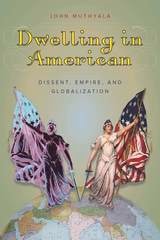
Dwelling in American
Dissent, Empire, and GlobalizationJohn Muthyala
Dartmouth College Press, 2012
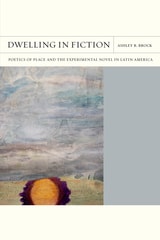
Dwelling in Fiction
Poetics of Place and the Experimental Novel in Latin AmericaAshley R. Brock
Northwestern University Press, 2023
The radical formal experiments undertaken by writers across Latin America in the mid-twentieth century introduced friction, opacity, and self-reflexivity to the very act of reading. Dwelling in Fiction: Poetics of Place and the Experimental Novel in Latin America explores the limitations and the possibilities of literature for conveying place-specific forms of life. Focusing on authors such as José María Arguedas, João Guimarães Rosa, and Juan José Saer, who are often celebrated for universalizing regional themes, Ashley R. Brock brings a new critical lens to Latin American writers who were ambivalent toward their era’s “boom.”
Beyond mere resistance to or critique of the commodification and political instrumentalization of rural topics and types, this countertrend of critical regionalism positions readers themselves as outsiders, pushing them to engage their senses, to train their attention, and to learn to dwell in unknown textual landscapes. Dwelling in Fiction draws on a transnational community of thinkers and writers to show how their midcentury aesthetic practices of sensorial pedagogy anticipate contemporary turns toward affect, embodiment, decoloniality, and ecological thought.
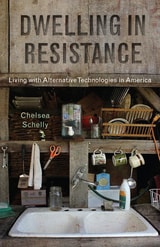
Dwelling in Resistance
Living with Alternative Technologies in AmericaSchelly, Chelsea
Rutgers University Press, 2017
Schelly portrays a wide range of residential living alternatives utilizing renewable, small-scale, de-centralized technologies. These technologies considerably change how individuals and communities interact with the material world, their natural environment, and one another. Using in depth interviews and compelling ethnographic observations, the book offers an insightful look at different communities’ practices and principles and their successful endeavors in sustainability and self-sufficiency.
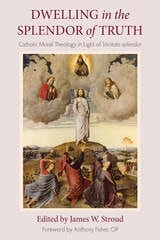
Dwelling in the Splendor of Truth
Catholic Moral Theology in Light of <i>Veritatis splendor</i>James W. Stroud
Catholic University of America Press, 2026
Dwelling on the Future
Architecture of the Seaside, Middle England and the MetropolisPierre d'Avoine
University College London, 2020
D’Avoine covers a wide range of examples, including proposals for luxury housing and designs for low-cost dwellings, which all address the needs and desires of their potential inhabitants. The book explores an inclusive approach to the design of settlements—and not just in cities—that recognizes difference, an approach that demands a fresh political vision to resolve humanity’s increasing inequality, for the benefit of all. Simultaneously practical and aspirational, Dwelling on The Future casts a much needed light on our thoughts and aspirations, and on our definitions of home.
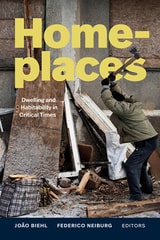
Homeplaces
Dwelling and Habitability in Critical TimesJoão Biehl and Federico Neiburg, editors
Duke University Press, 2026
Land and the Given Economy
The Hermeneutics and Phenomenology of DwellingTodd S. Mei
Northwestern University Press, 2017
Alarming environmental degradation makes ever more urgent the reconciliation of political economy and sustainability. Land and the Given Economy examines how the landed basis of human existence converges with economics, and it offers a persuasive new conception of land that transcends the flawed and inadequate accounts in classical and neoclassical economics.
Todd S. Mei grounds this work in a rigorous review of problematic economic conceptions of land in the work of John Locke, Adam Smith, David Ricardo, John Stuart Mill, Karl Marx, Henry George, Alfred Marshall, and Thorstein Veblen.
Mei then draws on the thought of Martin Heidegger to posit a philosophical clarification of the meaning of land—its ontological nature. He argues that central to rethinking land is recognizing its unique manner of being, described as its "givenness." Concluding with a discussion of ground rent, Mei reflects on specific strategies for incorporating the philosophical account of land into contemporary economic policies.
Revivifying economic frameworks that fail to resolve the impasse between economic development and sustainability, Land and the Given Economy offers much of interest to scholars and readers of philosophy, environmentalism, and the full spectrum of political economy.
Reading the Fascicles of Emily Dickinson
Dwelling in PossibilitiesEleanor Elson Heginbotham
The Ohio State University Press, 2020
We cannot know why Dickinson compiled the books or what she thought of them, but we can observe what she left in them. What she left is visible only by noting the way the poem answers in a dialogue across the pages, the way lines spilling onto a second page introduce the next poem, the way openings suggest image clusters so that each book has its own network of concerns and language—not a story or philosophical preachment but an aesthetic wholeness.
This book is the first to demonstrate that Dickinson’s poetic and philosophical creativity is most startling when the reader observes the individual lyric in the poet’s own, and only, context for them. For teacher, student, scholar, and poetry lover, Heginbotham creates an important new framework for understanding one of the most complex, clever, and profound U.S. poets.