Results by title
8 books match the query 'Dye, David H.'
Between Contacts and Colonies
Archaeological Perspectives on the Protohistoric SoutheastEdited by Cameron B. Wesson and Mark A. Rees
University of Alabama Press, 2002
This collection of essays brings together diverse approaches to the analysis of Native American culture in the protohistoric period
For most Native American peoples of the Southeast, almost two centuries passed between first contact with European explorers in the 16th century and colonization by whites in the 18th century—a temporal span commonly referred to as the Protohistoric period. A recent flurry of interest in this period by archaeologists armed with an improved understanding of the complexity of culture contact situations and important new theoretical paradigms has illuminated a formerly dark time frame.
This volume pulls together the current work of archaeologists, historians, and anthropologists to demonstrate a diversity of approaches to studying protohistory. Contributors address different aspects of political economy, cultural warfare, architecture, sedentism, subsistence, foods, prestige goods, disease, and trade. From examination of early documents by René Laudonnière and William Bartram to a study of burial goods distribution patterns; and from an analysis of Caddoan research in Arkansas and Louisiana to an interesting comparison of Apalachee and Powhatan elites, this volume ranges broadly in subject matter. What emerges is a tantalizingly clear view of the protohistoric period in North America.
Changing Perspectives on the Archaeology of the Central Mississippi Valley
Michael J. O'Brien
University of Alabama Press, 1998
Fourteen experts examine the current state of Central Valley prehistoric research and provide an important touchstone for future archaeological study of the region
The Mississippi Valley region has long played a critical role in the development of American archaeology and continues to be widely known for the major research of the early 1950s. To bring the archaeological record up to date, fourteen Central Valley experts address diverse topics including the distribution of artifacts across the landscape, internal configurations of large fortified settlements, human-bone chemistry, and ceramic technology.
The authors demonstrate that much is to be learned from the rich and varied archaeological record of the region and that the methods and techniques used to study the record have changed dramatically over the past half century. Operating at the cutting edge of current research strategies, these archaeologists provide a fresh look at old problems in central Mississippi Valley research.
New Deal Archaeology in Tennessee
Intellectual, Methodological, and Theoretical ContributionsEdited by David H. Dye
University of Alabama Press, 2016
Exploring how New Deal innovation transformed archaeology in the American South.
New Deal Archaeology in Tennessee tells the engrossing story of Southeastern archaeology in the 1930s. The Tennessee Valley Authority Act of May 1933 initiated an ambitious program of flood control and power generation by way of a chain of hydroelectric dams on the Tennessee River. The construction of these dams flooded hundreds of thousands of square miles of river bottoms, campsites, villages, and towns that had been homes to Native Americans for centuries. This triggered an urgent need to undertake extensive archaeological fieldwork throughout the region. Those studies continue to influence contemporary archaeology.
The state of Tennessee and the Tennessee Valley were especially well suited research targets thanks to their mild climate and long field seasons. A third benefit in the 1930s was the abundance of labor supplied by Tennesseans unemployed during the Great Depression. Within months of the passage of the Tennessee Valley Authority Act, teams of archaeologists fanned out across the state and region under the farsighted direction of Smithsonian Institution curators Neil M. Judd, Frank H. H. Roberts, and Frank M. Setzler. The early months of 1934 would become the busiest period of archaeological fieldwork in US history.
The twelve insightful essays in New Deal Archaeology in Tennessee document and explore this unique peak in archaeological study. Chapters highlight then-new techniques such as mound “peeling” and stratigraphic excavation adapted from the University of Chicago; the four specific New Deal sites of Watts Bar Reservoir, Mound Bottom, Pack, and Chickamauga Basin; bioarchaeology in the New Deal; and the enduring impact of the New Deal on contemporary fieldwork.
The challenges of the 1930s in recruiting skilled labor, training unskilled ancillary labor, developing and improvising new field methods, and many aspects of archaeological policies, procedures, and best-practices laid much of the foundation of contemporary archaeological practice. New Deal Archaeology in Tennessee offers an invaluable record of that pivotal time for professional, student, and amateur archaeologists.
Of Caves and Shell Mounds
Edited by Kenneth C. Carstens and Patty Jo Watson
University of Alabama Press, 1996
Ancient human groups in the Eastern Woodlands of North America were long viewed as homogeneous and stable hunter-gatherers, changing little until the late prehistoric period when Mesoamerican influences were thought to have stimulated important economic and social developments. The authors in this volume offer new, contrary evidence to dispute this earlier assumption, and their studies demonstrate the vigor and complexity of prehistoric peoples in the North American Midwest and Midsouth. These peoples gathered at favored places along midcontinental streams to harvest mussels and other wild foods and to inter their dead in the shell mounds that had resulted from their riverside activities. They created a highly successful, pre-maize agricultural system beginning more than 4,000 years ago, established far-flung trade networks, and explored and mined the world's longest cave—the Mammoth Cave System in Kentucky.
Contributors include:
Kenneth C. Carstens, Cheryl Ann Munson, Guy Prentice, Kenneth B. Tankersley, Philip J. DiBlasi, Mary C. Kennedy, Jan Marie Hemberger, Gail E. Wagner, Christine K. Hensley, Valerie A. Haskins, Nicholas P. Herrmann, Mary Lucas Powell, Cheryl Claassen, David H. Dye, and Patty Jo Watson
Shaman, Priest, Practice, Belief
Materials of Ritual and Religion in Eastern North AmericaEdited by Stephen B. Carmody and Casey R. Barrier
University of Alabama Press, 2020
Archaeologists today are interpreting Native American religion and ritual in the distant past in more sophisticated ways, considering new understandings of the ways that Native Americans themselves experienced them. Shaman, Priest, Practice, Belief: Materials of Ritual and Religion in Eastern North America broadly considers Native American religion and ritual in eastern North America and focuses on practices that altered and used a vast array of material items as well as how physical spaces were shaped by religious practices.
Unbound to a single theoretical perspective of religion, contributors approach ritual and religion in diverse ways. Importantly, they focus on how people in the past practiced religion by altering and using a vast array of material items, from smoking pipes, ceremonial vessels, carved figurines, and iconographic images, to sacred bundles, hallucinogenic plants, revered animals, and ritual architecture. Contributors also show how physical spaces were shaped by religious practice, and how rock art, monuments, soils and special substances, and even land- and cityscapes were part of the active material worlds of religious agents.
Case studies, arranged chronologically, cover time periods ranging from the Paleoindian period (13,000–7900 BC) to the late Mississippian and into the protohistoric/contact periods. The geographical scope is much of the greater southeastern and southern Midwestern culture areas of the Eastern Woodlands, from the Central and Lower Mississippi River Valleys to the Ohio Hopewell region, and from the greater Ohio River Valley down through the Deep South and across to the Carolinas.
Contributors
Sarah E. Baires / Melissa R. Baltus / Casey R. Barrier / James F. Bates / Sierra M. Bow / James A. Brown / Stephen B. Carmody / Meagan E. Dennison / Aaron Deter-Wolf / David H. Dye / Bretton T. Giles / Cameron Gokee / Kandace D. Hollenbach / Thomas A. Jennings / Megan C. Kassabaum / John E. Kelly / Ashley A. Peles / Tanya M. Peres / Charlotte D. Pevny / Connie M. Randall / Jan F. Simek / Ashley M. Smallwood / Renee B. Walker / Alice P. Wright
Shovel Ready
Archaeology and Roosevelt's New Deal for AmericaBernard K. Means
University of Alabama Press, 2013
John L. Cordell / John F. Doershuk / David H. Dye /Scott W. Hammerstedt / Janet R. Johnson / Kevin Kiernan /Gregory D. Lattanzi /Patrick C. Livingood / Anna R. Lunn / Bernard K. Means / Stephen E. Nash / Amanda L. Regnier / Sissel Schroeder / James R. Wettstaed
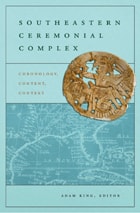
Southeastern Ceremonial Complex
Chronology, Content, ContestEdited by Adam King
University of Alabama Press, 2007
A timely, comprehensive reevaluation of the Southeastern Ceremonial Complex.
One of the most venerable concepts in Southeastern archaeology is that of the Southern Cult. The idea has its roots in the intensely productive decade (archaeologically) of the 1930s and is fundamentally tied to yet another venerable concept—Mississippian culture. The last comprehensive study of the melding of these two concepts into the term Southeastern Ceremonial Complex (SECC) is more than two decades old, yet our understanding of the objects, themes, and artistic styles associated with the SECC have changed a great deal. New primary data have come to light that bear directly on the complex, requiring a thorough reanalysis of both concepts and dating. Recent publications have ignited many debates about the dating and the nature of the SECC.
This work presents new data and new ideas on the temporal and social contexts, artistic styles, and symbolic themes included in the complex. It also demonstrates that engraved shell gorgets, along with other SECC materials, were
produced before A.D. 1400.
Towns and Temples Along the Mississippi
Edited by David H. Dye and Cheryl Anne Cox
University of Alabama Press, 1990
A Dan Josselyn Memorial Publication
Discover the stories, structures, and spirit that shaped life along America’s greatest river.
Specialists from archaeology, ethnohistory, physical anthropology, and cultural anthropology bring their varied points of view to this subject in an attempt to answer basic questions about the nature and extent of social change within the time period. The scholars' overriding concerns include presentation of a scientifically accurate depiction of the native cultures in the Central Mississippi Valley prior and immediately subsequent to European contact and the need to document the ensuing social and biological changes that eventually led to the widespread depopulation and cultural reorientation. Their findings lead to three basic hypotheses that will focus the scholarly research for decades to come.
Contributors include:
George J. Armelagos, Ian W. Brown, Chester B. DePratter, George F. Fielder, Jr., James B. Griffin, M. Cassandra Hill, Michael P. Hoffman, Charles Hudson, R. Barry Lewis, Dan F. Morse, Phyllis A. Morse, Mary Lucas Powell, Cynthia R. Price, James F. Price, Gerald P. Smith, Marvin T. Smith, and Stephen Williams