Results by title
28 books match the query 'Dying'

Arts of Dying
Literature and Finitude in Medieval EnglandD. Vance Smith
University of Chicago Press, 2020
Covering the emergence of English literature from the Old English to the late medieval periods, Arts of Dying argues that the problem of how to designate death produced a long tradition of literature about dying, which continues in the work of Heidegger, Blanchot, and Gillian Rose. Philosophy’s attempt to designate death’s impossibility is part of a literature that imagines a relationship with death, a literature that intensively and self-reflexively supposes that its very terms might solve the problem of the termination of life. A lyrical and elegiac exploration that combines medieval work on the philosophy of language with contemporary theorizing on death and dying, Arts of Dying is an important contribution to medieval studies, literary criticism, phenomenology, and continental philosophy.
Compass of the Dying
PoemsLaurence Lieberman
University of Arkansas Press, 1998
When Laurence Lieberman writes of Guyana or islands in the Dutch West Indies, he excavates, explores, even exhumes the essence of the place. In the flora and fauna, in the rural cafes and ruins of churches and crypts, in the taste of iguana soup and the look of light through stained glass, Lieberman unfolds an exquisite atlas of the senses.
The awe of encounter, the raw impact, beauty, and sometimes the brutality of both the surroundings and the people fuel this poetry. Whether he meets an iguana hunter, a bricklayer, a witness to the United States–led Grenada invasion, or a classical composer, Lieberman gives the reader a vivid combination of his own wit and surprising observations mingled with the speech of each character.
Folk tales, legends, and island myths play a great role in his newest work. In the eddies of a river in Guyana, Lieberman dares river demons. On the island of Aruba, he hears the chants and work songs of long-dead miners in an abandoned gold mine. He briefly loses himself when he stares into the mirror of a well once frequented by slaves on Bonaire.
Coupled with natural forces—floods, volcanic eruptions, constant rains—these folk tales and the stories of the islanders’ lives create a “wedding of sun and rain,” and a map to the troves of the Caribbean hidden beneath a rich and often violent history.
DYING TO BE BEAUTIFUL
FIGHT FOR SAFE COSMETICSGwen Kay
The Ohio State University Press, 2005
Death and Dying in Central Appalachia
Changing Attitudes and PracticesJames K. Crissman
University of Illinois Press, 1994
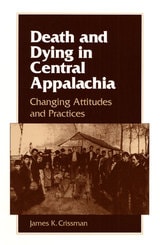
Written for both scholarly and general audiences, the book contains sections on the death watch, body preparation, selection or construction of a coffin or casket, digging the grave by hand, the wake, the funeral, and other topics. Crissman then demonstrates how technology and the encroachment of American society have turned these vital traditions into the disappearing practices of the past.

Death and Dying in Colonial Spanish America
Edited by Martina Will de Chaparro and Miruna Achim
University of Arizona Press, 2011
The variety of sources uncovered in the authors’ original archival research suggests the wide diversity of topics and approaches they employ: Nahua annals, Spanish chronicles, Inquisition case records, documents on land disputes, sermons, images, and death registers. Geographically, the range of research focuses on the viceroyalties of New Spain, Peru, and New Granada.
The resulting records—both documentary and archaeological—offer us a variety of vantage points from which to view each of these cultural groups as they came into contact with others. Much less tied to modern national boundaries or old imperial ones, the many facets of the new historical research exploring the topic of death demonstrate that no attitudes or practices can be considered either “Western” or universal.
Death and Dying in the Working Class, 1865-1920
Michael K. Rosenow
University of Illinois Press, 2015
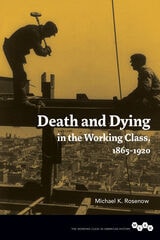
Drawing from an eclectic array of sources ranging from Andrew Carnegie to grave markers in Chicago's potter's field, Rosenow portrays the complex political, social, and cultural relationships that fueled the United States' industrial ascent. The result is an undertaking that adds emotional depth to existing history while challenging our understanding of modes of cultural transmission.
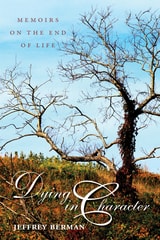
Dying in Character
Memoirs on the End of LifeJeffrey Berman
University of Massachusetts Press, 2012
Examining the works cited above, as well as memoirs by Mitch Albom, Roland Barthes, Jean-Dominique Bauby, Art Buchwald, Randy Pausch, David Rieff, Philip Roth, and Morrie Schwartz, Jeffrey Berman's analysis of this growing genre yields some surprising insights. While the authors have much to say about the loneliness and pain of dying, many also convey joy, fulfillment, and gratitude. Harold Brodkey is willing to die as long as his writings survive. Art Buchwald and Randy Pausch both use the word fun to describe their dying experiences. Dying was not fun for Morrie Schwartz and Tony Judt, but they reveal courage, satisfaction, and fearlessness during the final stage of their lives, when they are nearly paralyzed by their illnesses.
It is hard to imagine that these writers could feel so upbeat in their situations, but their memoirs are authentically affirmative. They see death coming, yet they remain stalwart and focused on their writing. Berman concludes that the contemporary end-of-life memoir can thus be understood as a new form of death ritual, "a secular example of the long tradition of ars moriendi, the art of dying."
Dying in Full Detail
Mortality and Digital DocumentaryJennifer Malkowski
Duke University Press, 2017
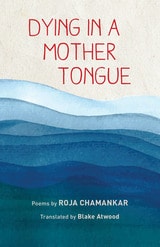
Dying in a Mother Tongue
By Roja Chamankar, Translated by Blake Atwood
University of Texas Press, 2018
This collection of poetry by the celebrated southern Iranian poet and filmmaker Roja Chamankar (b. 1981) introduces English-speaking readers to one of the most accomplished and well-loved poets of her generation. Chamankar’s work blends surrealism and the southern coastal landscape of the poet’s upbringing with everyday experiences in rapidly urbanizing Tehran. While locating herself in the modernist tradition of Iranian poets like Forugh Farrokhzad and Ahmad Shamlu through form and imagery, Chamankar infuses this tradition with concerns unique to a generation that grew up in post-revolutionary Iran and endured the effects of the Iran-Iraq war. Seascapes, love and eroticism, the disconnection of modern life, and myths and fairytales figure prominently in these vivid, lyrical poems.
In the rich miniature worlds of Chamankar’s poetry, readers become privy to a range of experiences, from desire and pain to rage and humor. Sometimes abstract, other times surreal—Chamankar’s unique poetic voice, like the sea she returns to again and again, combines and sweeps these experiences to shore with assurance, strength, and beauty.
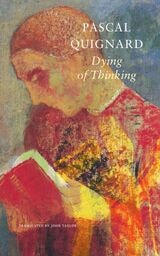
Dying of Thinking
The Last Kingdom IXPascal Quignard
Seagull Books, 2023
Dying of Thinking is the ninth volume of Pascal Quignard’s Last Kingdom series. It explores three themes: how thought and death coincide, how thought is close to melancholy, and how thought takes shelter near traumatism. One who thinks, Quignard shows us, “compensates” for a very ancient abandonment. Even as a dream is a meaning whose disorderly, condensed, paradoxical images intuit something which has preceded sleep and which returns in them, thought is a meaning which uses words that are written, re-transcribed, dissected, etymologized and neologized. Throughout the Last Kingdom series, Quignard has sought to experience another way of thinking, one that has nothing to do with philosophy, a way of attaching himself “literally” to texts and of progressing by decomposing the imagery of dreams. Dying of Thinking is the heart of this quest.
Dying to Count
Post-Abortion Care and Global Reproductive Health Politics in SenegalSiri Suh
Rutgers University Press, 2021
Dying to Know
Scientific Epistemology and Narrative in Victorian EnglandGeorge Levine
University of Chicago Press, 2002
In Dying to Know, eminent critic George Levine makes a landmark contribution to the history and theory of scientific knowledge. This long-awaited book explores the paradoxes of our modern ideal of objectivity, in particular its emphasis on the impersonality and disinterestedness of truth. How, asks Levine, did this idea of selfless knowledge come to be established and moralized in the nineteenth century?
Levine shows that for nineteenth-century scientists, novelists, poets, and philosophers, access to the truth depended on conditions of such profound self-abnegation that pursuit of it might be taken as tantamount to the pursuit of death. The Victorians, he argues, were dying to know in the sense that they could imagine achieving pure knowledge only in a condition where the body ceases to make its claims: to achieve enlightenment, virtue, and salvation, one must die.
Dying to Know is ultimately a study of this moral ideal of epistemology. But it is also something much more: a spirited defense of the difficult pursuit of objectivity, the ethical significance of sacrifice, and the importance of finding a shareable form of knowledge.
Edges of Care
Living and Dying in No Man’s LandNoam Leshem
University of Chicago Press, 2025
“No man’s land” invokes stretches of barren landscape, twisted barbed wire, desolation, and the devastation of war. But this is not always the reality. According to Noam Leshem in Edges of Care, the term also reveals radical abandonment by the state. From the Northern Sahara to the Amazon rainforests, people around the world find themselves in places that have been stripped of sovereign care. Leshem is committed to defining these spaces and providing a more intimate understanding of this urgent political reality.
Based on nearly a decade of research in some of the world’s most challenging conflict zones, Edges of Care offers a profound account of abandoned lives and lands, and how they endure and sometimes thrive once left to fend for themselves. Leshem interrogates no man’s land as a site of radical uncaring: abandoned by a sovereign power in a relinquishment of responsibility for the space or anyone inside it. To understand the ramifications of such uncaring, Leshem takes readers through a diverse series of abandoned places, including areas in Palestine, Syria, Colombia, Sudan, and Cyprus. He shows that no man’s land is not empty of life, but almost always inhabited and, in fact, often generative of new modes of being. Beautifully written and evocative, Edges of Care reveals the unexamined complexities and political dynamics hidden within and around places governed by callous indifference.
Final Acts
Death, Dying, and the Choices We MakeBauer-Maglin, Nan
Rutgers University Press, 2010
Contributors include patients, caretakers, physicians, journalists, lawyers, social workers, educators, hospital administrators, academics, psychologists, and a poet, and among them are ethicists, religious believers, and nonbelievers. Some write moving, personal accounts of "good" or 'bad" deaths; others examine the ethical, social, and political implications of slow dying. Essays consider death from natural causes, suicide, and aid-in-dying (assisted suicide).
Writing in a style free of technical jargon, the contributors discuss documents that should be prepared (health proxy, do-not-resuscitate order, living will, power of attorney); decision-making (over medical interventions, life support, hospice and palliative care, aid-in-dying, treatment location, speaking for those who can no longer express their will); and the roles played by religion, custom, family, friends, caretakers, money, the medical establishment, and the government.
For those who yearn for some measure of control over death, the essayists in Final Acts, from very different backgrounds and with different personal and professional experiences around death and dying, offer insight and hope.
How We Die Now
Intimacy and the Work of DyingKarla Erickson
Temple University Press, 2013
Instead of Dying
Lauren Haldeman
University Press of Colorado, 2017
Laughing to Keep from Dying
African American Satire in the Twenty-First CenturyDanielle Fuentes Morgan
University of Illinois Press, 2020
Adventurous and perceptive, Laughing to Keep from Dying reveals how African American satirists unmask the illusions and anxieties surrounding race in the twenty-first century.
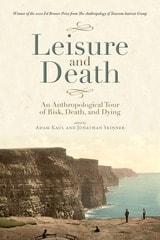
Leisure and Death
An Anthropological Tour of Risk, Death, and DyingAdam Kaul
University Press of Colorado, 2018
This anthropological study examines the relationship between leisure and death, specifically how leisure practices are used to meditate upon—and mediate—life. Considering travelers who seek enjoyment but encounter death and dying, tourists who accidentally face their own mortality while vacationing, those who intentionally seek out pleasure activities that pertain to mortality and risk, and those who use everyday leisure practices like social media or dogwalking to cope with death, Leisure and Death delves into one of the most provocative subsets of contemporary cultural anthropology.
These nuanced and well-developed ethnographic case studies deal with different and distinct examples of the intertwining of leisure and death. They challenge established conceptions of leisure and rethink the associations attached to the prospect of death. Chapters testify to encounters with death on a personal and scholarly level, exploring, for example, the Cliffs of Moher as not only one of the most popular tourist destinations in Ireland but one of the most well-known suicide destinations as well, and the estimated 30 million active posthumous Facebook profiles being repurposed through proxy users and transformed by continued engagement with the living. From the respectful to the fascinated, from the macabre to the morbid, contributors consider how people deliberately, or unexpectedly, negotiate the borderlands of the living.
An engaging, timely book that explores how spaces of death can be transformed into spaces of leisure, Leisure and Death makes a significant contribution to the burgeoning interdisciplinary literature on leisure studies and dark tourism. This book will appeal to students, scholars, and laypeople interested in tourism studies, death studies, cultural studies, heritage studies, anthropology, sociology, and marketing.
Contributors: Kathleen M. Adams, Michael Arnold, Jane Desmond, Keith Egan, Maribeth Erb, James Fernandez, Martin Gibbs, Rachel Horner-Brackett, Shingo Iitaka, Tamara Kohn, Patrick Laviolette, Ruth McManus, James Meese, Bjorn Nansen, Stravoula Pipyrou, Hannah Rumble, Cyril Schafer
Living and Dying in São Paulo
Immigrants, Health, and the Built Environment in BrazilJeffrey Lesser
Duke University Press, 2025
Living and Dying on the Periphery
The Archaeology and Human Remains from Two 13th-15th Century AD Villages in Southeastern New MexicoJamie L. Clark and John D. Speth
University of Utah Press, 2022
Summarizing results from eight seasons of research, Clark and Speth document human burials and associated grave offerings from the two sites. They discuss evidence for pathologies and trauma, raising questions about the nature and causes of violence that led to the demise of Henderson and Bloom Mound, and the abandonment of many other farming-hunting communities in the surrounding region.

Matters of Life and Death
Moral Responsibility, Care, and Dignity in DyingStephanie O'Connor
Haus Publishing, 2026
A thoughtful examination of dignity at the end of life and the ethical limits of choice in modern medicine.
For most of human history, death was shaped by circumstance, custom, and human presence. Today, it is increasingly mediated by medicine, law, and the language of choice. Our expanding capacity to prolong life and manage dying has outstripped the moral habits that once helped us make sense of such moments. What confronts us now is not only the question of what may be done, or what is permitted, but also how moral responsibility is borne when knowledge is partial and responsibility is dispersed.
Resisting moral certainty and procedural comfort, Stephanie O’Connor considers what is revealed and obscured when complex situations are reduced to questions of choice or rights alone. Considering dignity as a guiding moral concern at the limits of life, and drawing on healthcare ethics, case law, and contemporary debates—including those surrounding assisted dying and artificial intelligence—this book examines how decisions made under conditions of vulnerability are shaped not only by autonomy and consent, but also by dependence, unequal power, and institutional practice. Acutely attentive to the tensions that exist between compassion and restraint, as well as personal agency and shared responsibility, O’Connor does not propose solutions or offer moral closure. Instead, she asks what is owed: to those whose lives are ending, to those who care for them, and to the fragile shared moral life that binds personal decisions to their public consequences.

Ministry to the Sick and Dying in the Late Medieval Church
Thomas M. Izbicki
Catholic University of America Press, 2023
On the Fireline
Living and Dying with Wildland FirefightersMatthew Desmond
University of Chicago Press, 2007
A classic early work by the author of Evicted, a close-up look at the lives of wildland firefighters
In this rugged account of a rugged profession, Matthew Desmond explores the heart and soul of the wildland firefighter. Having joined a firecrew in Northern Arizona as a young man, Desmond relates his experiences with intimate knowledge and native ease, adroitly balancing emotion with analysis and action with insight. On the Fireline shows that these firefighters aren’t the adrenaline junkies or romantic heroes as they’re so often portrayed.
An immersion into a dangerous world, On the Fireline is also a sophisticated analysis of a high-risk profession—and a captivating read.
Populus
Living and Dying in Ancient RomeGuy de la Bédoyère
University of Chicago Press, 2024
Frenzied crowds, talking ravens, the stench of the Tiber River: life in ancient Rome was stimulating, dynamic, and often downright dangerous. The Romans relaxed and gossiped in baths, stole precious water from aqueducts, and partied and dined to excess. Everyone from senators to the enslaved crowded into theaters and circuses to watch their favorite singers, pantomime, and comedies and scream their approval at charioteers. The lucky celebrated their accomplishments with elaborate tombs. Amid pervasive inequality and brutality, beauty also flourished through architecture, poetry, and art.
From the smells of fragrant cookshops and religious sacrifices to the cries of public executions and murderous electoral mobs, Guy de la Bédoyère’s Populus draws on a host of historical and literary sources to transport us into the intensity of daily life at the height of ancient Rome.
Speaking for the Dying
Life-and-Death Decisions in Intensive CareSusan P. Shapiro
University of Chicago Press, 2019
Speaking for the Dying tells their story, drawing on daily observations over more than two years in two intensive care units in a diverse urban hospital. From bedsides, hallways, and conference rooms, you will hear, in their own words, how physicians really talk to families and how they respond. You will see how decision makers are selected, the interventions they weigh in on, the information they seek and evaluate, the values and memories they draw on, the criteria they weigh, the outcomes they choose, the conflicts they become embroiled in, and the challenges they face. Observations also provide insight into why some decision makers authorize one aggressive intervention after the next while others do not—even on behalf of patients with similar problems and prospects. And they expose the limited role of advance directives in structuring the process decision makers follow or the outcomes that result.
Research has consistently found that choosing life or death for another is one of the most difficult decisions anyone can face, sometimes haunting families for decades. This book shines a bright light on a role few of us will escape and offers steps that patients and loved ones, health care providers, lawyers, and policymakers could undertake before it is too late.
The Rise of Necro/Narco Citizenship
Belonging and Dying in the Southwest North American RegionCarlos G. Vélez-Ibáñez
University of Arizona Press, 2025
Carlos G. Vélez-Ibáñez’s latest work, The Rise of Necro/Narco Citizenship investigates the intricate and often harrowing dynamics that define the borderlands between the United States, Mexico, and beyond. This groundbreaking book provides a comprehensive cultural, economic, social, and political-ecological analysis, illustrating how various forms of violence and militarization have reshaped the daily lives and identities of the region’s inhabitants. Through meticulous ethnographic fieldwork, extensive archival research, and rigorous statistical data, Vélez-Ibáñez exposes the deeply entrenched networks of exploitation and conflict that have emerged in response to global capitalism’s pressures.
Vélez-Ibáñez builds on theorization about necrocitizenship to introduce the concept of necro/narco citizenship, which argues that pervasive violence and socioeconomic disruptions create a unique form of existence on both sides of the border. The author examines the dislocation of thousands, the persistent threat of violence, and the ways in which these forces compel individuals to navigate a reality steeped in addiction, self-destruction, and civil deterioration. This book reveals the transnational networks and the morally compromised political economies that sustain them, offering readers an unflinching look at the cost of survival in this tumultuous region.
This essential volume is not only a critical addition to the field of anthropology but also an invaluable resource for those interested in the sociopolitical landscape of the U.S.-Mexico border. Vélez-Ibáñez’s insights will resonate with scholars, students, and policymakers alike. The Rise of Necro/Narco Citizenship challenges us to rethink the narratives of violence, militarization, and resistance that define our understanding of the Southwest North American Region.
Too Poor to Die
The Hidden Realities of Dying in the MarginsAmy Shea
Rutgers University Press, 2025
Gold Winner in the Death & Dying Category of the Nautilus Book Awards
Winner of the 2025 Book Excellence Awards in the Death and Dying Category
Silver Winner in the Reader Views Literary Awards in the Humanities and Societal Issues categories
Best Nonfiction Book in TalkDeath's Reader Choice Awards
CALIBA Golden Poppy Award Finalist — Nonfiction category
Death is the great equalizer, but not all deaths are created equal. In recent years, there has been an increased interest and advocacy concerning end-of-life and after-death care. An increasing number of individuals and organizations from health care to the funeral and death care industries are working to promote and encourage people to consider their end-of-life wishes. Yet, there are limits to who these efforts reach and who can access such resources. These conversations come from a place of good intentions, but also from a place of privilege.
Too Poor to Die: The Hidden Realities of Dying in the Margins, a collection of closely connected essays, takes the reader on a journey into what happens to those who die while experiencing homelessness or who end up indigent or unclaimed at the end of life. Too Poor to Die bears witness to the disparities in death and dying faced by some of society’s most vulnerable and marginalized and asks the reader to consider their own end-of-life and disposition plans within the larger context of how privilege and access plays a role in what we want versus what we get in death.
When I Came to Die
Process and Prophecy in Thoreau's Vision of DyingAudrey Raden
University of Massachusetts Press, 2017
When I Came to Die suggests that throughout his writings, Thoreau communicated that knowing how to die properly is an art and a lifelong study, a perspective that informed his ideas about politics, nature, and individualism. With this insight, Raden opens a dialogue that will engage both Thoreauvians and those interested in American literature and thought.