Results by title
5 books match the query 'Dystopias'
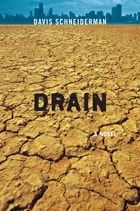
Drain
A NovelDavis Schneiderman
Northwestern University Press, 2010
It’s the year 2039, and Lake Michigan is mysteriously emptied of water. The planet’s atmosphere and magnetic field are failing, and fires burn ominously throughout the empty lake bed. In this seemingly endless desert east of Chicago, three factions are locked in conflict: the original end-of-times cultist settlers who follow religious visionary Fulcrum Maneuvers and worship a giant World Worm they deem responsible for the drained lake; the megacorporation Quadrilateral, a mega-consumerist, planned-community combine of bourgeois city planners developing what is now called the Wildland-Urban Interface; and the Blackout Angels, landlocked punk pirates raised in Quadrilateral cities, who oppose everything and everyone.
In Davis Schneiderman’s shocking novel, Drain, freedom, creativity, and transgression wage war with forces of control, censorship, and conformity. The wordscapes of William S. Burroughs and Thomas Pynchon, the dystopic nightmares of Philip K. Dick, and the transgressive punch of Chuck Palahniuk and Georges Bataille together convene in this stunning and thrilling work.
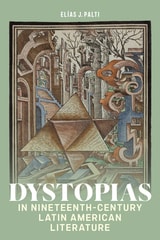
Dystopias in Nineteenth-Century Latin American Literature
Elías J. Palti
Bucknell University Press, 2027
How did nineteenth-century Latin American novelists respond to moments when history itself seemed to come undone? Rather than treating dystopia as a futuristic genre, Palti traces its emergence from concrete political crises in Mexico, Argentina, and Brazil, as writers confronted national defeat, dictatorship, and revolutionary uncertainty. Reading Mexican fiction written after the U.S. occupation; Argentine texts produced under Juan Manuel de Rosas, including works by Esteban Echeverría, Domingo F. Sarmiento, and José Mármol; and Brazilian novels from the transition from Empire to Republic, with particular attention to Machado de Assis, the book shows how narrative form begins to falter. Plots stall, identities fragment, and stories resist closure. These breakdowns constitute early dystopian modes—atopia-atropia, heterotopia, and transtopia—through which literature registers the collapse of historical intelligibility. By locating dystopia in narrative form rather than theme, Palti offers a rich new account of literature under political catastrophe.
Published by Bucknell University Press. Distributed worldwide by Rutgers University Press.
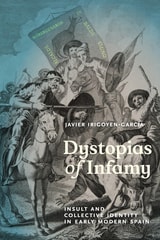
Dystopias of Infamy
Insult and Collective Identity in Early Modern SpainJavier Irigoyen-García
Bucknell University Press, 2022
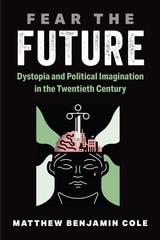
Fear the Future
Dystopia and Political Imagination in the Twentieth CenturyMatthew Benjamin Cole
University of Michigan Press, 2025
Offering a novel reading of major themes and thinkers, Fear the Future explores visions of the future from literary figures such as Yevgeny Zamyatin, Aldous Huxley, and George Orwell; political theorists such as Max Weber, Hannah Arendt, Herbert Marcuse, Jürgen Habermas, and Michel Foucault; and mid-century social scientists such as Erich Fromm, Max Horkheimer, Theodor Adorno, David Reisman, C. Wright Mills, and Jacques Ellul. It offers a comparative analysis of distinct intellectual and literary traditions, including modern utopianism and anti-utopianism, midcentury social science, Frankfurt School critical theory, and continental political philosophy. With detailed case studies of key thinkers from the Enlightenment to the late twentieth century, the book synthesizes secondary literature and research from a range of disciplinary areas, including in political theory, intellectual history, literary studies, and utopian studies. This wide-ranging reconstruction shows that while dystopian thinking has illustrated the dangers of domination and dehumanization, it has also illuminated new possibilities for freedom.
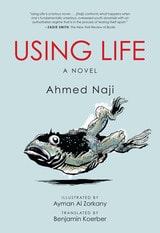
Using Life
By Ahmed Naji, Illustrations by Ayman Al Zorkany, Translated by Benjamin Koerber
University of Texas Press, 2017
Upon its initial release in Arabic in the fall of 2014, Using Life received acclaim in Egypt and the wider Arab world. But in 2016, Ahmed Naji was sentenced to two years in prison after a reader complained that an excerpt published in a literary journal harmed public morality. His imprisonment marks the first time in modern Egypt that an author has been jailed for a work of literature. Writers and literary organizations around the world rallied to support Naji, and he was released in December 2016. His original conviction was overturned in May 2017 but, at the time of printing, he is awaiting retrial and banned from leaving Egypt.
Set in modern-day Cairo, Using Life follows a young filmmaker, Bassam Bahgat, after a secret society hires him to create a series of documentary films about the urban planning and architecture of Cairo. The plot in which Bassam finds himself ensnared unfolds in the novel’s unique mix of text and black-and-white illustrations.
The Society of Urbanists, Bassam discovers, is responsible for centuries of world-wide conspiracies that have shaped political regimes, geographical boundaries, reigning ideologies, and religions. It is responsible for today’s Cairo, and for everywhere else, too. Yet its methods are subtle and indirect: it operates primarily through manipulating urban architecture, rather than brute force. As Bassam immerses himself in the Society and its shadowy figures, he finds Cairo on the brink of a planned apocalypse, designed to wipe out the whole city and rebuild anew.