Results by title
3 books match the query 'Each'

Each and Her
Valerie Martínez
University of Arizona Press, 2010
In 2004 twenty-eight women and young girls were murdered in Ciudad Juárez and the surrounding areas. The tragedy escalated to fifty-eight murders in 2006, then again to eighty-six in 2008, and current estimates top four hundred deaths. Now poet Valerie Martínez offers a poetic exploration of these events, pushing boundaries—stylistically and artistically—with vivid poems that contextualize femicide.
Martínez departs from traditional narrative to reveal the hidden effects and outcomes of the horrific and heart-wrenching cases of femicide. These poems—lyric fragments and prose passages that form a collage—have an intricate relation to one another, creating a complex literary quilt that feels like it can be read from the beginning, the end, or anywhere in between. Martínez is personally invested in the topic, evoking the loss of her sister, and Each and Her emerges as a biography of sorts and a compelling homage to all those who have suffered. Other authors may elaborate on or investigate this topic, but Martínez humanizes it by including names, quotations, realistic details, and stark imagery.
The women of Juárez, like other women around the world, are ravaged by inequality, discontinuity, politics, and economic plagues that contribute to gender violence. Martínez offers us a poignant and alarming glance into another world with these never-before-told stories. Her refreshing and explosive voice will keep readers transfixed and intrigued about these events and emotions—removed from us and yet so close to the heart.
[more]

Each in a Place Apart
James McMichael
University of Chicago Press, 1994
James McMichael's psychologically penetrating long poem traces a man's twenty-year entanglement with a woman; the events that brought them together; the settings in which the two spent their time, together and alone; and the circumstances that led to their eventual separation.
[more]
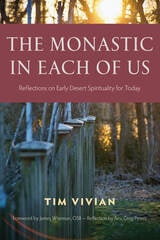
The Monastic In Each of Us
Heart, Mind, Body, Soul and SpiritTim Vivian
Catholic University of America Press, 2026
The Monastic in Each of Us offers eight chapters on early-monastic themes relevant for spiritual seekers today. In August 2024, at the invitation of Abbot James Wiseman, the author gave seven retreat talks for the brothers at St. Anselm’s Abbey in Washington, D.C., on early-monastic spirituality and its relevance for us today. The revised talks here, with an additional chapter, offer more accessible discussions both for a general non-monastic audience and monastic readers. Chapter 1, “The Desert Fathers and Mothers and the Ascetic Tradition,” offers an introduction to the early monastics and their teachings on asceticism and spirituality. Chapters 2 and 3 cover “Ego and Humility & The Path to Transformation” and “Some Monastic and Universal Virtues.”
Chapter 4, “A Fire That Burns Without Consuming,” offers an imagined conversation with Mary Margaret Funk, O.S.B, author of Thoughts Matter: Discovering the Spiritual Tradition, on the importance of early-monastic spirituality for today. Chapters 5 and 6 discuss some major themes: asceticism, sin, the passions, thoughts, and the importance of community. Chapter 7 focuses on Poemen, an early monastic, and the theme of judging to discernment to compassion. The concerns these chapters look at, and the practices given and hope offered are human and still speak to us today.
The final chapter offers brief discussions of what the early monastics call the eight “principal thoughts”: gluttony/greed, sexual immorality, love of money, gloominess, anger, acedia, self-importance, and excessive pride. Thoughts, and their discernment, are key in early monasticism, and can be for us. As John Chryssavgis stresses, “our thoughts” can “inhibit us in our relationships with others and with God. Disclosing our thoughts to a ‘physician’ is a step in the direction of trust and community. It is less a way of dealing with the past, than of directing our future.”
[more]