Results by title
7 books match the query 'Eagleton, Terry'
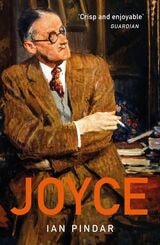
Joyce
Second EditionIan Pindar
Haus Publishing, 2025
James Joyce (1882–1941) is hailed as one of the greatest writers of the twentieth century. Rejecting his homeland and its religion as a young man, Joyce went on to reinvent the Dublin of his youth in his fiction. His masterpiece, Ulysses—once banned in Britain and the United States—redefined the modern novel and has become a canonical classic. Finnegans Wake, written as Joyce’s eyesight deteriorated, cemented his legacy as one of the founding figures of modernist literature.
In a revised edition of this lucid and compelling biography, containing a new foreword from the author, crucial events in Joyce’s life, from his self-imposed exile to his creative triumphs, are explored vividly. Ian Pindar reveals how Joyce’s work carefully blends the abstract and the mundane, capturing the great human comedy of which we are all part.
Literary Theory
An IntroductionTerry Eagleton
University of Minnesota Press, 1996
Marxism and the Interpretation of Culture
Edited by Cary Nelson and Lawrence Grossberg
University of Illinois Press, 1988
Nationalism, Colonialism, and Literature
Terry Eagleton
University of Minnesota Press, 1990
The three essays constituting this volume were originally published as individual pamphlets by the Field Day Theatre Company, in Derry, Northern Ireland. Each deals with the question of nationalism and the role of cultural production as a force in understanding and analyzing the aftermath of colonization. The authors’ diverse perspectives are demonstrated by the essays’ respective titles: Eagleton, Nationalism: Irony and Commitment; Jameson, Modernism and Imperialism; and Said, Yeats and Decolonization. The essays have implication beyond their immediate topics, bearing upon questions of feminism, decolonization, and modernism to illuminate problems that belong to other groups and regions.
Rape Of Clarissa
Writing, Sexuality, and Class Struggle in Samuel RichardsonTerry Eagleton
University of Minnesota Press, 1982

The Emergence of Social Space
Rimbaud and the Paris CommuneKristin RossForeword by Terry Eagleton
University of Minnesota Press, 1989
Central to her analysis of the Commune as social space and oppositional culture is a close textual reading of Arthur Rimbaud’s poetry. His poems - a common thread running through the book - are one set of documents among many in Ross’s recreation of the Communard experience. Rimbaud, Paul Lafargue, and the social geographer Elisee Reclus serve as emblematic figures moving within and on the periphery of the Commune; in their resistance to the logic and economy of a capitalist conception of work, in their challenge to work itself as a term of identity, all three posed a threat to the existing order. Ross looks at these and other emancipator notions as aspects of Communard life, each with an analogous strategy in Rimbaud’s poetry. Applying contemporary theory to a wealth of little-known archival material, she has written a fresh, persuasive, and original book.
Theology and the Political
The New Debate, sic vCreston Davis, John Milbank and Slavoj Žižek, eds.
Duke University Press, 2005
Contributors. Anthony Baker, Daniel M. Bell Jr., Phillip Blond, Simon Critchley, Conor Cunningham, Creston Davis, William Desmond, Hent de Vries, Terry Eagleton, Rocco Gangle, Philip Goodchild, Karl Hefty, Eleanor Kaufman, Tom McCarthy, John Milbank, Antonio Negri, Catherine Pickstock, Patrick Aaron Riches, Mary-Jane Rubenstein, Regina Mara Schwartz, Kenneth Surin, Graham Ward, Rowan Williams, Slavoj Žižek