Results by title
8 books match the query 'Early'
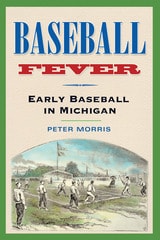
Baseball Fever
Early Baseball in MichiganPeter Morris
University of Michigan Press, 2003
Baseball seems tailor-made for the historian, yet even today, after almost a century and a half of organized play, baseball's origins remain unclear. Most accounts focus on Eastern teams and the advent of professionals, but how the game spread across a predominantly rural America to become our national pastime is a question still largely unresolved.
In this well-researched study of Michigan baseball from the 1830s to the 1870s, baseball scholar Peter Morris offers many answers. Drawing on such sources as personal memoirs, period photographs, and an extensive, often hilarious variety of newspaper accounts, he paints a vivid portrait of a game that was widely---if erratically---played well before the Civil War and gradually evolved from an informal amusement into an activity for local groups of young men and finally into a serious, organized sport.
Baseball began with pick-up "raisin'" games---so called because they took place after rural roof-raisings---played purely for fun by any number of participants, with myriad local variations. The first amateur clubs appeared in the 1850s and were often ridiculed for playing a child's game---"baseball fever" was then a term of mockery---but as they persevered and issued challenges to other teams from nearby towns, rivalries developed, rules began to conform, and a tradition started to take shape.
Tournaments, often connected with county fairs, and increased newspaper coverage gave the game new momentum after the Civil War, and what had been sociable matches became serious contests, sometimes marred by bad blood. Enclosed grounds changed the nature of the game--most notably with respect to home runs--and allowed teams to charge admission, which introduced a new element of commercialism, community involvement, and a heightened sense of competition. Ultimately, it brought about a level of play that made the best "amateur" clubs able to challenge professional teams from the East when they toured the country.
As he traces the exploits of clubs like the Excelsiors, the Wahoos, and the Unknowns, season by season and often game by game, Morris adds a wealth of new detail to the story of baseball's early days, showing how decades of at least nominally amateur play prepared the way for the advent of the National League in the 1870s, and with it the true beginnings of the professional sport we know today. In the process, he also paints a fascinating portrait of the attitudes, values, and lives of rural Americans in the mid-nineteenth century.

John Leland
De uiris illustribus / On Famous MenJohn Leland
Bodleian Library Publishing, 2010
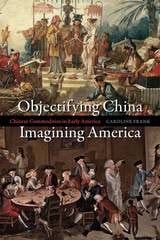
Objectifying China, Imagining America
Chinese Commodities in Early AmericaCaroline Frank
University of Chicago Press, 2011
With the ever-expanding presence of China in the global economy, Americans more and more look east for goods and trade. But as Caroline Frank reveals, this is not a new development. China loomed as large in the minds—and account books—of eighteenth-century Americans as it does today. Long before they had achieved independence from Britain and were able to sail to Asia themselves, American mariners, merchants, and consumers were aware of the East Indies and preparing for voyages there. Focusing on the trade and consumption of porcelain, tea, and chinoiserie, Frank shows that colonial Americans saw themselves as part of a world much larger than just Britain and Europe
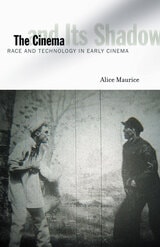
The Cinema and Its Shadow
Race and Technology in Early CinemaAlice Maurice
University of Minnesota Press, 2013
The Cinema and Its Shadow argues that race has defined the cinematic apparatus since the earliest motion pictures, especially at times of technological transition. In particular, this work explores how racial difference became central to the resolving of cinematic problems: the stationary camera, narrative form, realism, the synchronization of image and sound, and, perhaps most fundamentally, the immaterial image—the cinema’s “shadow,” which figures both the material reality of the screen image and its racist past.
Discussing early “race subjects,” Alice Maurice demonstrates that these films influenced cinematic narrative in lasting ways by helping to determine the relation between stillness and motion, spectacle and narrative drive. The book examines how motion picture technology related to race, embodiment, and authenticity at specific junctures in cinema’s development, including the advent of narratives, feature films, and sound. In close readings of such films as The Cheat, Shadows, and Hallelujah!, Maurice reveals how the rhetoric of race repeatedly embodies film technology, endowing it with a powerful mix of authenticity and magic. In this way, the racialized subject became the perfect medium for showing off, shoring up, and reintroducing the cinematic apparatus at various points in the history of American film.
Moving beyond analyzing race in purely thematic or ideological terms, Maurice traces how it shaped the formal and technological means of the cinema.
The Intimacy of Paper in Early and Nineteenth-Century American Literature
Jonathan Senchyne
University of Massachusetts Press, 2020
The Intimacy of Paper in Early and Nineteenth-Century American Literature reveals that book history and literary studies are mutually constitutive and proposes a new literary periodization based on materiality and paper production. In unpacking this history and connecting it to cultural and literary representations, Senchyne also explores how the textuality of paper has been used to make social and political claims about gender, labor, and race.

The Lithic Industries of the Illinois Valley in the Early and Middle Woodland Period
Anta Montet-White
University of Michigan Press, 1968

The Quest for the Historical Israel
Debating Archaeology and the History of Early IsraelIsrael Finkelstein
SBL Press, 2007

This Side of Early
Naomi Ayala
Northwestern University Press, 2008
“HOLE”
One morning
they dig up the sidewalk and leave.
No sign of the truck—only the large,
dark shadow digging and digging,
piling up sludge with a hand shovel
beside the only tree.
Two o’clock I come by
and he’s slumbering in the grass beside rat holes.
Three and he’s stretched across a jagged stonewall,
folded hands tucked beneath one ear—
a beautiful young boy smiling,
not the heavy, large shadow who can’t breathe.
Four-thirty and the August heat
takes one down here.
He’s pulled up an elbow joint
some three feet round.
At seven I head home for the night,
pass the fresh gravel mound,
a soft footprint near the manhole
like the “x” abuelo would place beside his name
all the years he couldn’t write.