Results by title

2 books match the query 'Early Modern Age'
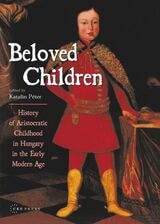
cover of Beloved Children: History of Aristocratic Childhood in Hungary in the Early Modern Age

Beloved Children

History of Aristocratic Childhood in Hungary in the Early Modern Age

Katalin Peter

Central European University Press, 2001

Drawing on evidence from a wide collection of surviving family papers, Beloved Children is a valuable contribution to literature available concerning childhood history in pre-industrial Central Europe.

With the aid of detailed case studies, the volume illustrates every aspect of Hungarian childhood in the early modern age from a variety of contrasting perspectives—birth, care, education, marriage, orphanhood and death. The book also includes a unique portrayal of family life in the Hungarian aristocracy.

Beloved Children is a comprehensive study examining topics such as family intimacy, paternal and maternal attitudes, providing the reader with a valuable insight into a child’s life in Hungary during the sixteenth and seventeenth centuries.
[more]
cover of Between the Living and the Dead: A Perspective on Witches and Seers in the Early Modern Age

Between the Living and the Dead

A Perspective on Witches and Seers in the Early Modern Age

Éva Pócs

Central European University Press, 1998

Éva Pócs, one of the most highly respected scholars of historical anthropology, has undertaken extensive research on the history of folk beliefs connected with communication and the supernatural sphere. In this book, she examines the relics of European shamanism in early modern sources, and the techniques and belief-systems of mediators found in the records of witchcraft trials from the sixteenth to the eighteenth century. The book explores the various communication systems known to early modern Hungarians, describes the role of these systems in everyday village life, and shows how they were connected to contemporary European systems, as well as new types of mediators and systems which function right up to the twentieth century. Representing a major contribution to the most up-to-date international research, Eva Pócs draws on significant East European material and literature not previously co-ordinated with that from the West.
[more]