Results by title
3 books match the query 'Early Modern China'
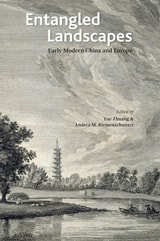
Entangled Landscapes
Early Modern China and EuropeEdited by Yue Zhuang and Andrea M. Riemenschnitter
National University of Singapore Press, 2017
Entangled Landscapes focuses on the exchange of ideas of landscape practice between Europe and China in the sixteenth, seventeenth, and eighteenth centuries. Yue Zhuang and Andrea M. Riemenschnitter explore this through three themes—empire-building, mediators’ constraints, and aesthetic negotiations. They challenge our assumptions about how China and Europe influenced one another and go beyond well-documented outcomes like the jardin anglo-chinois and Européenerie styles. Interdisciplinary and revisionist, this brings the critical spirit of postcolonial studies to art history and will appeal to scholars in fields such as comparative literature and visual culture, history, and human geography.
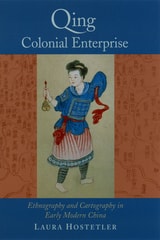
Qing Colonial Enterprise
Ethnography and Cartography in Early Modern ChinaLaura Hostetler
University of Chicago Press, 2001
Although mapping in China is almost as old as Chinese civilization itself, the Qing insistence on accurate, to-scale maps of their territory was a new response to the difficulties of administering a vast and growing empire. Likewise, direct observation became increasingly important to Qing ethnographic writings, such as the illustrated manuscripts known as "Miao albums" (from which twenty color paintings are reproduced in this book). These were intended to educate Qing officials about various non-Han peoples so that they could govern these groups more effectively.Hostetler's groundbreaking account will interest anyone studying the history of the early modern period and colonialism.
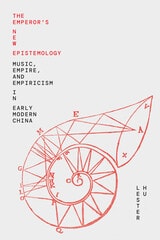
The Emperor’s New Epistemology
Music, Empire, and Empiricism in Early Modern ChinaLester Hu
University of Chicago Press, 2027
An innovative account of listening and empire-building in 17th- and 18th-century China.
The Emperor’s New Epistemology explores how listening shaped knowledge and empire-building in seventeenth- and eighteenth-century China. As the Manchu dynasty expanded deep into Inner Asian territories deemed foreign by the majority-Han population, the Qing Empire’s musical culture encompassed the sounds of Mongols, Uyghurs, and Tibetans, as well as Western music brought by Jesuit and other Christian missionaries. Lester Hu reveals that this diversity transformed not only Qing court culture but the very grounds on which knowledge and power could be established.
In one revealing episode from 1692, the Kangxi Emperor (1654–1722) misinterpreted a key term of Classical Chinese music after studying European music with the Jesuits. Hu situates this anecdote within the political, social, and epistemic shifts that transformed late-imperial China. As Hu shows, listening was an instrument of Qing imperial authority: Knowledge about music, language, and even the universe could only be verified through the emperor’s ears. Furthermore, listening facilitated new theories of empirical knowledge, which both lent themselves to Qing-imperial ideology and generated new epistemic tensions. By exploring their echoes in similar shifts in early modern Europe, Hu’s book brings a global perspective to the study of music in the early modern world and reconsiders the transcendental ground on which such comparative and intercultural knowledge is possible.