Results by title

7 books match the query 'Early Modern Italy'
cover of Forbidden Knowledge: Medicine, Science, and Censorship in Early Modern Italy

Forbidden Knowledge

Medicine, Science, and Censorship in Early Modern Italy

Hannah Marcus

University of Chicago Press, 2020

An exploration of the censorship of medical books from their proliferation in print through the prohibitions placed on them during the Counter-Reformation.

Forbidden Knowledge explores the censorship of medical books from their proliferation in print through the prohibitions placed on them during the Counter-Reformation. How and why did books banned in Italy in the sixteenth century end up back on library shelves in the seventeenth? Historian Hannah Marcus uncovers how early modern physicians evaluated the utility of banned books and facilitated their continued circulation in conversation with Catholic authorities.
 
Through extensive archival research, Marcus highlights how talk of scientific utility, once thought to have begun during the Scientific Revolution, in fact, began earlier, emerging from ecclesiastical censorship and the desire to continue to use banned medical books. What’s more, this censorship in medicine, which preceded the Copernican debate in astronomy by sixty years, has had a lasting impact on how we talk about new and controversial developments in scientific knowledge. Beautiful illustrations accompany this masterful, timely book about the interplay between efforts at intellectual control and the utility of knowledge.
[more]
cover of Gendering the Renaissance: Text and Context in Early Modern Italy

Gendering the Renaissance

Text and Context in Early Modern Italy

Meredith K. Ray

University of Delaware Press, 2023
The essays in this volume revisit the Italian Renaissance to rethink spaces thought to be defined and certain: from the social spaces of convent, court, or home, to the literary spaces of established genres such as religious plays or epic poetry. Repopulating these spaces with the women who occupied them but have often been elided in the historical record, the essays also remind us to ask what might obscure our view of texts and archives, what has remained marginal in the texts and contexts of early modern Italy and why. The contributors, suggesting new ways of interrogating gendered discourses of genre, identities, and sanctity, offer a complex picture of gender in early modern Italian literature and culture. Read in dialogue with one another, their pieces provide a fascinating survey of currents in gender studies and early modern Italian studies and point to exciting future directions in these fields.
[more]
cover of Ladies Errant: Wayward Women and Social Order in Early Modern Italy

Ladies Errant

Wayward Women and Social Order in Early Modern Italy

Deanna Shemek

Duke University Press, 1998

The issue of a woman’s place—and the possibility that she might stray from it—was one of early modern Italy’s most persistent social concerns. Ladies Errant takes as its starting point the vast literature of this era devoted to the proper conduct and education of women. Deanna Shemek uses this foundation to present the problem of wayward feminine behavior as it was perceived to threaten male identity and social order in the artistic and intellectual articulations of the Italian Renaissance.
Seeing errancy as an act of resistance rather than of error, Shemek carries her study beyond the didactic and prescriptive literature on femininity in early modern Italy to an arena in which theories about femininity are considered jointly with real and fictional instances of women’s waywardness. As prostitutes, warriors, lovers, and poets, the women of Shemek’s study are found in canonical texts, marginal works, and popular artistic activity, appearing, for instance, in literature, paintings, legal proceedings, and accounts of public festivals. By juxtaposing these varied places of errancy—from Ariosto’s chivalric Orlando furioso to the prostitutes’ race in the Palio di San Giorgio—Shemek points to the important contact between elite and popular cultures in early modernity, revealing the strength and flexibility of a gender boundary fundamental to early modern conceptions of social order.
[more]
cover of The Bishop's Burden: Reforming the Catholic Church in Early Modern Italy

The Bishop's Burden

Reforming the Catholic Church in Early Modern Italy

Celeste McNamara

Catholic University of America Press, 2020
In 1563, the Council of Trent published its Decrees, calling for significant reforms of the Catholic Church in response to criticism from both Protestants and Catholics alike. Bishops, according to the Decrees, would take the lead in implementing these reforms. They were tasked with creating a Church in which priests and laity were well educated, morally upright, and focused on worshipping God. Unfortunately for these bishops, the Decrees provided few practical suggestions for achieving the wide-ranging changes demanded. Reform was therefore an arduous and complex process, which many bishops struggled to accomplish or even refused to undertake fully. The Bishop’s Burden argues that reforming bishops were forced to be creative and resourceful to accomplish meaningful change, including creating strong diocesan governments, reforming clerical and lay behavior, educating priests and parishioners, and converting non-believers. The book explores this issue through a detailed case study of the episcopacy of Cardinal-Bishop Gregorio Barbarigo of Padua (bp. 1664-1697), asking how a dedicated bishop formulated a reform program that sought to achieve the Church’s goals. Barbarigo, like other reforming bishops, borrowed strategies from a variety of sources in the absence of clear guidance from Rome. He looked to both pre- and post-Tridentine bishops, the Society of Jesus, the Venetian government, and the Propaganda Fide, which he selectively emulated to address the problems he discovered in Padua. The book is based primarily on the detailed records of Barbarigo’s visitations of rural parishes and captures the rarely-heard voices of seventeenth-century Italian peasants. The Bishop's Burden helps us understand not only the changes experienced by early modern Catholics, but also how even the most sophisticated plans of central authorities could be frustrated by practical realities, which in turn complicates our understanding of state-building and social control.
[more]
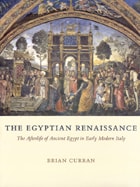
cover of The Egyptian Renaissance: The Afterlife of Ancient Egypt in Early Modern Italy

The Egyptian Renaissance

The Afterlife of Ancient Egypt in Early Modern Italy

Brian Curran

University of Chicago Press, 2007

Fascination with ancient Egypt is a recurring theme in Western culture, and here Brian Curran uncovers its deep roots in the Italian Renaissance, which embraced not only classical art and literature but also a variety of other cultures that modern readers don’t tend to associate with early modern Italy. Patrons, artists, and spectators of the period were particularly drawn, Curran shows, to Egyptian antiquity and its artifacts, many of which found their way to Italy in Roman times and exerted an influence every bit as powerful as that of their more familiar Greek and Roman counterparts.

Curran vividly recreates this first wave of European Egyptomania with insightful interpretations of the period’s artistic and literary works. In doing so, he paints a colorful picture of a time in which early moderns made the first efforts to decipher Egyptian hieroglyphs, and popes and princes erected pyramids and other Egyptianate marvels to commemorate their own authority. Demonstrating that the emergence of ancient Egypt as a distinct category of historical knowledge was one of Renaissance humanism’s great accomplishments, Curran’s peerless study will be required reading for Renaissance scholars and anyone interested in the treasures and legacy of ancient Egypt.
[more]
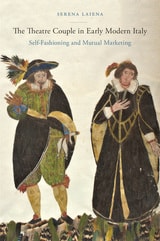
cover of The Theatre Couple in Early Modern Italy: Self-Fashioning and Mutual Marketing

The Theatre Couple in Early Modern Italy

Self-Fashioning and Mutual Marketing

Serena Laiena

University of Delaware Press, 2024

Winner of the ​Luca Attanasio International Flaiano Award for Italian Studies 

Who were the first celebrity couples? How was their success forged? Which forces influenced their self-fashioning and marketing strategies?
These questions are at the core of this study, which looks at the birth of a phenomenon, that of the couple in show business, with a focus on the promotional strategies devised by two professional performers: Giovan Battista Andreini (1576–1654) and Virginia Ramponi (1583–ca.1631). This book examines their artistic path – a deliberately crafted and mutually beneficial joint career – and links it to the historical, social, and cultural context of post-Tridentine Italy. Rooted in a broad research field, encompassing theatre history, Italian studies, celebrity studies, gender studies, and performance studies, The Theatre Couple in Early Modern Italy revises the conventional view of the Italian diva, investigates the deployment of Catholic devotion as a marketing tool, and argues for the importance of the couple system in the history of Commedia dell’Arte, a system that continues to shape celebrity today.
 
[more]
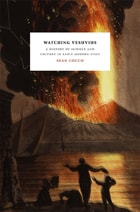
cover of Watching Vesuvius: A History of Science and Culture in Early Modern Italy

Watching Vesuvius

A History of Science and Culture in Early Modern Italy

Sean Cocco

University of Chicago Press, 2012

Mount Vesuvius has been famous ever since its eruption in 79 CE, when it destroyed and buried the Roman cities of Pompeii and Herculaneum. But less well-known is the role it played in the science and culture of early modern Italy, as Sean Cocco reveals in this ambitious and wide-ranging study. Humanists began to make pilgrimages to Vesuvius during the early Renaissance to experience its beauty and study its history, but a new tradition of observation emerged in 1631 with the first great eruption of the modern period. Seeking to understand the volcano’s place in the larger system of nature, Neapolitans flocked to Vesuvius to examine volcanic phenomena and to collect floral and mineral specimens from the mountainside.
 
In Watching Vesuvius, Cocco argues that this investigation and engagement with Vesuvius was paramount to the development of modern volcanology. He then situates the native experience of Vesuvius in a larger intellectual, cultural, and political context and explains how later eighteenth-century representations of Naples—of its climate and character—grew out of this tradition of natural history. Painting a rich and detailed portrait of Vesuvius and those living in its shadow, Cocco returns the historic volcano to its place in a broader European culture of science, travel, and appreciation of the natural world.
[more]