Results by title
2 books match the query 'Early Rome'
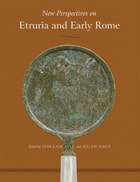
New Perspectives on Etruria and Early Rome
Sinclair Bell
University of Wisconsin Press, 2009
This impressive collection brings to light the works of international scholars, some previously unavailable to an English-language audience. With new information and assessments about the art, architecture, and archaeology of one of the most dynamic periods in the history of the ancient world—the transition between pre-Roman and Roman Italy—these scholars focus on ancient Italy and the wider Mediterranean. Shedding new light on the evidence of well-known and recently excavated sites and the objects they have yielded—their iconography, manufacturing techniques, and afterlives—this collection follows the first archaeological traces of the rise of ancient Italy to its rediscovery in the Renaissance and its reinvention in contemporary fiction, offering a vibrant contribution to classical studies.
Paying tribute to Richard Daniel De Puma, a scholar who has made significant and influential contributions to Etruscan and Roman studies, the contributors to this collection echo the ambition and creativity of his work while offering an up-to-date survey of contemporary Etruscan scholarship. In surveying new developments in both fields, the work collected here represent the diverse, interdisciplinary interests of De Puma as well as areas of recent groundbreaking research.
Paying tribute to Richard Daniel De Puma, a scholar who has made significant and influential contributions to Etruscan and Roman studies, the contributors to this collection echo the ambition and creativity of his work while offering an up-to-date survey of contemporary Etruscan scholarship. In surveying new developments in both fields, the work collected here represent the diverse, interdisciplinary interests of De Puma as well as areas of recent groundbreaking research.
[more]
Public Office in Early Rome
Ritual Procedure and Political PracticeRoberta Stewart
University of Michigan Press, 2010
". . . [A]n excellent, erudite book."
---Bryn Mawr Classical Review
---Bryn Mawr Classical Review
Studies of Roman politics have traditionally emphasized individual personalities or groups of personalities and have explained political behavior in terms of contests for individual power or group power. By contrast, Roberta Stewart focuses on being the religious institution of the "allotment" of duties among elected officials as a primary control on Roman politics. She examines in detail the procedure of allotment, the roles of popular election and allotment in defining public authority and duty, and the relationship between the Roman Senate and elected officials. Allotment is seen to reflect Republican ideology about the divine sanction of Roman leadership, military enterprise, and empire.
Allotment is examined in particular historical contexts, and the successive formations of public office in 444, 367, and 242 b.c.e. are analyzed as a series of political solutions in an evolving cultural context. The discussion documents the ritual definition of allotments and the historical development of distinctive features of Republican political office: the equal authority of colleagues (collegiality), the individual authority and accountability for an allotted function (provincia), the procedural alternative to allotment (comparatio), and the hierarchy of offices with imperium (the consuls and praetors).
Public Office in Early Rome will be of great interest for scholars and students of Roman religion, government, and history.
Roberta Stewart is Associate Professor of Classics, Dartmouth College.
[more]