Results by title
18 books match the query 'Echoes'
Echoes From The Holocaust
Philosophical Reflections on a Dark Timeedited by Alan Rosenberg and Gerald E. Myers
Temple University Press, 1990
The murder of six million Jewish men, women, and children during World War II was an act of such barbarity as to constitute one of the central events of our time; yet a list of the major concerns of professional philosophers since 1945 would exclude the Holocaust. This collection of twenty-three essays, most of which were written expressly for this volume, is the first book to focus comprehensively on the profound issues and philosophical significance of the Holocaust.
The essays, written for general as well as professional readers, convey an extraordinary range of factual information and philosophical reflection in seeking to identify the haunting meanings of the Holocaust. Among the questions addressed are: How should philosophy approach the Holocaust? What part did the philosophical climate play in allowing Hitlerism its temporary triumph? What is the philosophical climate today and what are its probable cultural effects? Can philosophy help our culture to become a bulwark against future agents of evil? The multiple dimensions of the Holocaust—historical, sociological, psychological, religious, moral, and literary—are collected here for concentrated philosophical interpretations.

Echoes from the Hills
Critical Essays on Ozarks LiteratureJohn J. Han
University of Arkansas Press, 2027
Echoes from the Hills: Critical Essays on Ozarks Literature offers a sustained critical examination of Ozarks writing through literary, ecological, cultural, and theoretical perspectives. Bringing together sixteen essays, the collection marks a shift in Ozarks studies from archival recovery and author-focused scholarship toward more self-aware literary criticism, showing that Ozarks literature is a dynamic field capable of serious interpretive work.
Organized around themes such as Arcadian myth, ecocriticism, postcolonialism, feminist criticism, and noir, the essays place Ozarks texts in conversation with broader debates in American literary studies and the environmental humanities. Discussions of writers such as Daniel Woodrell and Sue Hubbell, along with attention to film and visual culture including Minari, highlight how regional stories engage issues of land use, environmental strain, economic precarity, and cultural displacement.
The collection also broadens the field by addressing gaps in representation and including a wider range of voices and perspectives. By bringing together scholars from within and beyond the region, the book encourages dialogue across disciplinary and geographic boundaries. Overall, it presents Ozarks literature as an evolving part of American literary scholarship, one that reflects the complex intersections of place, memory, identity, and cultural change.
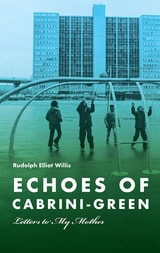
Echoes of Cabrini-Green
Letters to My MotherRudolph Elliot Willis
Southern Illinois University Press, 2026
A powerful memoir of love, survival, and resilience, told through intimate letters
In Echoes of Cabrini-Green, Rudolph Elliot Willis tells the story of his journey from Chicago’s most notorious public housing project to the halls of academia and medicine. Framed as heartfelt letters written after his mother’s death, this deeply personal narrative reflects on a childhood shaped by systemic poverty, racism, and uncertainty, showing how faith, education, and resilience can remake lives.
Willis recalls the daily struggles of growing up Black in a family of ten children in Cabrini-Green—hunger, fear, and the constant threat of violence—alongside glimpses of neighborly solidarity, faith, and perseverance. He watched his father, a decorated veteran, retreat into silence and alcoholism while his mother’s frustration flared into anger. Throughout it all, she remained a moral compass. Her faith in God, unwavering work ethic, and quiet dignity gave her children a vision of something better.
A summer at a Christian camp introduced Willis to serenity and the grounding power of faith. A passion for reading and a gift for learning propelled him to an elite high school, where he wrestled with the dissonance between two worlds. But because of his mother’s enduring belief in education as a shield against the harsh realities of the world, he was ultimately able to thrive.
Willis went on to graduate from Northwestern University and earn a medical degree, eventually becoming an oncologist and scientific researcher. In these letters, he shares with his mother his successes and setbacks, the triumphs and struggles of his siblings, his grief following their deaths, and the haunting demolition of Cabrini-Green—the place that shaped him and so many others. Past, present, and future collapse: the crisp white coats and hallowed halls of medical school give way to the stained cinderblocks and echoing gunshots of Cabrini-Green. Willis looks into the eyes of patients and finds his siblings staring back at him. He realizes Cabrini-Green is not simply a memory—it is part of his identity, the crucible that formed him into who he is.
With lyrical prose and unflinching honesty, Echoes of Cabrini-Green is an invitation to imagine change in communities too often defined only by hardship; a testament to the power of faith, education, and personal resolve to transform lives; and a call to recognize the dignity and potential that endure even in the most neglected places.
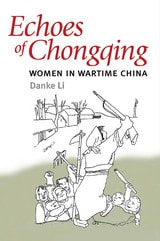
Echoes of Chongqing
Women in Wartime ChinaDanke Li
University of Illinois Press, 2010
This collection of annotated oral histories records the personal stories of twenty Chinese women who lived in the wartime capital of Chongqing during China's War of Resistance against Japan during World War II. By presenting women's remembrances of the war, this study examines the interplay between oral history and traditional historical narrative, public discourse, and private memories. The women interviewed came from differing social, economic, and educational backgrounds and experienced the war in a variety of ways, some of them active in the communist resistance and others trying to support families or pursue educations in the face of wartime upheaval. Their stories demonstrate that the War of Resistance had two faces: one presented by official propaganda and characterized by an upbeat unified front against Japan, the other a record of invisible private stories and a sobering national experience of death and suffering. The accounts of how women coped, worked, and lived during the war years in the Chongqing region recast historical understanding of the roles played by ordinary people in wartime and give women a public voice and face that, until now, have been missing from scholarship on the war.
Echoes of Emerson
Rethinking Realism in Twain, James, Wharton, and CatherDiana Hope Polley
University of Alabama Press, 2017
Probes the ways in which two major periods in nineteenth-century American literature—Romanticism and Realism—have come to be understood and defined.
Echoes of Emerson: Rethinking Realism in Twain, James, Wharton, and Cather traces the complex and unexplored relationship between American realism and the philosophy of Ralph Waldo Emerson. Critics often read American realism as a clear disavowal of earlier American romantic philosophy and as a commitment to recognizing the stark realities of a new postbellum order. Diana Hope Polley’s study complicates these traditional assumptions by reading American realism as an ongoing dialogue with the ideas—often idealisms—of America’s greatest romantic philosopher, Ralph Waldo Emerson.
In this illuminating work, Polley offers detailed readings of Mark Twain’s Adventures of Huckleberry Finn, Henry James’s The Portrait of a Lady, Edith Wharton’s The House of Mirth, and Willa Cather’s My Ántonia—all through the lens of Emersonian philosophy and discourse. This unique contribution to nineteenth- and early twentieth-century literary studies shows how these texts revisit Emerson’s antebellum “republic of the spirit” philosophy, specifically the trope of the Emersonian hero/heroine navigating the harsh contingencies of the modern world.
Romanticism and realism are often seen as opposing binaries, with romanticism celebrating the individual, self-reliance, and nature and realism emphasizing the weight of socio-historical forces. Realism is often characterized as rejecting the transcendent principles of Emersonian thought. Rather than accept those distinct boundaries between romance and realism, Polley argues that American realists struggled between celebrating Emerson’s core philosophies of individual possibility and acknowledging the stark “realities” of American social and historical life. In short, this study recognizes within realism a divided loyalty between two historical trends and explores how these seemingly contradictory notions—Emerson’s romantic philosophy and later nineteenth-century visions of historical reality—exist, simultaneously, within the literature of the period.
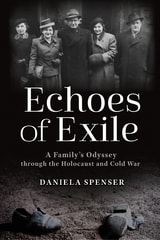
Echoes of Exile
A Family’s Odyssey through the Holocaust and Cold WarDaniela Spenser
University of Alabama Press, 2025
A sweeping exploration of survival, resilience, and the fate of one family amid Europe’s most turbulent century.
Echoes of Exile reveals the seismic disruptions of twentieth-century European history through the intimate lens of one family’s struggle to survive. Setting out to record the life of her mother, Ruth, Daniela Spenser unearthed personal facts and stories that additionally illuminate the shared traumas and experiences of millions of Czech, Polish, and German Jews who died in the Holocaust, as well as the stories of those who survived and lived under Communism and the Cold War. Her resulting work is a fascinating hybrid that combines family letters and interviews with deeply researched political history spanning from the collapse of the Austro-Hungarian Empire to the fall of the Berlin Wall.
Spenser’s fascinating work reveals the difficult choices her mother and family faced, the tests to their loves and loyalties, and the lingering scars of exile. More than a family history, it weaves personal and historical narratives with mundane and momentous threads to create a fresh, distinctive fabric. Spenser recovers fragments of the past that contribute to a map of the present and possibilities for the future. An engrossing account of survival, resilience, and the enduring human spirit amid the maelstrom of Europe’s savage twentieth century, Echoes of Exile will interest readers who value firsthand accounts of significant events and who seek to understand the complexities of survival, identity, and political change through intimate, lived experiences.
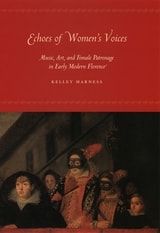
Echoes of Women's Voices
Music, Art, and Female Patronage in Early Modern FlorenceKelley Harness
University of Chicago Press, 2006
Through commissions, patrons sought to promote a vision of the world and their place in it. The unique social norms, laws, educational backgrounds, and life experiences of female patrons meant the expression of a worldview that differed significantly from that of their male counterparts. Joining exceptional archival research with telling analysis of significant examples of music, art, and drama, Kelley Harness challenges the prevailing view that Florence saw a political and artistic decline during this period. She argues convincingly that the female domination of these years brought forth artistic patronage that was both continuous and well-conceived.
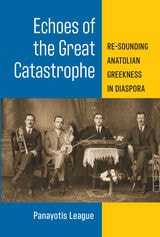
Echoes of the Great Catastrophe
Re-Sounding Anatolian Greekness in DiasporaPanayotis League
University of Michigan Press, 2021
Echoes of the Great Catastrophe: Re-sounding Anatolian Greekness in Diaspora explores the legacy of the Great Catastrophe—the death and expulsion from Turkey of 1.5 million Greek Christians following the Greco-Turkish War of 1919–1922—through the music and dance practices of Greek refugees and their descendants over the last one hundred years. The book draws extensively on original ethnographic research conducted in Greece (on the island of Lesvos in particular) and in the Greater Boston area, as well as on the author’s lifetime immersion in the North American Greek diaspora. Through analysis of handwritten music manuscripts, homemade audio recordings, and contemporary live performances, the book traces the routes of repertoire and style over generations and back and forth across the Atlantic Ocean, investigating the ways that the particular musical traditions of the Anatolian Greek community have contributed to their understanding of their place in the global Greek diaspora and the wider post-Ottoman world. Alternating between fine-grained musicological analysis and engaging narrative prose, it fills a lacuna in scholarship on the transnational Greek experience.
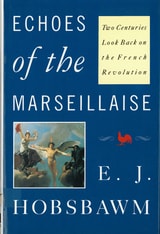
Echoes of the Marseillaise
Two Centuries Look Back on the French RevolutionHobsbawm, Eric
Rutgers University Press, 1990
We can learn a great deal from studying the French Revolution itself, but we can also learn from studying the ways in which scholars have interpreted the French Revolution, and from the ways their views have changed. For over a century following the Revolution, commentators and scholars spoke of it in glowing terms. But in the past three decades, revisionist historians have become skeptical. Eric Hobsbawm reiterates the centrality of the Revolution for history on a global basis. He argues that those who wrote about the Revolution in the nineteenth century were convinced it had changed their lives dramatically, improving the economy and the lot of peasants. They saw the Revolution as a prototype of of the bourgeois revolution, enabling the middle class to gain power from the ruling class of aristocrats. Many believed proletarian revolutions would inevitably follow. In the years between 1917 and the 1960s, Marxists continued to use the French Revolution as a point of reference, paying increasing attention to the social and economic factors in the Revolution, not only to the political factors. In the 1970s and 1980s, many historians began to argue that the Revolution achieved modest results at disproportionate costs. Hobsbawm argues that this massive historiographical reaction against the centrality of the Revolution reflects the personal politics of those contemporary historians for whom Marxism and communism are now out of favor. They are, he maintains, wrong. The Revolution transformed the world permanently and introduced forces that continue to transform it.
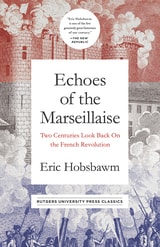
Echoes of the Marseillaise
Two Centuries Look Back on the French RevolutionHobsbawm, Eric
Rutgers University Press, 2019
E.J. Hobsbawm’s classic historiographic study—written at the very moment when a new set of revolutions swept through the Eastern Bloc and brought down the Iron Curtain—explores how the French Revolution was perceived over the following two centuries. He traces how the French Revolution became integral to nineteenth-century political discourse, when everyone from bourgeois liberals to radical socialists cited these historical events, even as they disagreed on what their meaning. And he considers why references to the French Revolution continued to inflame passions into the twentieth century, as a rhetorical touchstone for communist revolutionaries and as a boogeyman for social conservatives.
Echoes of the Marseillaise is a stimulating examination of how the same events have been reimagined by different generations and factions to serve various political agendas. It will give readers a new appreciation for how the French Revolution not only made history, but also shaped our fundamental notions about history itself.

Echoes of the Sunbird
An Anthology of Contemporary African PoetryDon Burness
Ohio University Press, 1993
Echoes
A Dramatic BagatelleEmma Gad, Translated by Lynn R. Wilkinson
University of Wisconsin Press, 2021
Although it was labeled a “bagatelle,” Echoes, like most of Gad’s other plays, is quite funny. The play brings together three individuals in the out-of-the-way cottage of an old servant. Countess Clara takes refuge with Maren, her former nursemaid, during a sudden downpour and is soon joined by Niels, her former tutor, who claims to be passing by on his way to a church, where he hopes to find important historical documents. During Clara’s conversations with the two, it comes out that she is considering marriage to a count who lives nearby, even though she finds him and his way of life unattractive, and that she and Niels had been in love years before.
Gad’s graceful dialogue manages to touch on questions hotly debated in the last decades of the nineteenth century, such as the ability of individuals to break with the past or with outmoded or repressive conventions, while also making audiences laugh. Despite the play’s lighthearted wittiness, Echoes is an inventive example of turn-of-the-century avant-garde theater.
Echoes
Poems Left BehindJohn Ciardi
University of Arkansas Press, 1989

Lincoln's Gettysburg Address
Echoes of the Bible and Book of Common PrayerA. E. Elmore
Southern Illinois University Press, 2009
While it has long been determined that Abraham Lincoln’s writings were influenced by the King James Bible, until now no full-length study has shown the precise ways in which the Gettysburg Address uses its specific language. Refuting the view that the address was crafted with traditional classical references, this revealing investigation provides a new way to think about the speech and the man who wrote it. A. E. Elmore offers chapter and verse evidence from the Bible as well as specific examples from the Episcopal Book of Common Prayer to illustrate how Lincoln borrowed from these sources to imbue his speech with meanings that would resonate with his listeners. He cites every significant word and phrase—conceived, brought forth, struggled, remaining, consecrate, dedicate, hallow, devotion, new birth, to name a few—borrowed by Lincoln from these two religious texts for use in his dedication of the Gettysburg National Cemetery.
Lincoln’s Gettysburg Address focuses on a number of overlooked themes and ideas, such as the importance of literary allusion and the general public’s knowledge of the Bible in the age of Lincoln. It provides fresh answers to old questions and poses new questions: Was Lincoln a common thief who made use of words from previously published materials as well as from works by his contemporaries? Was he a genius whose literary and political skills were unmatched? No one who reads this highly engaging study will ever think about Lincoln or the Gettysburg Address the same way again.
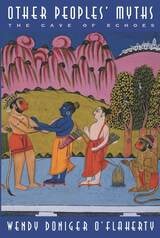
Other Peoples' Myths
The Cave of EchoesWendy Doniger O'Flaherty
University of Chicago Press, 1995

Remembering Paris in Text and Film
Echoes of Baudelaire in Text and on ScreenEdited by Alistair Rolls and Marguerite Johnson
Intellect Books, 2021
Experiencing urban space conjures visions of the past alongside contemplation of the present. This edited volume investigates this feeling of seeing double by investigating Paris—a city that has come to embody the tension of this sensation—through a dual lens of nostalgia and modernity.
Contributors survey Paris in film, poetry, and prose in the nineteenth and twentieth centuries, presenting the city as both a concrete reality and as a collection of the myths associated with it. Interdisciplinary and deeply researched, the essays distill complex concepts of the urban, the textual, and the modern for a wide readership.
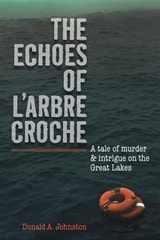
The Echoes of L'Arbre Croche
Donald A. Johnston
University of Michigan Press, 2009
The year is 1915, and Benjamin Corvet, founder of the ship-owning firm Corvet, Sherrill and Spearman, suddenly disappears, sparking events and questions that baffle even those who are close to him.
Constance Sherrill, an attractive, sheltered young woman, feels strangely responsible for what may have happened to him---her father's best friend and coworker. Alan Conrad arrives in Chicago searching for his identity and an unknown benefactor and is swept into a maelstrom of mystery and intrigue that tests his intelligence and athleticism to the fullest. Henry Spearman, the firm's junior partner, is the most eligible bachelor along Chicago's Lake Shore Drive as a result of his catapult from ships' ranks to successful owner.
When a ship sinks off the coast of Beaver Island in Michigan, the intertwining lives of these characters unlock the mystery of the disappearance of another ship twenty years earlier, in a riveting whodunit set on the stormy waters of the Great Lakes.
Donald A. Johnston was born and raised in Detroit, served in World War II as a U.S. Navy Reserve officer, and was decorated for service in the Philippines and in the invasions of Iwo Jima and Okinawa. His career includes forty years in the insurance business. An ardent sailing enthusiast, he has cruised the Great Lakes extensively and has sailed winners in class boats and in offshore competition.
Jacket photograph © Yuriz / iStockphoto.com
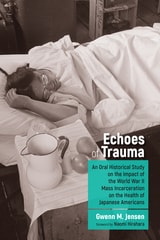
The Echoes of Trauma
An Oral Historical Study on the Impact of the World War II Mass Incarceration on the Health of Japanese AmericansGwenn M. Jensen
University Press of Colorado, 2026
In Echoes of Trauma, medical anthropologist Gwenn Jensen traces the longitudinal ramifications of racism, the chronic stress of imprisonment in concentration camps, and widespread healthcare inadequacies on the well-being of Japanese American Nisei during WWII and beyond.
Based on ninety oral history interviews conducted between 1995 and 2005, Jensen’s work uncovers long-term health impacts on former incarcerees, relating personal stories of Japanese Americans with archival corroboration of their traumatic experiences of having been made prisoners in their own land. These memories illuminate the betrayal and lifelong consequences of imprisonment not only on physical and psychological health but also including intergenerational trauma passed on to subsequent generations. Echoes of Trauma details these short- and long-term health effects and records the stories of these Americans for posterity.
In the wake of the current political climate, with echoes of this past reverberating, the reexamination of Japanese American incarceration undertaken here underscores the importance of comprehending the fallout from incomprehensible injustice visited upon innocent and law-abiding citizens.