Results by title

6 books match the query 'Ecocriticism in literature'
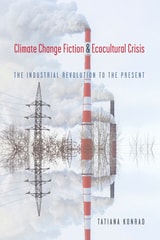
cover of Climate Change Fiction and Ecocultural Crisis: The Industrial Revolution to the Present

Climate Change Fiction and Ecocultural Crisis

The Industrial Revolution to the Present

Tatiana Konrad

University of Nevada Press, 2024

Concentrating on a powerful, emerging genre, Tatiana Konrad’s Climate Change Fiction and Ecocultural Crisis provides a survey of popular narratives that further our understanding of climate change in contemporary fiction. Konrad advocates for the expansion and redefinition of the cli-fi genre and argues that industrial fiction from the nineteenth century is the first example of climate change fiction. Tracing the ways through which cli-fi outlines a history of our modern ecocultural crisis, this book demonstrates how the genre employs four major thematic clusters to achieve this narrative: weather, science, religion, and place.

Focusing on a diverse range of issues, including fossil fuels, cheap energy, the intricacies of human–more-than-human relationships, and postcolonial geographies, Konrad illustrates how cli-fi transcends mere storytelling. The genre ultimately emerges as an important means to forecast, imagine, and contemplate climatic events.

The book invites a broadening of the environmental humanities discourse, asking readers not only to deepen their understanding of the current climate crisis, but also to consider how cli-fi culture can be viewed as an effective method to address climate change.
 
[more]
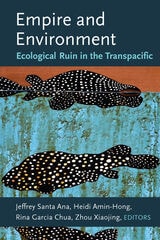
cover of Empire and Environment: Ecological Ruin in the Transpacific

Empire and Environment

Ecological Ruin in the Transpacific

Jeffrey Santa Ana, Heidi Amin-Hong, Rina Garcia Chua, Zhou Xiaojing, Editors

University of Michigan Press, 2022
Empire and Environment argues that histories of imperialism, colonialism, militarism, and global capitalism are integral to understanding environmental violence in the transpacific region. The collection draws its rationale from the imbrication of imperialism and global environmental crisis, but its inspiration from the ecological work of activists, artists, and intellectuals across the transpacific region. Taking a postcolonial, ecocritical approach to confronting ecological ruin in an age of ecological crises and environmental catastrophes on a global scale, the collection demonstrates how Asian North American, Asian diasporic, and Indigenous Pacific Island cultural expressions critique a de-historicized sense of place, attachment, and belonging. In addition to its thirteen chapters from scholars who span the Pacific, each part of this volume begins with a poem by Craig Santos Perez. The volume also features a foreword by Macarena Gómez-Barris and an afterword by Priscilla Wald.
[more]
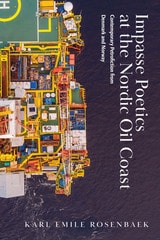
cover of Impasse Poetics at the Nordic Oil Coast: Contemporary Petrofiction from Denmark and Norway

Impasse Poetics at the Nordic Oil Coast

Contemporary Petrofiction from Denmark and Norway

Karl Emil Rosenbaek Reetz

West Virginia University Press, 2026
The first major study of contemporary Nordic petrofiction. Through a variety of cultural texts, including the Nordic noir mystery Smila’s Sense of Snow, Rosenbaek Reetz exposes the cultural, political, and environmental tensions in which green frontier ideas must coexist with the ongoing reliance on oil and gas and critiques the paradox of Nordic nations positioning themselves as climate leaders while remaining deeply tied to fossil fuel economies.
[more]
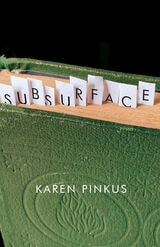
cover of Subsurface

Subsurface

Karen Pinkus

University of Minnesota Press, 2023

A bold new consideration of climate change between narratives of the Earth’s layers and policy of the present


Long seen as a realm of mystery and possibility, the subsurface beneath our feet has taken on all-too-real import in the era of climate change. Can reading narratives of the past that take imaginative leaps under the surface better attune us to our present knowledge of a warming planet?

In Subsurface, Karen Pinkus looks below the surface of texts by Edgar Allan Poe, Arthur Conan Doyle, George Sand, E. T. A. Hoffmann, and Jules Verne to find the buried origins of capitalist fantasies in which humans take what they want from the earth. Putting such texts into conversation with narrative theory, critical theory, geology, and climate policy, she shows that the subsurface has been, in our past, a place of myth and stories of male voyages down to gain knowledge—but it is also now the realm of fossil fuels. How do these two modes intertwine?

A highly original take on evocative terms such as extraction, burial, fossils, deep time, and speculative futurity, Subsurface questions the certainty of comfortable narrative arcs. It asks us to read literature with and against the figure of the geological column, with and against fossil fuels and the emissions warming our planet. As we see our former selves move into the distance, what new modes of imagination might we summon?
[more]
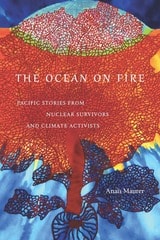
cover of The Ocean on Fire: Pacific Stories from Nuclear Survivors and Climate Activists

The Ocean on Fire

Pacific Stories from Nuclear Survivors and Climate Activists

Anaïs Maurer

Duke University Press, 2024

Bombarded with the equivalent of one Hiroshima bomb a day for half a century, Pacific people have long been subjected to man-made cataclysm. Well before climate change became a global concern, nuclear testing brought about untimely death, widespread diseases, forced migration, and irreparable destruction to the shores of Oceania. In The Ocean on Fire, Anaïs Maurer analyzes the Pacific literature that incriminates the environmental racism behind radioactive skies and rising seas. Maurer identifies strategies of resistance uniting the region by analyzing an extensive multilingual archive of decolonial Pacific art in French, Spanish, English, Tahitian, and Uvean, ranging from literature to songs and paintings. She shows how Pacific nuclear survivors’ stories reveal an alternative vision of the apocalypse: instead of promoting individualism and survivalism, they advocate mutual assistance, cultural resilience, South-South transnational solidarities, and Indigenous women’s leadership. Drawing upon their experience resisting both nuclear colonialism and carbon imperialism, Pacific storytellers offer compelling narratives to nurture the land and each other in times of global environmental collapse.
[more]
cover of Wordsworth and the Green Romantics: Affect and Ecology in the Nineteenth Century

Wordsworth and the Green Romantics

Affect and Ecology in the Nineteenth Century

Lisa Ottum

University of New Hampshire Press, 2016

Situated at the intersection of ecocriticism, affect studies, and Romantic studies, this collection breaks new ground on the role of emotions in Western environmentalism. Recent scholarship highlights how traffic between Romantic-era literature and science helped to catalyze Green Romanticism. Closer to our own moment, the affective turn reflects similar cross-disciplinary collaboration, as many scholars now see the physiological phenomenon of affect as a force central to how we develop conscious attitudes and commitments. Together, these trends offer suggestive insights for the study of Green Romanticism.
[more]