Results by title
5 books match the query 'Ecofiction'
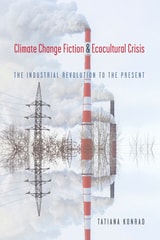
Climate Change Fiction and Ecocultural Crisis
The Industrial Revolution to the PresentTatiana Konrad
University of Nevada Press, 2024
Focusing on a diverse range of issues, including fossil fuels, cheap energy, the intricacies of human–more-than-human relationships, and postcolonial geographies, Konrad illustrates how cli-fi transcends mere storytelling. The genre ultimately emerges as an important means to forecast, imagine, and contemplate climatic events.
The book invites a broadening of the environmental humanities discourse, asking readers not only to deepen their understanding of the current climate crisis, but also to consider how cli-fi culture can be viewed as an effective method to address climate change.
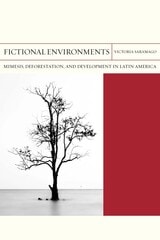
Fictional Environments
Mimesis, Deforestation, and Development in Latin AmericaVictoria Saramago
Northwestern University Press, 2021
Winner of the Brazilian Studies Association’s Roberto Reis Book Award for First Monograph • Honorable Mention for the Latin American Studies Association’s Antonio Candido Book Award • Shortlisted for the Association for the Study of Literature and Environment Book Award
Fictional Environments: Mimesis, Deforestation, and Development in Latin America investigates how fictional works have become sites for the production of knowledge, imagination, and intervention in Latin American environments. It investigates the dynamic relationship between fictional images and real places, as the lasting representations of forests, rural areas, and deserts in novels clash with collective perceptions of changes like deforestation and urbanization.
From the backlands of Brazil to a developing Rio de Janeiro, and from the rainforests of Venezuela and Peru to the Mexican countryside, rapid deforestation took place in Latin America in the second half of the twentieth century. How do fictional works and other cultural objects dramatize, resist, and intervene in these ecological transformations? Through analyses of work by João Guimarães Rosa, Alejo Carpentier, Juan Rulfo, Clarice Lispector, and Mario Vargas Llosa, Victoria Saramago shows how novels have inspired conservationist initiatives and offered counterpoints to developmentalist policies, and how environmental concerns have informed the agendas of novelists as essayists, politicians, and public intellectuals. This book seeks to understand the role of literary representation, or mimesis, in shaping, sustaining, and negotiating environmental imaginaries during the deep, ongoing transformations that have taken place from the 1950s to the present.
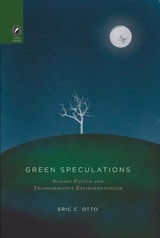
Green Speculations
Science Fiction and Transformative EnvironmentalismEric C. Otto
The Ohio State University Press, 2012
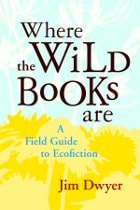
Where the Wild Books Are
A Field Guide to EcofictionJim Dwyer
University of Nevada Press, 2010
As interest in environmental issues grows, many writers of fiction have embraced themes that explore the connections between humans and the natural world. Ecologically themed fiction ranges from profound philosophical meditations to action-packed entertainments. Where the Wild Books Are offers an overview of nearly 2,000 works of nature-oriented fiction. The author includes a discussion of the precursors and history of the genre, and of its expansion since the 1970s. He also considers its forms and themes, as well as the subgenres into which it has evolved, such as speculative fiction, ecodefense, animal stories, mysteries, ecofeminist novels, cautionary tales, and others. A brief summary and critical commentary of each title is included. Dwyer’s scope is broad and covers fiction by Native American writers as well as ecofiction from writers around the world. Far more than a mere listing of books, Where the Wild Books Are is a lively introduction to a vast universe of engaging, provocative writing. It can be used to develop book collections or curricula. It also serves as an introduction to one of the most fertile areas of contemporary fiction, presenting books that will offer enjoyable reading and new insights into the vexing environmental questions of our time.
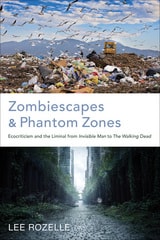
Zombiescapes and Phantom Zones
Ecocriticism and the Liminal from "Invisible Man" to "The Walking Dead"Lee Rozelle
University of Alabama Press, 2016
A Critical Journey Through Zombie Worlds and Ecological Thought.
In Zombiescapes and Phantom Zones: Ecocriticism and the Liminal from “Invisible Man” to “The Walking Dead,” Lee Rozelle chronicles the weirdest, ugliest, and most mixed-up characters to appear on the literary scene since World War II—creatures intimately linked to damaged habitats that rise from the muck, not to destroy or rule the world, but to save it. The book asks what happens to these landscapes after the madness, havoc, and destruction. What monsters and magic surface then?
Rozelle argues that zombiescapes and phantom zones depicted in the book become catalysts for environmental reanimation and sources of hope. Liminality offers exciting and useful new ways to conceptualize places that have historically proven troublesome, unwieldy, or hard to define. Zombiescapes can reduce the effects of pollution, promote environmental justice, lessen economic disparity, and localize food production. The grotesques that ooze and crawl from these passages challenge readers to consider new ways to re-inhabit broken lands at a time when energy efficiency, fracking, climate change, the Pacific trade agreement, local food production, and sustainability shape the intellectual landscape.
Rozelle focuses on literary works from 1950 to 2015—the zombiescapes and monsterscapes of post–World War II literature—that portray in troubling and often devastating ways the “brownfields” that have been divested of much of their biodiversity and ecological viability. However, he also highlights how these literary works suggest a new life and new potential for such environments. With an unlikely focus on places of ruination and an application of interdisciplinary, transnational approaches to a range of fields and texts, Rozelle advances the notion that places of distortion might become a nexus where revelation and advocacy are possible again.
Zombiescapes and Phantom Zones has much to offer to various fields of scholarship, including literary studies, ecocriticism, and environmental studies. Research, academic, and undergraduate audiences will be captivated by Rozelle’s lively prose and unique anthropological, ecocritical, and literary analyses.