Results by title
12 books match the query 'Ecologies'
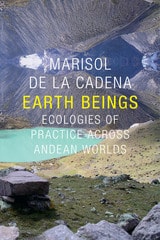
Earth Beings
Ecologies of Practice across Andean WorldsMarisol de la Cadena
Duke University Press, 2015
Ecologies of Comparison
An Ethnography of Endangerment in Hong KongTim Choy
Duke University Press, 2011
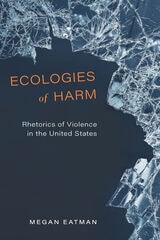
Ecologies of Harm
Rhetorics of Violence in the United StatesMegan Eatman
The Ohio State University Press, 2020
While Eatman looks to examples of violent spectacles to make her case (lynching, capital punishment, and torture in the War on Terror), it is in her analysis of more mundane responses to these forms of violence (congressional debates, court documents, visual art, and memorial performance) where the key to her argument lies—as she shows how circulating violence in these ways produces violent rhetorical ecologies that facilitate some modes of being while foreclosing others. Through this ecological approach, Ecologies of Harm offers a new understanding of the debates surrounding legacies of violence, examines how rhetoric and violence function together, and explores implications of their entanglement for antiviolence work.
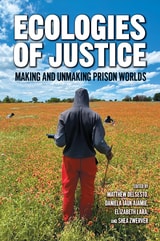
Ecologies of Justice
Making and Unmaking Prison WorldsMatthew DelSesto
Rutgers University Press, 2027
What is the role of multi-species ecologies in creating spaces that counteract the violence in carceral systems and environmental destruction? This book brings together, for the first time, contributions on issues related to prison, jail, and reentry programs, community-based interventions, environmental justice, and sustainability. Through rigorous analysis, detailed case studies, poetry, and personal reflections, the book offers ways of thinking and acting at the intersection of environmental issues and the carceral system. It gathers hard-earned wisdom and insight of researchers, activists, practitioners, and community leaders from within and beyond prison walls who have taken up their projects despite profound institutional constraints.
Approaches in the book range from reform to abolition, as authors detail both practical interventions and imaginative courses of action. More than a contribution to academic knowledge, the book also uniquely highlights voices of those who are incarcerated, survivors of crime, and institutional stakeholders. In addition to writing about the carceral system based on research and personal experience, authors describe practices that are creating transformative spaces of environmental education, building effective pipelines for green workforce development, and sustaining reciprocal relationships for eco-social healing.
Visit for more information: ecologiesofjustice.net
Ecologies of a Storied Planet in the Anthropocene
Serpil Oppermann
West Virginia University Press, 2023
Ecologies of a Storied Planet in the Anthropocene is a tour de force. With transdisciplinarity and theoretical lucidity, it rethinks the Anthropocene from a material ecocritical perspective, envisioning innovative modes of knowledge for deeper understandings of Anthropocene ecologies. Focusing on nonhuman agencies, Serpil Oppermann shows in fascinating detail how to better imagine an ecological future on our storied planet that has suffered enormously from an anthropocentric mindset.
Farm to Form
Modernist Literature and Ecologies of Food in the British EmpireJessica Martell
University of Nevada Press, 2020
Deeply informed by Martell’s extensive knowledge of modern British, Irish, American, and World Literatures, this progressive work positions modernism as central to the study of narratives of resistance against social and environmental degradation. Analyzed works include those of Thomas Hardy, E. M. Forster, Virginia Woolf, Joseph Conrad, George Russell, and James Joyce.
In light of climate change, fossil fuel supremacy, nutritional dearth, and other pressing food issues, modernist texts bring to life an era of crisis and anxiety similar to our own. In doing so, Martell summons the past as a way to employ the modernist term of “defamiliarizing” the present so that entrenched perceptions can be challenged. Our current food regime is both new and constantly evolving with the first industrial food trades. Studying earlier cultural responses to them invites us to return to persistent problems with new insights and renewed passion.
Harvesting the Clouds
Ecologies of Fog Capture in Coastal PeruChakad Ojani
University of Arizona Press, 2027
Vision limited, sounds muffled. Tiny water droplets reflect light back to its source and make it difficult to locate the origin of sounds: this is fog. In Chakad Ojani’s ethnography, this atmospheric phenomenon plays a pivotal role.
Drawing on long-term ethnographic research on engagements with fog in Lima and coastal Peru, Harvesting the Clouds examines how local NGO workers and fog oasis conservationists sought to utilize coastal fog as a water source. NGO workers installed fog catchers in informal or recently formalized neighborhoods where state infrastructure was absent, while conservationists harnessed ground-touching clouds in order to prevent informal urbanization. As they set out to capture ground-touching clouds to pursue their distinct goals, these collectives became entrapped by activities, demands, and expectations that they had not foreseen. The book frames these relationships as ecologies of capture: emergent webs of relationships held together by conflicting aims and expectations, the possibilities and limitations of fog capture, and the material qualities of fog itself.
Harvesting the Clouds argues that capture is always only partially successful, but by virtue of this partiality, it becomes productive of social relations—an understanding that the author extends to anthropological inquiry itself as an exercise in the productive impossibility of ethnographic entrapment.
Jugaad Time
Ecologies of Everyday Hacking in IndiaAmit S. Rai
Duke University Press, 2019
Legacies of War
Violence, Ecologies, and KinKimberly Theidon
Duke University Press, 2022
Ruderal City
Ecologies of Migration, Race, and Urban Nature in BerlinBettina Stoetzer
Duke University Press, 2022
Shipwreck Modernity
Ecologies of Globalization, 1550–1719Steve Mentz
University of Minnesota Press, 2015
Shipwreck Modernity engages early modern representations of maritime disaster in order to describe the global experience of ecological crisis. In the wet chaos of catastrophe, sailors sought temporary security as their worlds were turned upside down. Similarly, writers, poets, and other thinkers searched for stability amid the cultural shifts that resulted from global expansion. The ancient master plot of shipwreck provided a literary language for their dislocation and uncertainty.
Steve Mentz identifies three paradigms that expose the cultural meanings of shipwreck in historical and imaginative texts from the mid-sixteenth through the early eighteenth centuries: wet globalization, blue ecology, and shipwreck modernity. The years during which the English nation and its emerging colonies began to define themselves through oceangoing expansion were also a time when maritime disaster occupied sailors, poets, playwrights, sermon makers, and many others. Through coming to terms with shipwreck, these figures adapted to disruptive change.
Traces of shipwreck ecology appear in canonical literature from Shakespeare to Donne to Defoe and also in sermons, tales of survival, amateur poetry, and the diaries of seventeenth-century English sailors. The isolated islands of Bermuda and the perils of divine anger hold central places. Modern sailor-poets including Herman Melville serve as valuable touchstones in the effort to parse the reality and understandings of global shipwreck.
Offering the first ecocritical account of early modern shipwreck narratives, Shipwreck Modernity reveals the surprisingly modern truths to be found in these early stories of ecological collapse.
Still Life
Ecologies of the Modern Imagination at the Art MuseumFernando Domínguez Rubio
University of Chicago Press, 2020
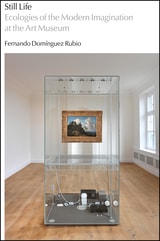
Still Life offers a fascinating and detailed ethnographic account of what it takes to prevent these disasters from happening. Going behind the scenes at MoMA, Domínguez Rubio provides a rare view of the vast technological apparatus—from climatic infrastructures and storage facilities, to conservation labs and machine rooms—and teams of workers—from conservators and engineers to guards and couriers—who fight to hold artworks still.
As MoMA reopens after a massive expansion and rearranging of its space and collections, Still Life not only offers a much-needed account of the spaces, actors, and forms of labor traditionally left out of the main narratives of art, but it also offers a timely meditation on how far we, as a society, are willing to go to keep the things we value from disappearing into oblivion.