Results by title
26 books match the query 'Econometrics'
A Rational Expectations Approach to Macroeconometrics
Testing Policy Ineffectiveness and Efficient-Markets ModelsFrederic S. Mishkin
University of Chicago Press, 1983
Big Data for Twenty-First-Century Economic Statistics
Edited by Katharine G. Abraham, Ron S. Jarmin, Brian C. Moyer, and Matthew D. Shapiro
University of Chicago Press, 2022
The existing infrastructure for the production of key economic statistics relies heavily on data collected through sample surveys and periodic censuses, together with administrative records generated in connection with tax administration. The increasing difficulty of obtaining survey and census responses threatens the viability of existing data collection approaches. The growing availability of new sources of Big Data—such as scanner data on purchases, credit card transaction records, payroll information, and prices of various goods scraped from the websites of online sellers—has changed the data landscape. These new sources of data hold the promise of allowing the statistical agencies to produce more accurate, more disaggregated, and more timely economic data to meet the needs of policymakers and other data users. This volume documents progress made toward that goal and the challenges to be overcome to realize the full potential of Big Data in the production of economic statistics. It describes the deployment of Big Data to solve both existing and novel challenges in economic measurement, and it will be of interest to statistical agency staff, academic researchers, and serious users of economic statistics.
Data Privacy Protection and the Conduct of Applied Research
Methods, Approaches, and New FindingsEdited by V. Joseph Hotz, Ruobin Gong, and Ian M. Schmutte
University of Chicago Press, 2026
A necessary exploration into the mechanics of data privacy protections within empirical social science research.
The explosion of computational power and data availability has revolutionized empirical social science research, but it has also created unprecedented challenges for protecting the privacy of individuals and businesses. As computational tools make it increasingly possible to breach data anonymity in government surveys by combining the survey data with additional information from external sources, statistical agencies face mounting pressure to develop new privacy protection methods while maintaining data quality essential for research and policymaking. This volume explores how innovations in data privacy protection, including differential privacy and synthetic data methods, affect the conduct of empirical analysis in economics, computer science, and statistics. Contributors explore critical questions about the trade-offs between privacy and data usability: How do new protection methods impact statistical inference and parameter estimation? What standards should data providers adopt? The chapters examine frameworks for characterizing privacy protection, disclosure limitation challenges for survey data, methodological innovations for privacy-preserving statistical analysis, regulatory considerations in modern data governance, and strategies for balancing confidentiality with research access.
This volume provides researchers, statistical agencies, and policymakers with essential guidance for navigating the complex landscape where data protection meets scientific inquiry.
Elements of Econometrics
Second EditionJan Kmenta
University of Michigan Press, 1997
Throughout the book the emphasis is on simplification whenever possible, assuming the readers know college algebra and basic calculus. Jan Kmenta explains all methods within the simplest framework, and generalizations are presented as logical extensions of simple cases. And while a relatively high degree of rigor is preserved, every conflict between rigor and clarity is resolved in favor of the latter. Apart from its clear exposition, the book's strength lies in emphasizing the basic ideas rather than just presenting formulas to learn and rules to apply.
The book consists of two parts, which could be considered jointly or separately. Part one covers the basic elements of the theory of statistics and provides readers with a good understanding of the process of scientific generalization from incomplete information. Part two contains a thorough exposition of all basic econometric methods and includes some of the more recent developments in several areas.
As a textbook, Elements of Econometrics is intended for upper-level undergraduate and master's degree courses and may usefully serve as a supplement for traditional Ph.D. courses in econometrics. Researchers in the social sciences will find it an invaluable reference tool.
A solutions manual is also available for teachers who adopt the text for coursework.
Jan Kmenta is Professor Emeritus of Economics and Statistics, University of Michigan.
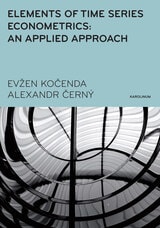
Elements of Time Series Econometrics
An Applied Approach - Third EditionEvzen Kocenda and Alexandr Cerný
Karolinum Press, 2017
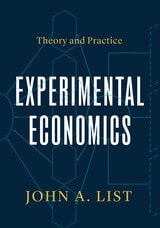
Experimental Economics
Theory and PracticeJohn A. List
University of Chicago Press, 2025
A landmark practical guide from the twenty-first-century pioneer in economics.
Experimental economics—generating and interpreting data to understand human decisions, motivations, and outcomes—is today all but synonymous with economics as a discipline. The advantages of the experimental method for understanding causal effects make it the gold standard for an increasingly empirical field. But until now the discipline has lacked comprehensive and definitive guidance for how to optimally design and conduct economic experiments.
For more than 30 years, John A. List has been at the forefront of using experiments to advance economic knowledge, expanding the domain of economic experiments from the lab to the real-world. Experimental Economics is his A-to-Z compendium for students and researchers on the ground floor of designing, conducting, analyzing, and interpreting data that they generate. List seeks not only to guide readers on how to develop and implement their experimental projects—everything from design to administrative and ethical considerations—but to help them avoid all the mistakes he’s made in his career, too. Experimental Economics codifies its author’s refined approach to the design, execution, and analysis of laboratory and field experiments. It is a milestone work poised to become the definitive reference for the next century of economics (and economists).
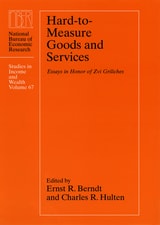
Hard-to-Measure Goods and Services
Essays in Honor of Zvi GrilichesEdited by Ernst E. Berndt and Charles R. Hulten
University of Chicago Press, 2007
The celebrated economist Zvi Griliches’s entire career can be viewed as an attempt to advance the cause of accuracy in economic measurement. His interest in the causes and consequences of technical progress led to his pathbreaking work on price hedonics, now the principal analytical technique available to account for changes in product quality.
Hard-to-Measure Goods and Services, a collection of papers from an NBER conference held in Griliches’s honor, is a tribute to his many contributions to current economic thought. Here, leading scholars of economic measurement address issues in the areas of productivity, price hedonics, capital measurement, diffusion of new technologies, and output and price measurement in “hard-to-measure” sectors of the economy. Furthering Griliches’s vital work that changed the way economists think about the U.S. National Income and Product Accounts, this volume is essential for all those interested in the labor market, economic growth, production, and real output.

Histories on Econometrics, Volume 43
Marcel Boumans, Ariane Dupont-Kieffer, Dou Qin, editors
Duke University Press, 0
Contributors: John Aldrich, Jeff E. Biddle, Olav Bjerkholt, Marcel Boumans, Chao-Hsi Huang, Robert W. Dimand, Duo Qin, Ariane Dupont-Kieffer, Hsiang-Ke Chao, Aiko Ikeo, Francisco Louçã, Mary S. Morgan, Daniela Parisi, Alain Pirotte, Charles G. Renfro, Thomas Stapleford, Sofia Terlica
Marcel Boumans is Associate Professor of Economics at the University of Amsterdam. Ariane Dupont-Kieffer is a Researcher at the French National Institute of Research on Transport and Safety. Duo Qin is Reader of Economics at the University of London.
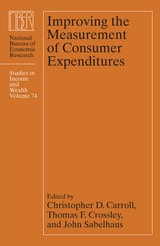
Improving the Measurement of Consumer Expenditures
Edited by Christopher D. Carroll, Thomas F. Crossley, and John Sabelhaus
University of Chicago Press, 2015
Improving the Measurement of Consumer Expenditures begins with a comprehensive review of current methodologies for collecting consumer expenditure data. Subsequent chapters highlight the range of different objectives that expenditure surveys may satisfy, compare the data available from consumer expenditure surveys with that available from other sources, and describe how the United States’s current survey practices compare with those in other nations.
Labour Statistics for a Market Economy
Challenges and Solutions in the Transition Countries of Central and Eastern Europe and the Former Soviet UnionIgor Chernyshev
Central European University Press, 1995
Measuring Capital in the New Economy
Edited by Carol Corrado, John Haltiwanger, and Daniel Sichel
University of Chicago Press, 2005
In Measuring Capital in the New Economy, Carol Corrado, John Haltiwanger, Daniel Sichel, and a host of distinguished collaborators offer new approaches for measuring capital in an economy that is increasingly dominated by high-technology capital and intangible assets. As the contributors show, high-tech capital and intangible assets affect the economy in ways that are notoriously difficult to appraise. In this detailed and thorough analysis of the problem and its solutions, the contributors study the nature of these relationships and provide guidance as to what factors should be included in calculations of different types of capital for economists, policymakers, and the financial and accounting communities alike.
Measuring Distribution and Mobility of Income and Wealth
Raj Chetty, John N. Friedman, Janet C. Gornick, Barry Johnson, and Arthur Kennickell
University of Chicago Press, 2022
Economic research is increasingly focused on inequality in the distribution of personal resources and outcomes. One aspect of inequality is mobility: are individuals locked into their respective places in this distribution? To what extent do circumstances change, either over the lifecycle or across generations? Research not only measures inequality and mobility, but also analyzes the historical, economic, and social determinants of these outcomes and the effect of public policies. This volume explores the latest developments in the analysis of income and wealth distribution and mobility. The collection of twenty-three studies is divided into five sections. The first examines observed patterns of income inequality and shifts in the distribution of earnings and in other factors that contribute to it. The next examines wealth inequality, including a substantial discussion of the difficulties of defining and measuring wealth. The third section presents new evidence on the intergenerational transmission of inequality and the mechanisms that underlie it. The next section considers the impact of various policy interventions that are directed at reducing inequality. The final section addresses the challenges of combining household-level data, potentially from multiple sources such as surveys and administrative records, and aggregate data to study inequality, and explores ways to make survey data more comparable with national income accounts data.
Measuring Economic Sustainability and Progress
Edited by Dale W. Jorgenson, J. Steven Landefeld, and Paul Schreyer
University of Chicago Press, 2014
The latest in the NBER’s influential Studies in Income and Wealth series, which has played a key role in the development of national account statistics in the United States and other nations, this volume explores collaborative solutions between academics, policy researchers, and official statisticians to some of today’s most important economic measurement challenges. Contributors to this volume extend past research on the integration and extension of national accounts to establish an even more comprehensive understanding of the distribution of economic growth and its impact on well-being, including health, human capital, and the environment. The research contributions assess, among other topics, specific conceptual and empirical proposals for extending national accounts.
Measuring Entrepreneurial Businesses
Current Knowledge and ChallengesEdited by John Haltiwanger, Erik Hurst, Javier Miranda, and Antoinette Schoar
University of Chicago Press, 2017
Measuring Entrepreneurial Businesses brings together economists and data analysts to discuss the most recent research covering three broad themes. The first chapters isolate high- and low-performing entrepreneurial ventures and analyze their roles in creating jobs and driving innovation and productivity. The next chapters turn the focus on specific challenges entrepreneurs face and how they have varied over time, including over business cycles. The final chapters explore core measurement issues, with a focus on new data projects under development that may improve our understanding of this dynamic part of the economy.
Measuring and Modeling Health Care Costs
Edited by Ana Aizcorbe, Colin Baker, Ernst R. Berndt, and David M. Cutler
University of Chicago Press, 2018
The research in Measuring and Modeling Health Care Costs seeks to connect our knowledge of expenditures with what we are able to measure of results, probing questions of methodology, changes in the pharmaceutical industry, and the shifting landscape of physician practice. The research in this volume investigates, for example, obesity’s effect on health care spending, the effect of generic pharmaceutical releases on the market, and the disparity between disease-based and population-based spending measures. This vast and varied volume applies a range of economic tools to the analysis of health care and health outcomes.
Practical and descriptive, this new volume in the Studies in Income and Wealth series is full of insights relevant to health policy students and specialists alike.
NBER Macroeconomics Annual 2017
Volume 32Edited by Jonathan A. Parker and Martin Eichenbaum
University of Chicago Press Journals, 2018
New Developments in Productivity Analysis
Edited by Charles R. Hulten, Edwin R. Dean, and Michael J. Harper
University of Chicago Press, 2001
Charles R. Hulten is professor of economics at the University of Maryland. He has been a senior research associate at the Urban Institute and is chair of the Conference on Research in Income and Wealth of the National Bureau of Economic Research. Michael Harper is chief of the Division of Productivity Research at the Bureau of Labor Statistics. Edwin R. Dean, formerly associate commissioner for Productivity and Technology at the Bureau of Labor Statistics, is adjunct professor of economics at The George Washington University.

New Directions in Market Design
Edited by Irene Lo, Michael Ostrovsky, Parag A. Pathak
University of Chicago Press, 2026
A comprehensive survey of the evolution of market design over the past three decades.
In the mid-1990s, the first Federal Communications Commission spectrum auction and the redesign of the National Residency Matching Program collectively helped to jumpstart the field of market design. Since then, extensive research has improved auction design and broken new conceptual ground in addressing multi-agent matching problems. This volume summarizes key discoveries and advances in market design over the past three decades and explores contemporary challenges—from climate policy and electricity markets to AI-mediated exchanges and hospital resource allocation.
Contributors examine how to design efficient, incentive-compatible mechanisms that are robust to shifting conditions and increasing complexity. They consider a wide variety of applications that could benefit from the market design viewpoint, such as environmental markets, school choice, and organ exchange. Together, the chapters illustrate the important interactions between economic theory, computational tools, and institutional insight.
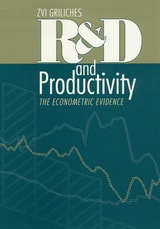
R&D and Productivity
The Econometric EvidenceZvi Griliches
University of Chicago Press, 1998
Griliches began his studies of productivity growth during the 1950s, adding a variable of "knowledge stock" to traditional production function models, and his work has served as the point of departure for much of the research into R&D and productivity. This collection of essays documents both Griliches's distinguished career as well as the history of this line of thought.
As inputs into production increasingly taking the form of "intellectual capital" and new technologies that are not as easily measured as traditional labor and capital, the methods Griliches has refined and applied to R&D become crucial to understanding today's economy.
Race, Ethnicity, and Economic Statistics for the 21st Century
Edited by Randall Akee, Lawrence F. Katz, and Mark A. Loewenstein
University of Chicago Press, 2026
Categorizing race and ethnicity for twenty-first-century statistics and economics.
The increasing racial and ethnic diversity of the US population raises the question of whether the race and ethnicity categories and definitions used by federal statistical agencies to create demographic statistics on which government officials, business decision-makers, and private citizens rely fully reflect the changing population. Official definitions of existing race and ethnic groups do not always command wide agreement, and over time, some definitions that were once widely accepted may become less so based on political, legal, and social factors. Comparable measures of race and ethnicity over time are needed to accurately track historical changes in economic and social outcomes, as well as racial and ethnic segregation.
This volume explores the production of economic statistics that accurately depict the complex racial and ethnic diversity of the US population in the twenty-first century. The chapters examine the consequences for economic analyses of different measurement choices concerning race and ethnicity, assess the likely implications of the 2024 changes in federal race and ethnicity measurement standards, introduce new data sets with richer demographic information, and compare measures of race and ethnicity in administrative versus survey data. They also apply existing data in creative ways to develop alternative characterizations of the changing US workforce and to illuminate important policy questions related to criminal justice, immigration, labor market discrimination, the social safety net, health care, and child welfare.

Rational Expectations and Econometric Practice
Volume 1Robert E. Lucas Jr. and Thomas J. Sargent, Editors
University of Minnesota Press, 1981
Rational Expectations and Econometric Practice was first published in 1981. Minnesota Archive Editions uses digital technology to make long-unavailable books once again accessible, and are published unaltered from the original University of Minnesota Press editions.
Assumptions about how people form expectations for the future shape the properties of any dynamic economic model. To make economic decisions in an uncertain environment people must forecast such variables as future rates of inflation, tax rates, government subsidy schemes and regulations. The doctrine of rational expectations uses standard economic methods to explain how those expectations are formed.
This work collects the papers that have made significant contributions to formulating the idea of rational expectations. Most of the papers deal with the connections between observed economic behavior and the evaluation of alternative economic policies.
Robert E. Lucas, Jr., is professor of economics at the University of Chicago. Thomas J. Sargent is professor of economics at the University of Minnesota and adviser to the Federal Reserve Bank of Minnesota.
Solutions Manual to Elements of Econometrics
Jan Kmenta
University of Michigan Press, 1997
The Solutions Manual to Elements of Econometrics, Second Edition provides chapter solutions to the exercises in the college textbook: Elements of Econometrics, Second Edition by Jan Kmenta.
The Economic Analysis of Substance Use and Abuse
An Integration of Econometric and Behavioral Economic ResearchEdited by Frank J. Chaloupka, Michael Grossman, Warren K. Bickel, and Henry Saffer
University of Chicago Press, 1999
The Economic Analysis of Substance Use and Abuse brings these distinctive fields of study together and presents for the first time an integrated assessment of their data and results. Unique and innovative, this multidisciplinary volume will serve as an important resource in the current debates concerning alcohol and drug use and abuse and the impacts of legalizing illicit drugs.

The Economics of Information and Uncertainty
Edited by John J. McCall
University of Chicago Press, 1982
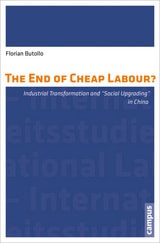
The End of Cheap Labour?
Industrial Transformation and "Social Upgrading" in ChinaFlorian Butollo
Campus Verlag, 2014
In The End of Cheap Labour?, Florian Butollo investigates the recent transformation of the garment and LED lighting industries in the Pearl River Delta, China’s largest industrial hub. He reveals that industrial upgrading rarely supports improvements in working conditions and the basic employment pattern; and this failure of “social upgrading” threatens to undermine the desired rebalancing of the Chinese economy. Butollo demonstrates that the implementation of collective labor rights remains an important obstacle in the future of the Chinese growth model.
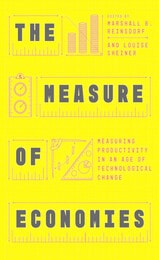
The Measure of Economies
Measuring Productivity in an Age of Technological ChangeEdited by Marshall B. Reinsdorf and Louise Sheiner
University of Chicago Press, 2024
Innovative new approaches for improving GDP measurement to better gauge economic productivity.
Official measures of gross domestic product (GDP) indicate that productivity growth has declined in the United States over the last two decades. This has led to calls for policy changes from pro-business tax reform to stronger antitrust measures. But are our twentieth-century economic methods actually measuring our twenty-first-century productivity?
The Measure of Economies offers a synthesis of the state of knowledge in productivity measurement at a time when many question the accuracy and scope of GDP. With chapters authored by leading economic experts on topics such as the digital economy, health care, and the environment, it highlights the inadequacies of current practices and discusses cutting-edge alternatives.
Pragmatic and forward-facing, The Measure of Economies is an essential resource not only for social scientists, but also for policymakers and business leaders seeking to understand the complexities of economic growth in a time of rapidly evolving technology.